Fractured Lives is a photographic and multimedia project illustrating the struggles faced by Rwandan citizens rebuilding their lives after the 1994 genocide. The exhibition is at the SW1 Gallery, Cardinal Place (Roof Garden) off Victoria Street in London, and runs until October 12th (check opening times of the gallery before making a trip).
Carol Allen Storey talking about one of her images.
After the private view, a colleague takes in the impact of the imagery.
The project was shot by Carol Allen Storey for International Alert and documents the lives of survivors, ex-combatants and ex-prisoners as they build their communities and reconcile.
Eleneus who did the voice over for the film of the project.
L-R: Photographers Edmond Terakopian, Carol Allen Storey and Joth Shakerley.
I’m proud to say that I have been involved in all the image processing for the project, as well as creating a multimedia piece using these powerful photographs, stories told by the subjects, local music and a voice over. You can view this film below.
It’s an exhibition I highly recommend, so don’t miss it.
I had the pleasure of attending a screening of “Deadline Every Second” by Ken Kobré at the Frontline Club a week ago. It’s a brilliantly shot short film covering 12 photojournalists from AP as they cover various assignments around the world, with great photographer interviews as well as superb footage of them actually on the job. Just to make things complete, we’re also treated to the actual images taken by the photographers.
Deadline Every Second screening and Q&A with director and professor of photojournalism at San Francisco State University Kenneth Kobre (on left) and AP staff photographer Lefteris Pitarakis. Frontline Club, London. September 21, 2012. Photo: Edmond Terakopian
The event had AP staff photographer Lefteris Pitarakis, one of the featured photographers, and Ken Kobré present for a very interesting Q&A session after the screening.
Deadline Every Second screening and Q&A. AP staff photographer Lefteris Pitarakis ansers questions put from the packed screening room. Frontline Club, London. September 21, 2012. Photo: Edmond Terakopian
I can’t recommend this film highly enough to anyone interested in journalism or world affairs, but also to photojournalists and students of it. Definitely try and see it. It’s being screened by various US TV stations and is also available from Amazon.
Nick Ut is an AP photographer. Using a Leica, he captured without doubt the most iconic photograph taken to date; the napalm girl, during the Vietnam war. Watch the story behind the famous photograph “The Napalm Girl”.
Nick Ut was honored with the Leica Hall of Fame Award on September 17 at “LEICA – DAS WESENTLICHE” at Photokina 2012.
AP’s Legendary Photographer’s Hong Kong Exhibition & London Memorial
Vietnam 1967 — AP photographer Horst Faas, with his Leica cameras around his neck, accompanies U.S. troops in War Zone C. (AP Photo)
Earlier this year, May 10th, saw the sad passing of one of our time’s greatest photojournalists and picture editors; the legendary Horst Faas. Best known for his amazing images from Vietnam, Horst was a double Pulitzer Prize winner. As AP chief photographer for Southeast Asia and picture editor, he was also instrumental in getting Nick Ut’s powerful ‘Napalm Girl’ on the AP wire, along with another definitive image from that war, Eddie Adams’ Vietcong prisoner execution.
A boy carries a toy rifle as he walks with his mother past French soldiers in battle gear at the Bastille Palace in Oran, Algeria, May 4, 1962. Algeria’s eight-year battle for independence had reached a tense cease-fire pending a July referendum. (AP Photo/Horst Faas)
The sun breaks through dense jungle foliage in early January 1965, around the embattled town of Binh Gia, 64 km east of Saigon, as South Vietnamese troops, joined by U.S. personnel, rest after a cold, damp night of waiting in an ambush position for a Viet Cong attack that didn’t come. One hour later, as the possibility of an overnight attack faded, the troops moved out for another hot day hunting the elusive communist guerrillas. (AP Photo/Horst Faas)
Exhibition
The Foreign Correspondent’s Club, Hong Kong will be have a reception and exhibition on Horst’s work on September 4th. For further details, visit the FCC website. The exhibition of images will remain on display for the foreseeable future.
Memorial
In London, on October 18th at 11.30am, we will be having a memorial service for Horst. The service will be at St Brides Church, Fleet Street.
South Vietnamese civilians, among the few survivors of two days of heavy fighting, huddle together in the aftermath of an attack by government troops to retake the post at Dong Xoai, June 1965. Just a few of the several hundred civilians who sought refuge at the post survived the two day barrage of mortars and bombardment. After the government recaptured Dong Xoai, the bodies of 150 civilians and some 300 South Vietnamese soldiers were discovered. (AP Photo/Horst Faas)
The Taylor Wessing Photographic Portrait Prize 2012
It’s perhaps one of the most interesting awards to enter; prestigious to win as the works are hung at the National Portrait Gallery, yet one of the most difficult & expensive to enter, as prints are required, complete with protective sleeves. As large print sizes are needed (your entry will be the print that is hung if you win), having anything smaller than A2 in size means your work may simply not be noticed by the judges, compared to huge prints entered by others which may dwarf smaller prints. In this day and age of conservation, it can be quite a wasteful effort putting together six A1 (or bigger) images purely for judging.
Past years have brought surprising results in images chosen and sometimes shocking winners. It is though a great competition and generally always shows off some great work.
Alas it is a competition that I failed to get selected for, and after being requested by friends to do so, here I share my six entries into this year’s Taylor Wessing Photographic Portrait Prize 2012 .
Portraits of Armenian singer Charles Aznavour in his suite at the Ritz Carlton Hotel in New York, NY, USA, ahead of an event by the Fund For Armenian Relief (FAR); 20 Years Of Armenian Independence Honoring Mr Aznavour. May 20, 2011. Photo: Edmond Terakopian
Grandmother for the first time. Photo: Edmond Terakopian
Knife violence in Glasgow, Scotland. Victim of a stabbing in the neck, quadriplegic Scott Breslin (26). He was stabbed when 16 and has spent his life in a wheelchair, paralysed from the neck down. February 10, 2011. Photo: Edmond Terakopian
The businessman. A heavy downpour of rain soaks pedestrians as they pass an illuminated advertising sign saying “Love Your Job”. Hammersmith, London. January 14, 2011. Photo: Edmond Terakopian
Photographer Jeff Moore in Downing Street, ahead of a visit by US President Barack Obama. London. April 24, 2011. Photo: Edmond Terakopian
Virgin Atlantic celebrate the launch of their flights to Vancouver. Fairmont Pacific Rim cocktail reception. Sir Richard Branson, founder and President of Virgin Atlantic Airways and members of the cabin crew. Vancouver, British Columbia, Canada. May 25, 2012. Photo: Edmond Terakopian
40 Years On From AP’s “Napalm Girl” Photograph From The Vietnam War
Anyone with any interest in history or photography will know the image. It’s a photograph that grabs you and never leaves you once you’ve seen it. The image taken by AP’s Nick Ut on June 8th, 1972, shows crying children running away from their village after a Napalm aerial attack by South Vietnamese Forces.
In this June 8, 1972 file photo, crying children, including 9-year-old Kim Phuc, center, run down Route 1 near Trang Bang, Vietnam after an aerial napalm attack on suspected Viet Cong hiding places as South Vietnamese forces from the 25th Division walk behind them. A South Vietnamese plane accidentally dropped its flaming napalm on South Vietnamese troops and civilians. From left, the children are Phan Thanh Tam, younger brother of Kim Phuc, who lost an eye, Phan Thanh Phouc, youngest brother of Kim Phuc, Kim Phuc, and Kim’s cousins Ho Van Bon, and Ho Thi Ting. AP Photo/Nick Ut
It’s a disturbing image; one that shakes us to our core. The main subject in the shot is nine year old Kim Phuc; running, , wailing the words “Too hot, too hot”, crying and naked. As she was hit by the burning Napalm, it raced up her body and incinerated her clothing on contact. It burnt through the layers of her skin all over her back, leaving her heavily scarred to this day.
This moment brought together photographer and subject, not only to create the most powerful image from the Vietnam war but it also united a nine year old girl who would certainly have died, with her saviour; the young 21 year old Vietnamese photographer, Nick Ut. He drove Phuc to a small hospital, where he was told the small girl was too far gone to save. He showed them his American press badge and demanded the doctors treat the girl and left, assuring them that the girl would not be forgotten. “I cried when I saw her running,” said Ut. “If I don’t help her — if something happened and she died — I think I’d kill myself after that.”
AP staff photographer Nick Ut in Vietnam during the 1970s. AP Photo/Nick Ut
Although AP had strict rules about nudity, legendary AP photo editor Horst Faas broke the rules as soon as he saw the image, as it’s news value far outweighed any policy.
A few days later, Christopher Wain from ITN found out that the little girl had survived. He was on the scene and had given her water and doused her burning back with water from his canteen. He fought to have her transferred to a speciality unit run by the Americans. Although she had 35% of her body scorched with 3rd degree burns, she survived and 13 months later, after multiple painful skin grafts and surgeries, she was allowed to leave the Barsky facility.
Kim Phuc
Photographer Nick Ut with Phan Thi Kim Phuc; the girl in iconic Vietnam War photo “Napalm Girl”. Vietnam Veterans Memorial in Washington D.C. AP Photo/Nick Ut
Kim Phuc, now 49, says “I really wanted to escape from that little girl. But it seems to me the picture didn’t let me go”. After years of difficulty, feeling like a victim of war, then finding love, and finally defecting to Canada, the picture has changed it’s meaning for her. “Most of the people, they know my picture but there’s very few that know about my life,” she said. “I’m so thankful that … I can accept the picture as a powerful gift. Then it is my choice. Then I can work with it for peace.”
AP staff photographer Nick Ut views an A-1 Skyraider attack aircraft, as used in Vietnam, fitted with Napalm. April 2010. AP Photo/Nick Ut
Over 40 years have passed since AP’s most iconic image was taken, and Nick Ut, who won a Pulitzer Prize for the image, is very much a full time AP staff photographer, now based in LA. In August this year, Nick visited the AP offices in NY to see his original negatives for the third time ever, since having processed it in the darkroom in Vietnam.
During a visit to the Associated Press headquarters photo library in New York, Aug. 10, 2012, AP staff photographer Nick Ut holds a plastic sleeve containing the original “Napalm Girl” negative, for which he won the 1973 Pulitzer Prize for Spot News Photography. (AP Photo)
To find out more about the background to this amazing image and the surrounding story, I thoroughly recommend this AP article.
Here’s a must watch interview with Nick Ut, describing the events of the day, with some stunning photography.
I do not condone nor can I be held responsible for reader comments published on this blog; they are the sole responsibility of the reader making the comment.

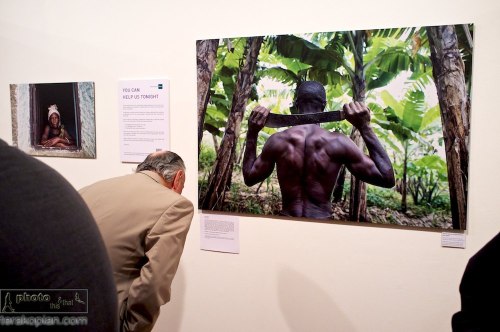


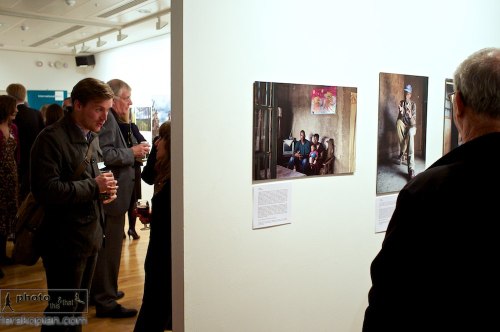

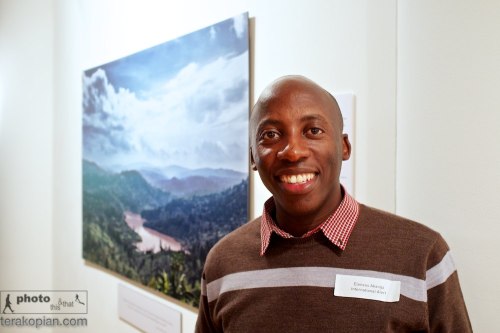


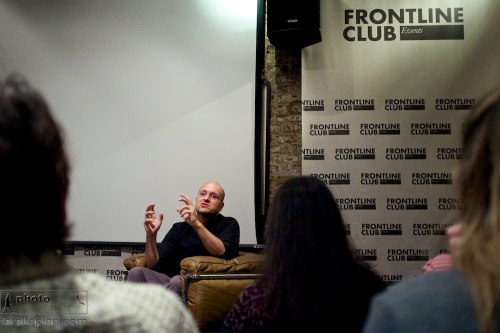

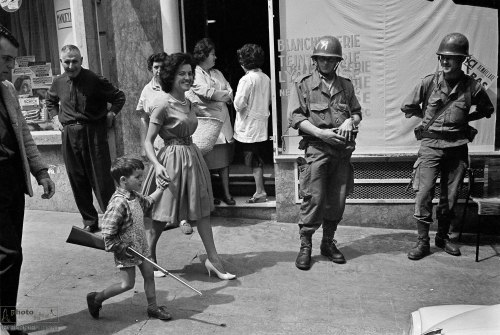


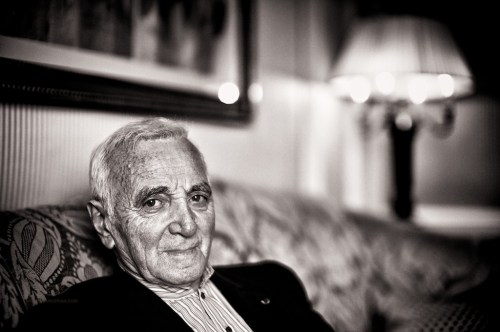
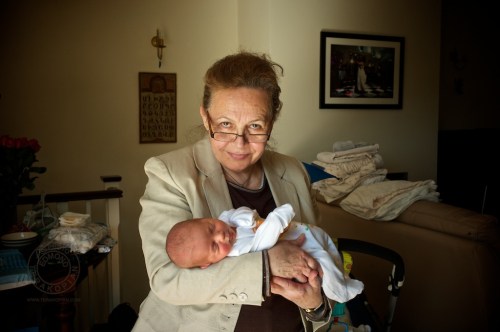
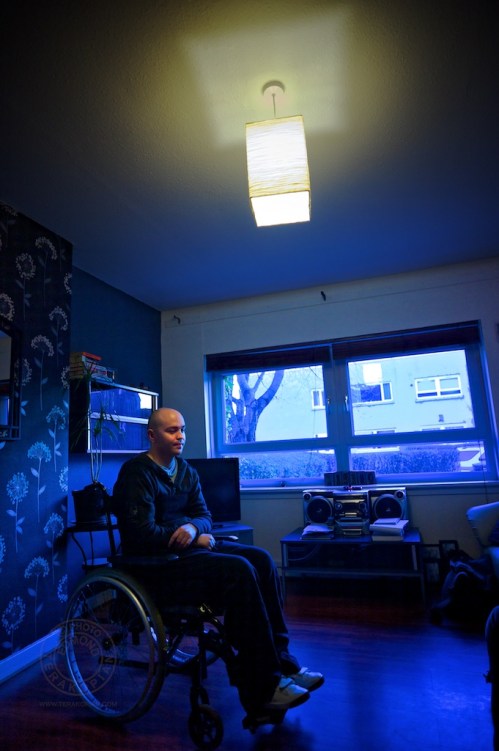
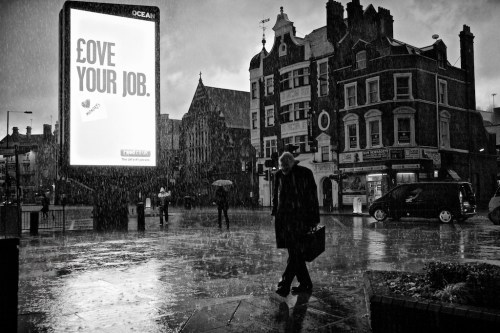
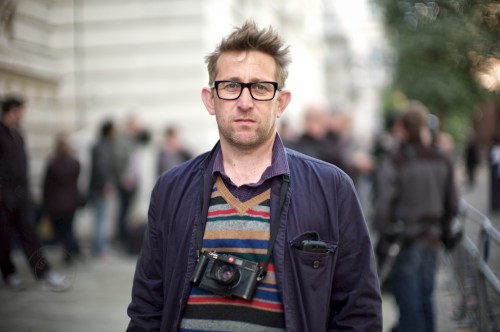



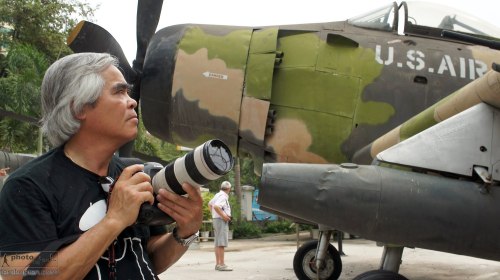


 Photo This & That