The Leica M Accessories

Accessorising The New Leica M Camera

Rather than changing the classic lines of the Leica rangefinder, Leica have instead opted to bring out a range of accessories that transform the image making machine into an even more capable tool, taking it beyond it’s traditional charm and ability as a classic rangefinder.

Leica R-Adapter M

The Leica M. Shown with the multifunctional Handgrip-M, optional finger loop, Leica R-Adapter M (and a Leica R 70-180mm zoom lens) and Leica EVF2 electronic viewfinder. Photo: © Leica

One of the big upsets amongst Leica users who had the R range of Leica SLRs and lenses has always been the lack of an DSLR solution. The Leica S2 definitely brought the DSLR aspect, but is firstly aimed at the studio environment with it’s medium format chip, but also has it’s own S lenses, making the R lenses still unusable. Thankfully, the Leica M changes things and with the R-Adapter M, the majority Leica’s superb R lenses can now be used. This now opens up the ability to shoot with telephoto, macro and zooms, for photography as well as video. The adapter will be priced at £215 and as with all the new accessories, available from early 2013.

Leica EVF2

The Leica M. Shown with the multifunctional Handgrip-M, optional finger loop, Leica R-Adapter M (and an R lens) and Leica EVF2 electronic viewfinder. Photo: © Leica

In the old days of film, some Leica M models had Visoflex attachments which brought SLR abilities. These were cumbersome and slow to operate. Thankfully, the modern day equivalent isn’t. The EVF2 is a 1.4 megapixel electronic viewfinder that allows through the lens viewing when using Live View for both photography and video. It simply slots onto the hotshoe and into the small interface slot under the hotshoe, on the back of the camera. It can also be tilted 90 degrees, allowing for low angle work with comfort. Having seen the quality of the image from this viewfinder on the Leica X2, it is going to provide an ideal solution for shooting with the camera to the eye. Although the rear screen of the camera can be used for using Leica R lenses or shooting video, the EVF2 will extend the way the camera can be used, and will for most I suspect, be a must buy item. The EVF2 will be priced at £360.

Multifunctional Handgrip-M

This smart grip brings with it several functions; it incorporates GPS, allowing tagging of image location straight into the image’s EXIF.
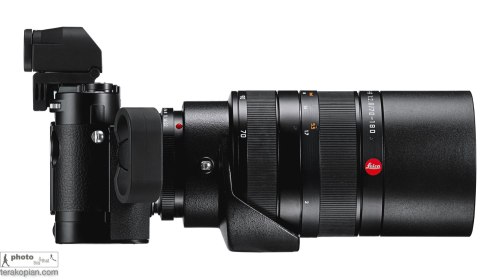
The Leica M. Shown with the multifunctional Handgrip-M, optional finger loop, Leica R-Adapter M (and a Leica R 70-180mm zoom lens) and Leica EVF2 electronic viewfinder. Photo: © Leica

The grip also offers the ability to use a flash when the normal hotshoe is occupied with the EVF2, using a dedicated SCA adapter and hotshoe, duplicating all of the normal hotshoe’s flash abilities.There will also be an extension cable with a flash bar to allow off camera flash using the grip. For those who prefer it, the grip also offers the ability to attach finger loops, first seen on the limited edition Leica M9 Titanium. The Multifunctional Handgrip-M will be £630. For those who may not need these functions, there is also going to be a Standard Handgrip-M for £209. I think for using the much larger and heavier Leica R lenses, a handgrip is going to be an absolute necessity.

Microphone Adapter Set

An absolutely essential aspect of video is great audio. Most people who work in the film business will in fact tell you that sound is 60% of the final product. It’s great to see that the Leica M is going to have the ability to use an external microphone, for which this adapter will be required.

The adapter slots into the hotshoe and plugs into the interface on the rear of the camera, allowing mono and stereo mini jack microphones to be used. Although the press release or the supplied images do not show this, I’m hopeful that there may be the ability to also mount a microphone to the secondary hotshoe available on the Multifunctional Handgrip-M. If this doesn’t turn out to be so, there are many other options already on the market for attaching a microphone, so I’m not too worried, although this would be an extremely neat solution.

Mounting the brilliant yet tiny Rode VideoMic Pro to the Leica M should make for a superb, compact and ultra high quality video shooting setup. I really cannot wait to try this out! The Microphone Adapter Set will be £150.

Leica Press Release

New accessories for LEICA M

Range of accessories for new LEICA M camera expands potential beyond traditional rangefinder capabilities

Photokina, Cologne, 17 September 2012: Leica Camera AG has unveiled a new range of accessories for the Leica M, increasing the potential use of the camera far beyond the classic capabilities of rangefinder photography. The accessories include the Leica R-Adapter M, Leica EVF2 electronic viewfinder, a Multifunctional Handgrip-M with optional finger loops, and a Leica Microphone Adapter Set, all compatible with the new Leica M, which was also announced today.

The Leica R-Adapter M enables almost all Leica R-Lenses ever built to be mounted on the new Leica M. Users can access a list of 20 dedicated profiles – including calibrated imaging workflows and Exif lens recognition – for a range of R-Lenses covering wide-angles, telephoto, zoom and macro options. This comprehensive portfolio opens up new potential for Leica M photographers, including, for example, video recording with Leica R zoom lenses.

The optional accessories range also includes a high-resolution, electronic Visoflex viewfinder. The Leica EVF2 has a resolution of 1.4 megapixels, and offers 90° rotation for capturing images from unusual angles. When mounted on the camera, it displays all significant exposure parameters and allows precise subject assessment, and is particularly useful when shooting in brightly lit surroundings. Using the R- Adapter M, R-Lenses and viewfinder, the Leica M can be used independently from its monitor in the same way as a DSLR camera.

Also new is the Multifunctional Handgrip-M, which features an integrated GPS module. With this handgrip, the user can record precise geographical information in the image’s EXIF data (i.e. geotagging), enabling the photographer to sort and display images according to location. Facilitating the use of a separate flash unit when an accessory viewfinder is mounted on the camera, the Multifunctional Handgrip-M also provides a dedicated SCA hot shoe that communicates with the camera in the same way as its own hot shoe. The Leica SCA Adapter Set is also available for this purpose. The set comprises a flash bar and a spiral cable with a hot shoe. In addition, the Multifunctional Handgrip-M provides a socket for a remote power supply, as well as a DIN/ISO X-sync socket for studio flash systems. An optional remote power unit (DC Adapter) is also available.

Furthermore, the Leica M can be connected directly to a computer workstation via the handgrip’s integrated USB socket. This allows full remote control of the camera with the ‘Leica Image Shuttle’ software provided, and the transfer of image files directly to the computer by USB cable.

The Multifunctional Handgrip-M is also a valuable aid to safe and steady handling of the camera, particularly when shooting with heavier R-lenses. The optional finger loops, which come in three sizes (S, M and L) further enhance safe and steady handling of the camera and lens system. These can be used in combination with the standard Handgrip-M, which is also available as an optional accessory.

Ensuring high quality sound with the 1080p Full HD video capability of the Leica M, a Leica Microphone Adapter Set, consisting of an adapter and stereo microphone, is also available. Other brands of microphone may also be connected using this adapter.

A new ever-ready case completes the range of accessories for the Leica M.

Pricing and availability

The Leica M range of accessories is scheduled to be available in the UK from early 2013 from authorised Leica dealers including the Leica Store Mayfair: www.leica-storemayfair.co.uk, tel: 020 7629 1351. A full list of authorised UK Leica dealers is available at www.leica-camera.co.uk. Suggested retail prices including VAT are as follows:

Leica R-Adapter M – £215 Multifunctional Handgrip-M – £630 Standard Handgrip-M – £209 Optional Finger Loops (S, M, L) – £80
The Leica M

Leica’s new digital M camera

Tonight (8pm GMT) Leica Camera made several announcements for new products at Photokina in Cologne, Germany. This particular announcement, I must admit, has me buzzing with creative energy.

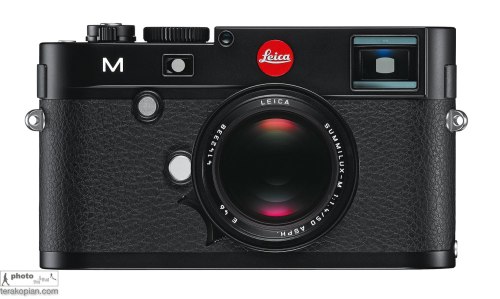
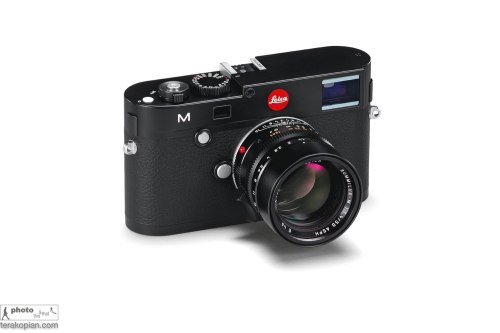
The Leica M. Photo: © Leica

The Leica M is by far the most versatile rangefinder camera ever produced. Although the rangefinder system dates back to the 1950s design used for the Leica M3, which the new Leica M also incorporates, it has other methods of focusing as well. It’s important to note that for purists, the rangefinder system works as it has done before on the M cameras and is not compromised.

The Leica M, Leica R-Adapter M (and an Leica R 28-90mm zoom lens) and Leica EVF2 electronic viewfinder. Photo: © Leica

The new additional focusing systems is Live View. This means that the photographer uses the rear screen, a 3”, 920,000 pixel screen which is covered by tough Gorilla Glass or the new Leica EVF2 optional electronic 1.4 megapixel viewfinder, to view the image through the lens. This opens up huge possibilities of mounting the Leica R range of lenses using the also announced Leica R-Adapter M. This opens up the world of telephoto, zoom and macro lenses (and although not mentioned on the press release, I imagine also fisheye photography. As with the world of Micro 4/3, I’m guessing that there will be the opportunity for third parties to make adapters, allowing all sorts of lenses from various manufacturers, even including tilt and shift and PL mount, to be mounted on the new Leica M. The huge advantage though here over every other camera in the market though is that the Leica M is full frame). The Live View has a magnification function and also focus peaking functions to fine tune focusing.

My wish since getting my Leica 50mm f0.95 Noctilux ASPH has been to use it to shoot video, and I’m thrilled to see that full 1080p HD video is available on the new Leica M. To be able to shoot video using Leica M and R lenses is going to be truly magical and I can’t wait to get my hands on this camera! The camera offers 1080p and 720p, at 24fps and 25fps, and 640×480(VGA) at 30fps shooting resolutions, in Motion jpeg or Quicktime format. For audio there is an external mono or stereo mini-jack microphone adapter available. Most importantly for audio, along with auto level adjustment, there is full manual gain control as well, even whilst filming; this is a great and needed facility.

The Leica M. Photo: © Leica

The Leica M, rear view. Photo: © Leica

The Leica M, top view. Photo: © Leica

Naturally the M9’s CCD chip could not support Live View, for which a CMOS chip is needed. Leica have collaborated with CMOSIS and designed a new chip for the Leica M. The full frame Leica Max CMOS image sensor has 24 megapixels and a sensitivity range of 200 to 6400 ISO (up from the M9’s 160 to 2500 ISO), with a pull 100 ISO setting. The new digital processing engine is the Leica Maestro chip, also deployed in the Leica S2, which promises higher image quality and speed. The entire digital workflow of images is now under Leica’s control which promises even higher imaging capabilities than previously achieved.

The Leica M. Shown with the multifunctional Handgrip-M, which features an integrated GPS module and dedicated SCA hot shoe. Photo: © Leica

Having worked with my M9 and M9-P extensively for years, occasionally in the rain, I’ve never had a problem with moisture ingress. The good news is that Leica have made mention of special rubber seals to protect the camera from spray, dust and moisture, which makes me thing it’s sealed even better against the elements.

The Leica M in silver chrome finish. Photo: © Leica

The Leica M will be available in black or silver chrome and is expected in the UK in early 2013 with a suggested retail price of £5,100 including VAT.

Thoughts

Having been a Leica photographer since 1989, and using the Leica M9 for three years now, I’m really excited by the specification and look of this new camera. It’s by far my favourite camera system to use and accounts for around 80% of my work. I also use Canon’s DSLR system for the rest of my work, when needing telephoto, macro, fisheye and tilt and shift lenses, and also for video. I can see the Leica M taking over all of these functions, leaving the Canon DSLRs for work that needs fast moving AF and fast drive speeds.

Leica have taken the classic Leica M camera, with it’s discreet look and size, kept it’s fabulously traditional operating interface of shutter dial and aperture ring, yet incorporated Live View and full 1080p HD video, with all the needed options, in practically the same body.  At a quick glance, it’s impossible to tell the difference with the M9 (the Leica M is 5mm taller and is 95g heavier), yet the Leica M has so much more to it. It has the best of the traditional Leica and the best of modern digital photography and video. The announced accessories (see the separate post) support and add to the camera’s abilities and are a perfect match. It’s a brilliant achievement and I really cannot wait to shoot with this camera; I have a strong suspicion that it will be awesome!

Videos


Leica Press Release

The LEICA M: a new milestone in digital rangefinder technology

Most versatile rangefinder camera yet includes high performance sensor and processing technology, three focusing options including Live View, Full HD video recording and compatibility with Leica R-Lenses

Photokina, Cologne, 17 September 2012: Leica Camera AG has today announced a groundbreaking milestone in the history of the Leica rangefinder system: the Leica M. As the first camera to implement a newly designed and constructed CMOS image sensor, and to feature additional focusing methods and functions such as Live View and Full HD video capability, this is the most versatile model ever in the history of the Leica rangefinder camera, and sets entirely new standards.

The Leica M combines the advantages of digital innovation with rangefinder technology that has been continuously perfected over decades. At the same time, it remains true to the legendary values of the M- System, while expanding the opportunities offered by rangefinder photography – and, for the first time, offers compatibility with Leica-R legacy lenses.

The Leica M also marks the beginning of a new era in Leica’s product naming policy. In future, Leica M and S model names will omit the number suffix to emphasise the long-term significance and enduring value of the respective systems.

The Leica M is the first in a long line of Leica rangefinder cameras to feature a completely new development in sensor technology: the Leica Max CMOS image sensor. This 24 megapixel, full 35mm format sensor was designed and constructed in collaboration with CMOSIS specifically for the camera and its use with Leica M- and R-Lenses. This new development successfully transfers the characteristic advantages of CCD sensors, such as natural and brilliant colour rendition and impressive reproduction of detail, to a CMOS sensor.

In combination with the high-performance Leica Maestro processor, which is also employed in Leica S cameras, this new full format sensor ensures maximum image quality and speed. All elements in the image creation chain, from the lens to the resulting image file, are now under complete control of Leica’s engineers, guaranteeing the ultimate in image performance and quality. A further key feature is the low power consumption of the components which, in conjunction with the high battery capacity, ensures outstanding performance over a long shooting period.

The Leica M offers a multitude of new features. The first of these are Live View and Live View Focus, where image composition can take place in real time with the view of the subject through the lens. The sharpness, exposure and colour content of images can be precisely assessed on the camera’s large, 3”, high-resolution 920,000 pixel screen. The glass covering plate of the monitor screen is manufactured from particularly tough and scratch-resistant Corning® Gorilla® Glass.

Thanks to the Live View function, photographers now have access to entirely new opportunities that, in combination with the outstanding performance of Leica M- and R-Lenses, go far beyond the classic capabilities of rangefinder photography. This applies particularly in macro and telephoto photography, and allows even more discreet shooting. In combination with M- and R-Lenses, the camera’s new 1080p Full HD video mode also opens up completely new possibilities.

The Leica M offers two additional focusing methods that can be activated quickly and easily with the new focus button, giving M-Photographers even more options for capturing outstandingly sharp images. The ‘Live View Zoom’ option enables up to 10x magnification for precise assessment of the sharpness of subject details or the close focusing limit. The second aid to focusing is ‘Live View Focus Peaking’. With this feature, contours of the subject are automatically displayed as red lines to allow simple and convenient focus assessment. Focusing precision can be reviewed on the basis of the intensity of the lines displayed.

All new features of the camera have been optimised for the Leica rangefinder system, and ensure the renowned dependability of the Leica M in all shooting situations, from available light photography to discreet and aesthetic fine-art image composition. In line with the principles of the M-Philosophy, all functions and features are designed and constructed for absolute robustness and a long working life. The top and base plates of the Leica M are machined from solid brass, and the full-metal chassis is a completely self-contained, die-cast element manufactured from high-strength magnesium alloy. Special rubber seals protect the camera body against dust, spray and moisture.

The new rangefinder camera is also a typical ‘M’ thanks to its intuitive handling, with direct manual setting options and fast access to functions. The new layout and user-friendly operation of the menu interface guarantee a clear and uncomplicated overview of the camera settings. Dedicated button controls have been provided for the Live View and new focusing functions, and Live View Zoom and Live View Focus Peaking can be selected with the new focus button on the front of the camera. User profiles can be programmed with any camera and shooting settings, stored under a specific, user-selected name, and accessed quickly whenever required for particular situations. The profiles can also now be saved to an SD memory card. For improved comfort when shooting, the Leica M features an ergonomically formed thumb rest with an integrated setting dial at the top right, on the back of the top plate. This ensures the camera can be held securely in even the most demanding situations.

A wide range of optional accessories is available for the new Leica M. Of particular note is the new Leica R-Adapter M, which allows almost all Leica R-Lenses ever built to be mounted on the camera. Further accessories include the Leica EVF 2 (Visoflex electronic viewfinder) and the Multifunctional Handgrip-M with an integrated GPS module that, in combination with optional finger loops in various sizes (S, M and L), helps to ensure safe and steady handling of the camera and lens system. The range also includes a Leica Microphone Adapter set to ensure high quality sound with video recordings.

The Leica M will be available in a discreet black paint version, or an elegant silver chrome finish.

Pricing and availability

The Leica M in black paint or silver chrome finish is scheduled to be available in the UK at a suggested retail price of £5,100 inc VAT from early 2013, from authorised Leica dealers including the Leica Store Mayfair: www.leica-storemayfair.co.uk, tel: 020 7629 1351. A full list of authorised UK Leica dealers is available at www.leica-camera.co.uk.

Leica warranty and added value services

The Leica M comes with a two-year warranty and a one-year Leica UK ‘Passport’ (complimentary accidental damage cover). UK customers are also welcome to visit the Leica Store and Akademie in Mayfair, London, for a complimentary demonstration or training session on the features of the camera. Technical support by telephone or in person is available via Leica’s London-based Client Care department.

The Leica M in silver chrome finish. Photo: © Leica

SD Card Holder

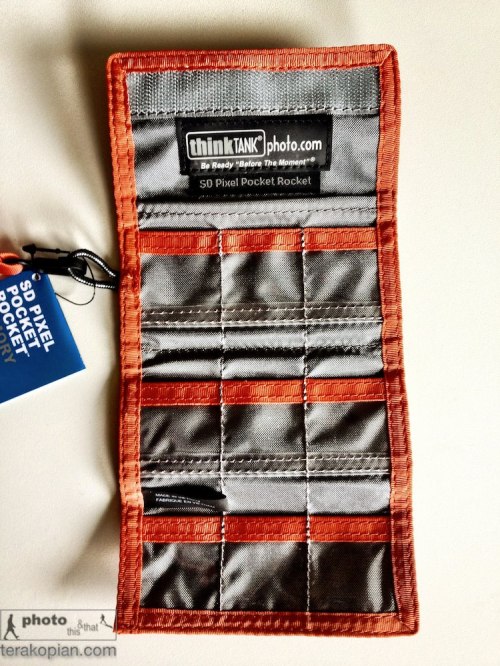
SD Pixel Pocket Rocket

It’s often the little things that make life so much easier for the working photographer. Carrying memory cards has always been an issue. Personally, I found the perfect way to carry mine when Think Tank Photo came out with the Pixel Pocket Rocket; a way to carry ten CF cards and some business cards, in one nicely made, slim, wallet. The cards themselves came together in their individual pockets when the wallet was rolled up, making the wallet extremely rigid.

The new Think Tank Photo SD Pixel Pocket Rocket. September 14, 2012. Photo: Edmond Terakopian

As we now shoot much more SD cards, the company has thankfully addressed that issue too with their new SD Pixel Pocket Rocket which can accomodate nine SD cards as well as some business cards. Any digital Leica M, Micro 4/3, Sony NEX or small DSLR photographer is going to love this. Small, compact, well made and extremely useful and usable. Lastly, as with the other Pixel Pocket Rockets, it has a loop which makes attaching it to the inside of your bag or pouch extremely easy.

The new Think Tank Photo SD Pixel Pocket Rocket, which can carry nine SD cards. September 14, 2012. Photo: Edmond Terakopian

My workflow is that I put my empty, formatted cards in face up (with the logo on the front showing). When I’ve shot a card, it goes into the wallet face down. That was I know which cards are used and which are blank.

It’s a simple accessory, but I can’t emphasise just how totally useful this is; get one!

For the UK, check out the local distributor Snapperstuff for your local retailer or to order direct. Other countries can check out Think Tank Photo’s website to find their relevant source.

Horst Faas Exhibition & Memorial

AP’s Legendary Photographer’s Hong Kong Exhibition & London Memorial

Vietnam 1967 — AP photographer Horst Faas, with his Leica cameras around his neck, accompanies U.S. troops in War Zone C. (AP Photo)

Earlier this year, May 10th, saw the sad passing of one of our time’s greatest photojournalists and picture editors; the legendary Horst Faas. Best known for his amazing images from Vietnam, Horst was a double Pulitzer Prize winner. As AP chief photographer for Southeast Asia and picture editor, he was also instrumental in getting Nick Ut’s powerful ‘Napalm Girl’ on the AP wire, along with another definitive image from that war, Eddie Adams’ Vietcong prisoner execution.

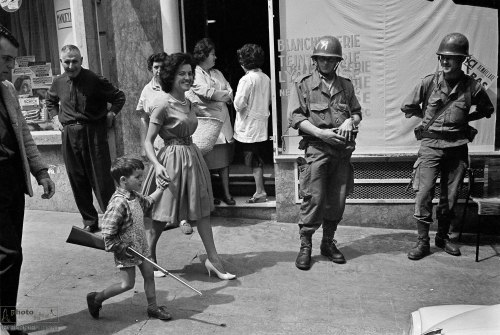
A boy carries a toy rifle as he walks with his mother past French soldiers in battle gear at the Bastille Palace in Oran, Algeria, May 4, 1962. Algeria’s eight-year battle for independence had reached a tense cease-fire pending a July referendum. (AP Photo/Horst Faas)

The sun breaks through dense jungle foliage in early January 1965, around the embattled town of Binh Gia, 64 km east of Saigon, as South Vietnamese troops, joined by U.S. personnel, rest after a cold, damp night of waiting in an ambush position for a Viet Cong attack that didn’t come. One hour later, as the possibility of an overnight attack faded, the troops moved out for another hot day hunting the elusive communist guerrillas. (AP Photo/Horst Faas)

Exhibition

The Foreign Correspondent’s Club, Hong Kong will be have a reception and exhibition on Horst’s work on September 4th. For further details, visit the FCC website. The exhibition of images will remain on display for the foreseeable future.

Memorial

In London, on October 18th at 11.30am, we will be having a memorial service for Horst. The service will be at St Brides Church, Fleet Street.

South Vietnamese civilians, among the few survivors of two days of heavy fighting, huddle together in the aftermath of an attack by government troops to retake the post at Dong Xoai, June 1965. Just a few of the several hundred civilians who sought refuge at the post survived the two day barrage of mortars and bombardment. After the government recaptured Dong Xoai, the bodies of 150 civilians and some 300 South Vietnamese soldiers were discovered. (AP Photo/Horst Faas)

The Taylor Wessing Prize 2012

The Taylor Wessing Photographic Portrait Prize 2012

It’s perhaps one of the most interesting awards to enter; prestigious to win as the works are hung at the National Portrait Gallery, yet one of the most difficult & expensive to enter, as prints are required, complete with protective sleeves. As large print sizes are needed (your entry will be the print that is hung if you win), having anything smaller than A2 in size means your work may simply not be noticed by the judges, compared to huge prints entered by others which may dwarf smaller prints. In this day and age of conservation, it can be quite a wasteful effort putting together six A1 (or bigger) images purely for judging.

Past years have brought surprising results in images chosen and sometimes shocking winners. It is though a great competition and generally always shows off some great work.

Alas it is a competition that I failed to get selected for, and after being requested by friends to do so, here I share my six entries into this year’s Taylor Wessing Photographic Portrait Prize 2012 .

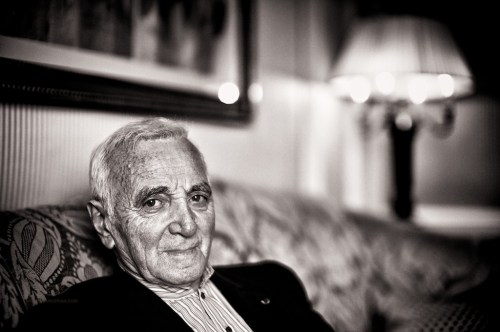
Portraits of Armenian singer Charles Aznavour in his suite at the Ritz Carlton Hotel in New York, NY, USA, ahead of an event by the Fund For Armenian Relief (FAR); 20 Years Of Armenian Independence Honoring Mr Aznavour. May 20, 2011. Photo: Edmond Terakopian

Grandmother for the first time. Photo: Edmond Terakopian

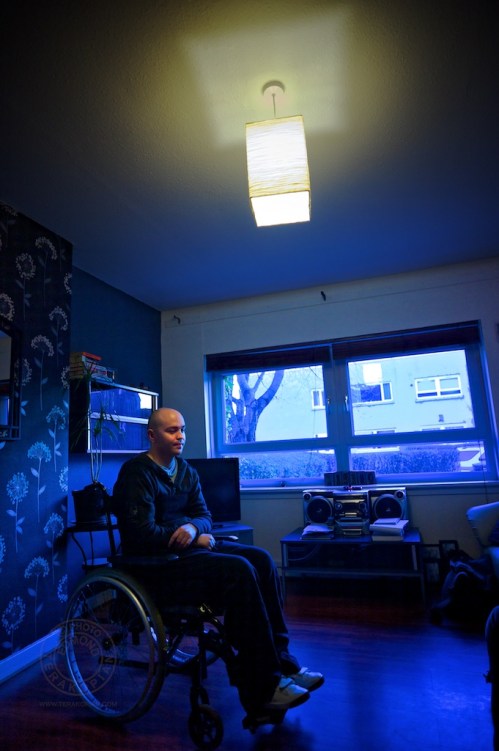
Knife violence in Glasgow, Scotland. Victim of a stabbing in the neck, quadriplegic Scott Breslin (26). He was stabbed when 16 and has spent his life in a wheelchair, paralysed from the neck down. February 10, 2011. Photo: Edmond Terakopian

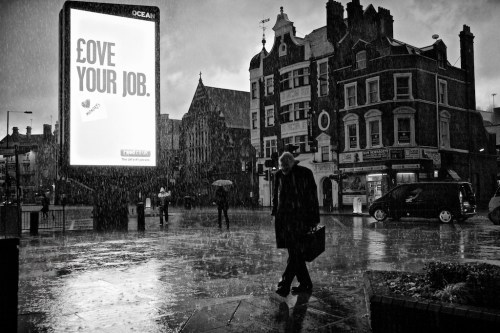
The businessman. A heavy downpour of rain soaks pedestrians as they pass an illuminated advertising sign saying “Love Your Job”. Hammersmith, London. January 14, 2011. Photo: Edmond Terakopian

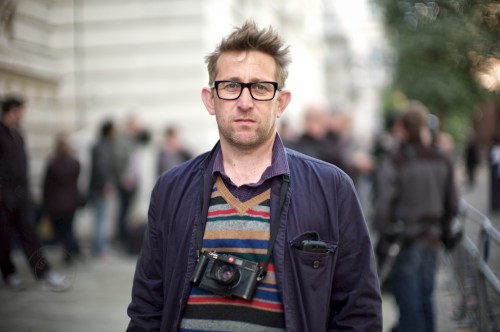
Photographer Jeff Moore in Downing Street, ahead of a visit by US President Barack Obama. London. April 24, 2011. Photo: Edmond Terakopian

Virgin Atlantic celebrate the launch of their flights to Vancouver. Fairmont Pacific Rim cocktail reception. Sir Richard Branson, founder and President of Virgin Atlantic Airways and members of the cabin crew. Vancouver, British Columbia, Canada. May 25, 2012. Photo: Edmond Terakopian

Nick Ut’s Iconic Napalm Girl Photo

40 Years On From AP’s “Napalm Girl” Photograph From The Vietnam War

Anyone with any interest in history or photography will know the image. It’s a photograph that grabs you and never leaves you once you’ve seen it. The image taken by AP’s Nick Ut on June 8th, 1972, shows crying children running away from their village after a Napalm aerial attack by South Vietnamese Forces.

In this June 8, 1972 file photo, crying children, including 9-year-old Kim Phuc, center, run down Route 1 near Trang Bang, Vietnam after an aerial napalm attack on suspected Viet Cong hiding places as South Vietnamese forces from the 25th Division walk behind them. A South Vietnamese plane accidentally dropped its flaming napalm on South Vietnamese troops and civilians. From left, the children are Phan Thanh Tam, younger brother of Kim Phuc, who lost an eye, Phan Thanh Phouc, youngest brother of Kim Phuc, Kim Phuc, and Kim’s cousins Ho Van Bon, and Ho Thi Ting. AP Photo/Nick Ut

It’s a disturbing image; one that shakes us to our core. The main subject in the shot is nine year old Kim Phuc; running, , wailing the words “Too hot, too hot”, crying and naked. As she was hit by the burning Napalm, it raced up her body and incinerated her clothing on contact. It burnt through the layers of her skin all over her back, leaving her heavily scarred to this day.

This moment brought together photographer and subject, not only to create the most powerful image from the Vietnam war but it also united a nine year old girl who would certainly have died, with her saviour; the young 21 year old Vietnamese photographer, Nick Ut. He drove Phuc to a small hospital, where he was told the small girl was too far gone to save. He showed them his American press badge and demanded the doctors treat the girl and left, assuring them that the girl would not be forgotten. “I cried when I saw her running,” said Ut. “If I don’t help her — if something happened and she died — I think I’d kill myself after that.”

AP staff photographer Nick Ut in Vietnam during the 1970s. AP Photo/Nick Ut

Although AP had strict rules about nudity, legendary AP photo editor Horst Faas broke the rules as soon as he saw the image, as it’s news value far outweighed any policy.

A few days later, Christopher Wain from ITN found out that the little girl had survived. He was on the scene and had given her water and doused her burning back with water from his canteen. He fought to have her transferred to a speciality unit run by the Americans. Although she had 35% of her body scorched with 3rd degree burns, she survived and 13 months later, after multiple painful skin grafts and surgeries, she was allowed to leave the Barsky facility.

Kim Phuc

Photographer Nick Ut with Phan Thi Kim Phuc; the girl in iconic Vietnam War photo “Napalm Girl”. Vietnam Veterans Memorial in Washington D.C. AP Photo/Nick Ut

Kim Phuc, now 49, says “I really wanted to escape from that little girl. But it seems to me the picture didn’t let me go”. After years of difficulty, feeling like a victim of war, then finding love, and finally defecting to Canada, the picture has changed it’s meaning for her. “Most of the people, they know my picture but there’s very few that know about my life,” she said. “I’m so thankful that … I can accept the picture as a powerful gift. Then it is my choice. Then I can work with it for peace.”

To help children caught up in war, she has created The Kim Foundation.

Nick Ut

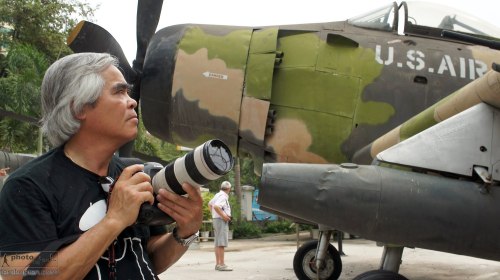
AP staff photographer Nick Ut views an A-1 Skyraider attack aircraft, as used in Vietnam, fitted with Napalm. April 2010. AP Photo/Nick Ut

Over 40 years have passed since AP’s most iconic image was taken, and Nick Ut, who won a Pulitzer Prize for the image, is very much a full time AP staff photographer, now based in LA. In August this year, Nick visited the AP offices in NY to see his original negatives for the third time ever, since having processed it in the darkroom in Vietnam.

During a visit to the Associated Press headquarters photo library in New York, Aug. 10, 2012, AP staff photographer Nick Ut holds a plastic sleeve containing the original “Napalm Girl” negative, for which he won the 1973 Pulitzer Prize for Spot News Photography. (AP Photo)

To find out more about the background to this amazing image and the surrounding story, I thoroughly recommend this AP article.

Here’s a must watch interview with Nick Ut, describing the events of the day, with some stunning photography.


All images ©AP