Tag Archives: reportage

The AMAHORO Generation

the youth of Rwanda talk peace

Orphan at the age of 1 month when both her parents were butchered during the genocide, Miraculously Germaine Mukagasana survived because a neighbor rescued her. She recentlyattended a beauty school sponsored by International Alert but now finds it difficult to secure employment because she does not have the funds for an internship, a common custom for graduates.  Perched on her bed tented by mosquito netting she shines with optimism. She said: “Peace means happiness” Kimironko, Rwanda, May 26, 2014. Photo: Carol Allen-Storey

Orphan at the age of 1 month when both her parents were butchered during the genocide, Miraculously Germaine Mukagasana survived because a neighbor rescued her. She recentlyattended a beauty school sponsored by International Alert but now finds it difficult to secure employment because she does not have the funds for an internship, a common custom for graduates. Perched on her bed tented by mosquito netting she shines with optimism. She said: “Peace means happiness” Kimironko, Rwanda, May 26, 2014. Photo: Carol Allen-Storey

Savagery took over the mind, they went out hunting as kindred spirits, they became a ferocious barbaric species. They were the Interahamwe, the infamous killers of the 1994 Rwandan Genocide. They were also the youth of the nation.

The Ntarama Church is the site where some of the most brutal killings of the 1994 Rwandan genocide took place. The church at Ntarama was seen as a safe place by almost 5000 people, many of whom were women and children and who went there for sanctuary. But Ntarama was not a safe place. The victims of the genocide remain there, their bones still strewn with lifeless chaos where they fell over 20 years ago. Their belongings cover the floor; clothes, suitcases, a child's white sock - the last remnants of a desperate flight for life. Ntarama Memorial Church, Ntarama, Rwanda,  June 1, 2014. Photo: Carol Allen-Storey.

The Ntarama Church is the site where some of the most brutal killings of the 1994 Rwandan genocide took place. The church at Ntarama was seen as a safe place by almost 5000 people, many of whom were women and children and who went there for sanctuary. But Ntarama was not a safe place. The victims of the genocide remain there, their bones still strewn with lifeless chaos where they fell over 20 years ago. Their belongings cover the floor; clothes, suitcases, a child’s white sock – the last remnants of a desperate flight for life. Ntarama Memorial Church, Ntarama, Rwanda, June 1, 2014. Photo: Carol Allen-Storey.

Two decades on victim and perpetrator are still coping with the aftermath of the 100 days the world chose to ignore.
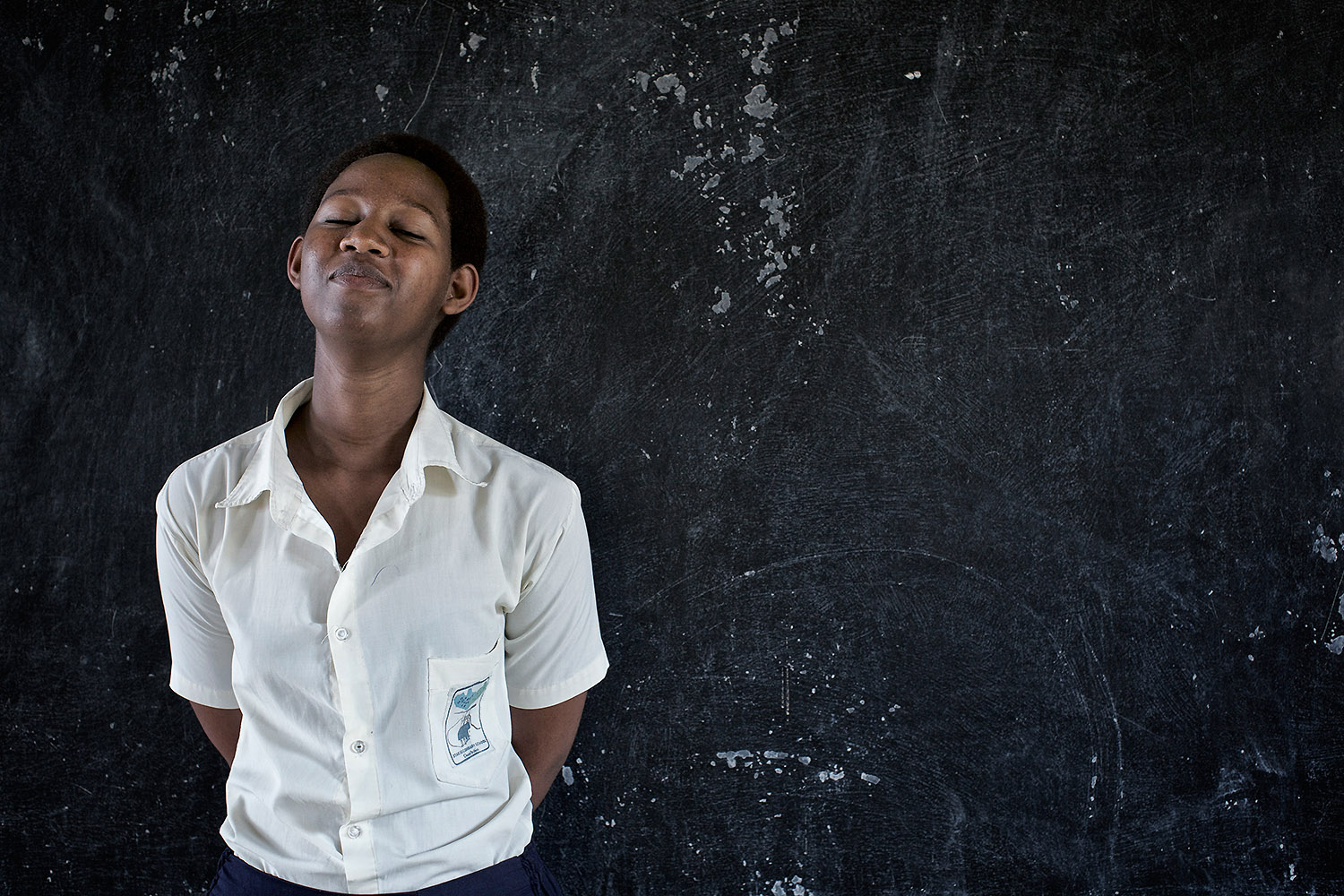
Portrait of Jeanne Unutomi, student at the STAR Secondary School, 20 years old, defining Amahoro, Peace. Masaka, Rwanda, June 6, 2014. Photo: Carol Allen-Storey.

Portrait of Jeanne Unutomi, student at the STAR Secondary School, 20 years old, defining Amahoro, Peace. Masaka, Rwanda, June 6, 2014. Photo: Carol Allen-Storey.

Born during the genocide era, Rwandan’s youth speak of their aspirations, their hope for peace in the aftermath of a brutal war that fractured their nation. They are the generation that wants to be acknowledged as Rwandese, united in purpose, eliminating historical tribal labels of Hutu and Tutsi. They want their legacy to be known as the Amahoro generation, the peace brokers; where the youth of their parent’s generation were the brutal warriors.

The Kigali School in Nyanga, a remote region in Rwanda was formed less than a year ago and boasts more than 50 members. Gathered together the students dialogue about the causes of the genocide,and the importance of creating a mind-set of being a united nation, not a divided tribe which fueled the hatred between Hutu and Tutsi. There were many definitions of peace but a universal theme stated was: “Peace means respect”. Nyange, Rwanda, May 29 2014. Photo: Carol Allen Storey.

The Kigali School in Nyanga, a remote region in Rwanda was formed less than a year ago and boasts more than 50 members. Gathered together the students dialogue about the causes of the genocide,and the importance of creating a mind-set of being a united nation, not a divided tribe which fueled the hatred between Hutu and Tutsi. There were many definitions of peace but a universal theme stated was: “Peace means respect”. Nyange, Rwanda, May 29 2014. Photo: Carol Allen Storey.

Amahoro, means peace; it is the youth’s anchor to pursue their destiny.

To mark the 20th anniversary of the Rwandan genocide and to coincide with the UN International Day of Peace on 21 September, International Alert present The Amahoro Generation: The youth of Rwanda talk peace.

The exhibition, by award-winning photojournalist Carol Allen-Storey, documents the stories of young people born amid the horrors of the Rwandan genocide, and their hopes for ‘amahoro’ – peace. It is an ideal rooted in the wisdom that without peace, there is no future. “Peace unifies,” says Angelique, aged 21 from Gatumba. “Without peace, people remain divided.”

The Amahoro Generation by Carol Allen Storey for International Alert. The outdoor exhibition is at the Bernie Spain Gardens, Riverside Walksway (by Oxo Tower Wharf), South Bank, London. September 18, 2014. Photo: Edmond Terakopian
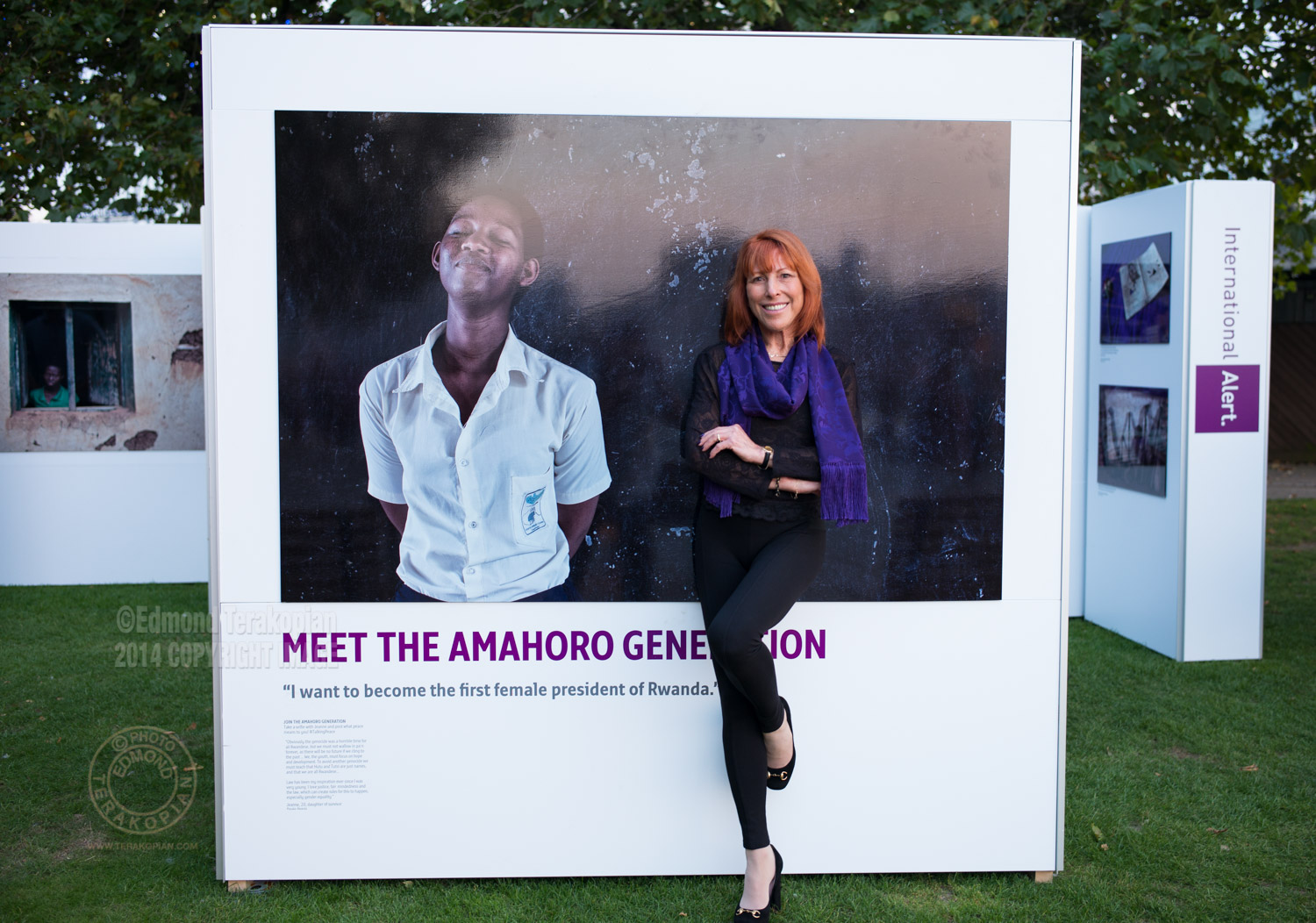
The Amahoro Generation by Carol Allen Storey for International Alert. The outdoor exhibition is at the Bernie Spain Gardens, Riverside Walksway (by Oxo Tower Wharf), South Bank, London. September 18, 2014. Photo: Edmond Terakopian

The Amahoro Generation by Carol Allen Storey (pictured) for International Alert. The outdoor exhibition is at the Bernie Spain Gardens, Riverside Walksway (by Oxo Tower Wharf), South Bank, London. September 18, 2014. Photo: Edmond Terakopian

The Amahoro Generation by Carol Allen Storey (pictured) for International Alert. The outdoor exhibition is at the Bernie Spain Gardens, Riverside Walksway (by Oxo Tower Wharf), South Bank, London. September 18, 2014. Photo: Edmond Terakopian

“I was struck by the collective view of these young people that they must ensure there is never another genocide – and to do so, learn to forgive and fuel their energy into building a united and prosperous country,” says photographer Carol Allen-Storey.

Dan Smith, Secretary General of International Alert  and Carol Allen Storey. The Amahoro Generation by Carol Allen Storey for International Alert. The outdoor exhibition is at the Bernie Spain Gardens, Riverside Walksway (by Oxo Tower Wharf), South Bank, London. September 18, 2014. Photo: Edmond Terakopian

Dan Smith, Secretary General of International Alert and Carol Allen Storey. The Amahoro Generation by Carol Allen Storey for International Alert. The outdoor exhibition is at the Bernie Spain Gardens, Riverside Walksway (by Oxo Tower Wharf), South Bank, London. September 18, 2014. Photo: Edmond Terakopian

The outdoor exhibition, “The Amahoro Generation”, is on display from the 18th of September to the 2nd of October 2014 (now extended to the 2nd of November 2014; see addendum below) on the South Bank in London at The Bernie Spain Gardens, Riverside Walkway (by Oxo Tower Wharf), South Bank, London SE1 9PP and is free to attend.

Addendum: Some fantastic news; the Amahoro exhibition has been extended for anther 4 weeks. The South Bank have said that responses have been phenomanal and they requested an extended run. The exhibition has been moved in the court yard between OXO Tower and the Barge House and is on until the 2nd of November 2014.

Earlier this year, Carol spent a month in Rwanda, travelling across the country with her Canon 5D MkII cameras documenting the commemoration and interviewing the youth. The exhibition was printed by built by Standard8, designed by Stuart Smith and post produced by Edmond Terakopian.

The Amahoro Generation by Carol Allen Storey for International Alert. The outdoor exhibition is at the Bernie Spain Gardens, Riverside Walksway (by Oxo Tower Wharf), South Bank, London. September 18, 2014. Photo: Edmond Terakopian
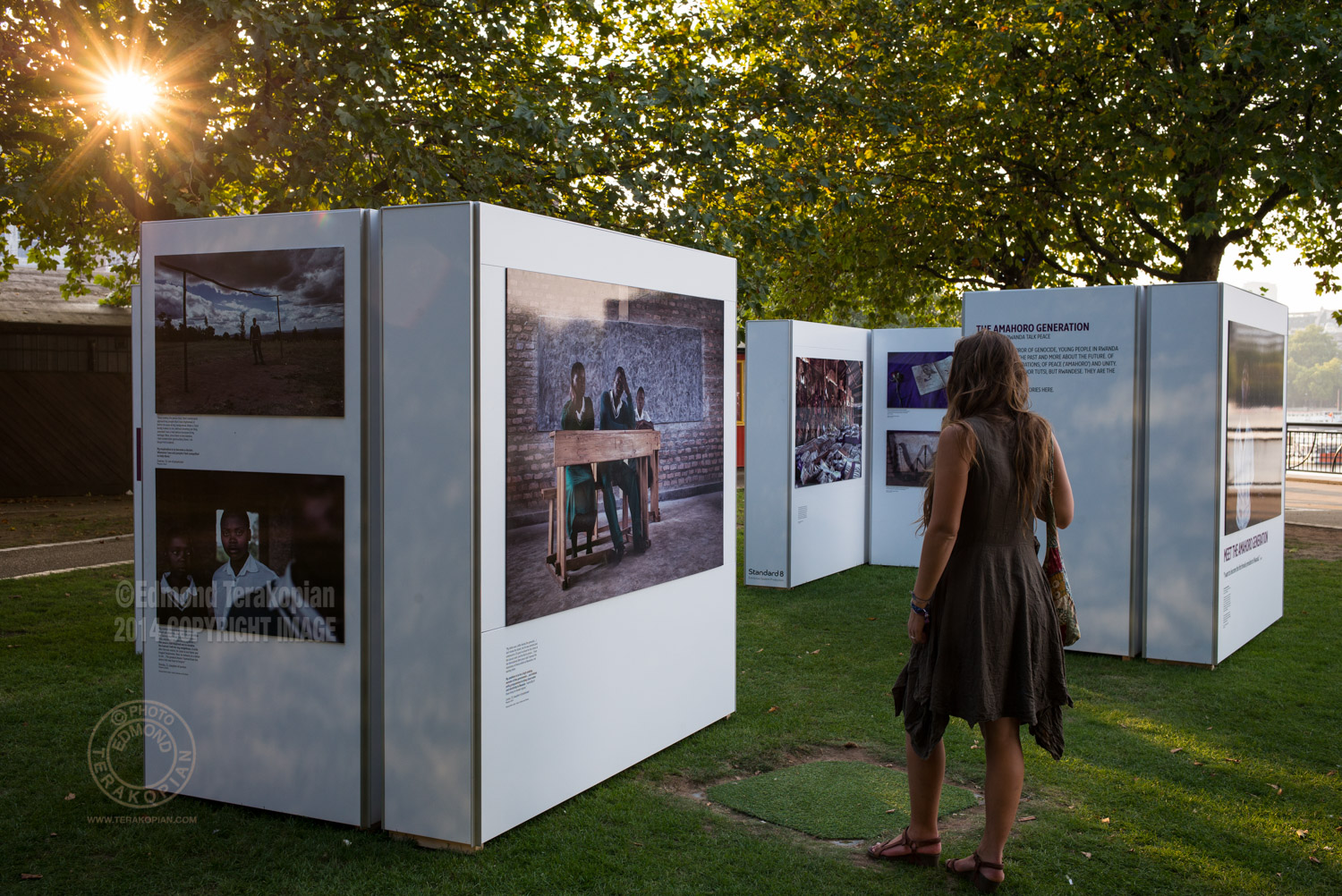
The Amahoro Generation by Carol Allen Storey for International Alert. The outdoor exhibition is at the Bernie Spain Gardens, Riverside Walksway (by Oxo Tower Wharf), South Bank, London. September 18, 2014. Photo: Edmond Terakopian
The Amahoro Generation by Carol Allen Storey for International Alert. The outdoor exhibition is at the Bernie Spain Gardens, Riverside Walksway (by Oxo Tower Wharf), South Bank, London. September 18, 2014. Photo: Edmond Terakopian

The Amahoro Generation by Carol Allen Storey for International Alert. The outdoor exhibition is at the Bernie Spain Gardens, Riverside Walksway (by Oxo Tower Wharf), South Bank, London. September 18, 2014. Photo: Edmond Terakopian

DataColor Webinar Recording

Reportage & Street Photography

For those who couldn’t join in live on my webinar earlier this week, courtesy of DataColor, here’s a recording of the webinar. It lacks the Q&A which went on for around 30 minutes after, so feel free to post questions here instead.

Sebastião Salgado – TED Talk

The silent drama of photograph

A wonderful TED talk by my favourite photographer, Sebastião Salgado, where he discusses his work and what led him towards creating his most recent project, Genesis.


Further Reading:

Salgado’s Genesis Project.

Sebastião Salgado: Genesis

The Unspoilt Planet

Sebastião Salgado: Genesis from Edmond Terakopian on Vimeo.

In 2004, Sebastião began the Genesis project, aimed at presenting the unblemished face of nature and humanity. Genesis consists of a series of landscape and wildlife photographs, as well as photographs of human communities that continue to live in accordance with their ancestral traditions and cultures, shot across 32 countries, over an eight year period. This body of work was conceived as a potential path to humanity’s rediscovery of itself in nature.

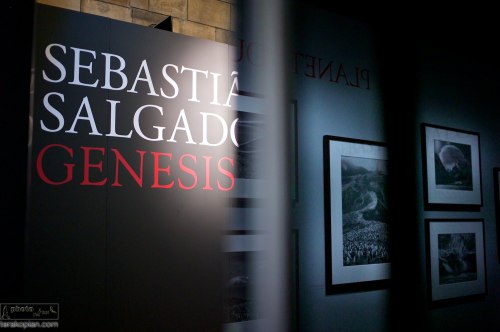
World premiere of Sebastiao Salgado's Genesis Exhibition at the Natural History Museum in London, UK. April 09, 2013. Photo: Edmond Terakopian

World premiere of Sebastiao Salgado’s Genesis Exhibition at the Natural History Museum in London, UK. April 09, 2013. Photo: Edmond Terakopian

Sebastião Salgado’s photographic exhibition Genesis is unveiled for its world premiere at the Natural History Museum on Thursday 11 April (and will run until September 8th, 2013). Edited, designed and curated by Lélia Wanick Salgado, the exhibition includes 200 epic black-and-white photographs that celebrate the majesty of nature and examine the balance of human relationships with our fragile planet.

World premiere of Sebastião Salgado's Genesis Exhibition at the Natural History Museum in London, UK. April 09, 2013. Photo: Edmond Terakopian

World premiere of Sebastião Salgado’s Genesis Exhibition at the Natural History Museum in London, UK. April 09, 2013. Photo: Edmond Terakopian

Accompanying the exhibition is an equally amazing book published by Taschen. For the collector, there are bigger, limited edition volumes, with photographic prints.

Since elephants are hunted by poachers in Zambia, they are scared of humans and vehicles. Alarmed when they see an approaching car, they usually run quickly into the bush.  Kafue National Park. Zambia. July and August 2010. Photo: © Sebastião SALGADO / Amazonas images/nbpictures

Since elephants are hunted by poachers in Zambia, they are scared of humans and vehicles. Alarmed when they see an approaching car, they usually run quickly into the bush. Kafue National Park. Zambia. July and August 2010. Photo: © Sebastião SALGADO / Amazonas images/nbpictures

Speaking about the exhibition, Sebastião Salgado commented, ‘Genesis is about beginnings. It is about the unspoiled planet, the most pristine parts, and a way of life that is traditional and in harmony with nature. I wanted to present places that were untouched and remain so to this day.

World premiere of Sebastião Salgado's Genesis Exhibition, Natural History Museum, London. April 09, 2013. Photo: Edmond Terakopian

World premiere of Sebastião Salgado’s Genesis Exhibition, Natural History Museum, London. April 09, 2013. Photo: Edmond Terakopian

I want people to see our planet in another way, to feel moved and be brought closer to it. I want them to become more conscious of the environment, to feel respect for nature because this is something that is relevant to everyone.’

Iceberg between Paulet Island and the South Shetland Islands on the Antarctic Channel.  At sea level, earlier flotation levels are clearly visible where the ice has been polished by the ocean’s constant movement. High above, a shape resembling a castle tower has been carved by wind erosion and detached pieces of ice.  The Antarctic Peninsula. January and February 2005. Photo: © Sebastião SALGADO / Amazonas images/nbpictures

Iceberg between Paulet Island and the South Shetland Islands on the Antarctic Channel. At sea level, earlier flotation levels are clearly visible where the ice has been polished by the ocean’s constant movement. High above, a shape resembling a castle tower has been carved by wind erosion and detached pieces of ice. The Antarctic Peninsula. January and February 2005. Photo: © Sebastião SALGADO / Amazonas images/nbpictures

Sebastião Salgado was a driving force behind me taking up photography as a career. When I first saw his image, often referred to as “the crucifix” from the open gold mine in Brazil, I was totally stunned; my mind and eyes were opened like never before, as I discovered a new way of seeing and an epic way of using a camera to convey a story. Personally I have never looked back. They say, one should never meet one’s heroes as disappointment is guaranteed. I’m thankful to say that when I met Sebastião Salgado and his wife, curator and editor Lélia Wanick Salgado at their book signing in Taschen’s London store, it was a special moment. Genuinely lovely, passionate and talented with absolute modesty and elegance. My career has always been inspired by the work and now I’m glad to say that it continues to be inspired by the person too.

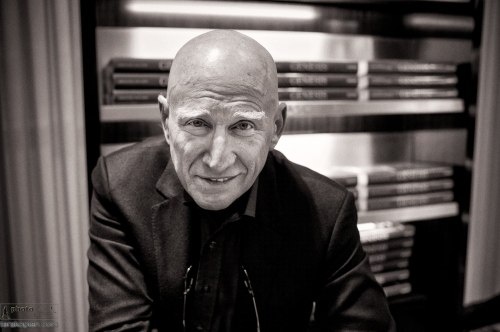
Sebastião Salgado: Genesis book signing.   Photographer Sebastião Salgado. TASCHEN Store London, 12 Duke of York Square, London. April 10, 2013. Photo: Edmond Terakopian

Sebastião Salgado: Genesis book signing. Photographer Sebastião Salgado. TASCHEN Store London, 12 Duke of York Square, London. April 10, 2013. Photo: Edmond Terakopian

As a press launch (just like a private view) is never the best time to see an exhibition; one’s always busy working. From the parts of the exhibition I did manage to see, I cannot recommend this exhibition highly enough. I foresee that I’ll be visiting it several times over the coming weeks and months. It should be on everyone’s “to do” list. It is quite literally awesome. I also cannot recommend the book highly enough either. It’s an amazing body of work, with an extremely important message. Go see it.

Addendum: I went to see the exhibition and spent several hours wondering around the various rooms, exploring various aspects of the project. It is magnificent. Amazing imagery, amazing prints and very well curated too. One gets really drawn into the images, discovering amazing details and subtleties. Equally, stepping back from some of the images, brings the graphic elements of the composition to play. I cannot recommend this exhibition highly enough. Book your ticket and time slot and visit; it is quite literally awesome.

Sebastião Salgado: Genesis book signing.   L-R: Lélia Wanick Salgado (wife, curator & editor of the book) and photographer Sebastião Salgado. TASCHEN Store London, 12 Duke of York Square, London. April 10, 2013. Photo: Edmond Terakopian

Sebastião Salgado: Genesis book signing. L-R: Lélia Wanick Salgado (wife, curator & editor of the book) and photographer Sebastião Salgado. TASCHEN Store London, 12 Duke of York Square, London. April 10, 2013. Photo: Edmond Terakopian

Finalist In The Picture Editors Guild Awards

The UK Picture Editors’ Guild Awards 2012; Photo Essay category

Delighted to share some good news. A reportage I shot at the amazing Royal National Orthopaedic Hospital, to highlight the conditions the hospital has to work in and help raise awareness and hopefully funds, has been selected by the UK Picture Editors Guild as a finalist in this year’s competition.

This slideshow requires JavaScript.

The 20 images have been selected as a finalist in the Photo Essay category of the awards and the winners will be announced tonight at the awards dinner this evening. The photo essay is one of six selected essays submitted by press photographers from around the country, covering national and international stories. Fingers crossed!

Royal Wedding

My Reportage On The Wedding Of

Prince William To Kate Middleton

This slideshow requires JavaScript.

It’s been a hectic few weeks. The pressure of the Royal wedding has resulted in many meetings, emails, phone calls and Tweets between colleagues, picture editors, technicians and press officers.

With a story as huge as this, with all of it’s logistical nightmares as far as security, bureaucracy, cost and locations are concerned, one photojournalist just couldn’t tell the entire story. Looking through the papers, “Fleet Street’s” finest did a superb job; there are stunning images of the couple from every angle and every moment covered by my colleagues. The page designers at the papers also pulled the stops out and produced magnificent work. The highest accolade though must be paid to photographer Max Mumby with his stunning picture of the couple driving away in the Aston Martin; The Times did an amazing job of running this as their front page and even went as far as doing a complete wrap with another wrap picture on the inside; genius. It’s these collection of images which told the story in it’s entirety. Although part of me really wanted to witness the wedding itself, I had other plans.

My way of covering the story was more aimed at the magazine market for which my agency Polaris Images specialises. I decided to look at how Londoners were effected by the wedding, starting from all the memorabilia being offered for sale to the Royal super fans camping out days before the event at Westminster Abbey and The Mall near Buckingham Palace. For this aspect I visited the super fans at night and also during the day.

For the actual day, I had spent well over a month talking with various people who were organising street parties and finally found what I hoped would be perfect for my needs; a small road in Brentford with a nice little pub called the Lord Nelson. On the day after a slow start it did end up offering some of what I had wished for!

For anyone wishing to buy images for publication, please contact Polaris Images or visit my Photoshelter site.

Technically, I used a Leica M9 and 50mm f0.95 Noctilux ASPH for the majority of this work. The first night was shot entirely on a Leica X1. For other shots, I used a Canon 5D MkII with the 135mm f2L, 45mm TS-E and 15mm f2.8 Fisheye. All image processing was done in Apple’s Aperture 3 and Nik Software’s Silver Efex Pro 2.

I’m thrilled to say that this project is also featured on Steve Huff’s website, where there is more information on behind the scenes stuff.

To see the entire edit of images, of which there is also a colour set, please visit:

(NB – although there are some identical images in both sets, they are different)

Flickr – B/W Set

Flickr – Colour Set