Magnum photographer René Burri at his book signing in the Photographers’ Gallery book shop, Ramillies Street, London. April 24, 2013. Photo: Edmond Terakopian
I always enjoy meeting photographers’ whose work I’ve admired for decades; whose images I’ve grown up with and have helped form my interest in photography and further my understanding of it. It’s even a bigger joy when the person in question turns out to be a wonderful person. I’m thankful to say René Burri certainly fits the bill (as did Sebastião Salgado recently).
I attended a book signing of René Burri’s new book, Impossible Reminiscences at the Photographers’ Gallery book shop. I must admit, at first look, it was not what I was expecting. I hadn’t seen this side of the work and it’s absolutely fascinating. A combination of great reportage, street photography, social commentary in a quirky way (well before Martin Parr made it trendy), in colour, all published in one beautiful book. It’s well worth checking out. Whilst there I also took advantage and got a copy of René Burri Photographs which is just wonderful; filled with the images he is perhaps best known for. A title worth having for any photographer.
The evening concluded with a fascinating talk about various images and assignments, focusing mainly on the new book and the imagery within. Very enjoyable and interesting indeed!
In 2004, Sebastião began the Genesis project, aimed at presenting the unblemished face of nature and humanity. Genesis consists of a series of landscape and wildlife photographs, as well as photographs of human communities that continue to live in accordance with their ancestral traditions and cultures, shot across 32 countries, over an eight year period. This body of work was conceived as a potential path to humanity’s rediscovery of itself in nature.
World premiere of Sebastiao Salgado’s Genesis Exhibition at the Natural History Museum in London, UK. April 09, 2013. Photo: Edmond Terakopian
Sebastião Salgado’s photographic exhibition Genesis is unveiled for its world premiere at the Natural History Museum on Thursday 11 April (and will run until September 8th, 2013). Edited, designed and curated by Lélia Wanick Salgado, the exhibition includes 200 epic black-and-white photographs that celebrate the majesty of nature and examine the balance of human relationships with our fragile planet.
World premiere of Sebastião Salgado’s Genesis Exhibition at the Natural History Museum in London, UK. April 09, 2013. Photo: Edmond Terakopian
Speaking about the exhibition, Sebastião Salgado commented, ‘Genesis is about beginnings. It is about the unspoiled planet, the most pristine parts, and a way of life that is traditional and in harmony with nature. I wanted to present places that were untouched and remain so to this day.
World premiere of Sebastião Salgado’s Genesis Exhibition, Natural History Museum, London. April 09, 2013. Photo: Edmond Terakopian
I want people to see our planet in another way, to feel moved and be brought closer to it. I want them to become more conscious of the environment, to feel respect for nature because this is something that is relevant to everyone.’
Sebastião Salgado was a driving force behind me taking up photography as a career. When I first saw his image, often referred to as “the crucifix” from the open gold mine in Brazil, I was totally stunned; my mind and eyes were opened like never before, as I discovered a new way of seeing and an epic way of using a camera to convey a story. Personally I have never looked back. They say, one should never meet one’s heroes as disappointment is guaranteed. I’m thankful to say that when I met Sebastião Salgado and his wife, curator and editor Lélia Wanick Salgado at their book signing in Taschen’s London store, it was a special moment. Genuinely lovely, passionate and talented with absolute modesty and elegance. My career has always been inspired by the work and now I’m glad to say that it continues to be inspired by the person too.
Sebastião Salgado: Genesis book signing. Photographer Sebastião Salgado. TASCHEN Store London, 12 Duke of York Square, London. April 10, 2013. Photo: Edmond Terakopian
As a press launch (just like a private view) is never the best time to see an exhibition; one’s always busy working. From the parts of the exhibition I did manage to see, I cannot recommend this exhibition highly enough. I foresee that I’ll be visiting it several times over the coming weeks and months. It should be on everyone’s “to do” list. It is quite literally awesome. I also cannot recommend the book highly enough either. It’s an amazing body of work, with an extremely important message. Go see it.
Addendum: I went to see the exhibition and spent several hours wondering around the various rooms, exploring various aspects of the project. It is magnificent. Amazing imagery, amazing prints and very well curated too. One gets really drawn into the images, discovering amazing details and subtleties. Equally, stepping back from some of the images, brings the graphic elements of the composition to play. I cannot recommend this exhibition highly enough. Book your ticket and time slot and visit; it is quite literally awesome.
Sebastião Salgado: Genesis book signing. L-R: Lélia Wanick Salgado (wife, curator & editor of the book) and photographer Sebastião Salgado. TASCHEN Store London, 12 Duke of York Square, London. April 10, 2013. Photo: Edmond Terakopian
Raising Awareness To The Growing Number Of Journalists Killed & Injured In Armed Conflict Zones
Imagine a day without news; imagine not knowing what’s happening around the world. Conflicts taking place uncovered; perpetrators’ acts of violence going unchecked or the civilian casualties not given a voice.
Journalists, be they writers or photographers, have always put their lives at risk by going to cover wars; to tell the stories and share the pictures. Over recent years, journalists have become legitimate targets in the minds of combatants and in some cases are actively targeted.
Recent years have seen the deaths of far too many amazing people; dedicated to the truth and upholding humanity by covering acts of inhumanity. 2012 was the deadliest year for journalism with a 33% increase in deaths, resulting in 90 colleagues losing their life.
On April 20, 2011, photojournalist Tim Hetherington was killed whilst working in Misrata, Libya, covering the events of the bloody conflict. British photojournalist and filmmaker Tim Hetherington photographed on the last day of ‘Operation Rock Avalanche’ on October 25, 2007 at the Korengal Valley, East Afghanistan. Photo: Balazs Gardi
On April 20, 2011, photojournalist Chris Hondros was killed whilst working in Misrata, Libya, covering the events of the bloody conflict.
February 22, 2012, legendary correspondent Marie Colvin was killed in Homs, Syria. Evidence from eye witnesses, including London Sunday Times photographer Paul Conroy who was working with Marie, said that they had been deliberately targeted.
February 22, 2012, photojournalist Remi Ochlik was killed in Homs, Syria. Evidence from eye witnesses, including London Sunday Times photographer Paul Conroy who was working with Marie, said that they had been deliberately targeted.
Support
I’m supporting the work of colleagues in spreading the word and campaigning world leaders to bring attention to these injustices and develop laws to try and safeguard journalism; visit the website, A DAY WITHOUT NEWS and do the same. Lastly, please spread the word using your social media.
ioSafe Rugged Portable at the pool. Royal Hideaway Placar, Riviera Maya, Mexico. July 12, 2012. Photo: Edmond Terakopian
ioSafe describe their Rugged Portable drive as an aircraft black box for mobile date; I must say that I agree. I’ve been using their 500Gb model for over three months now and I am very impressed. From the moment you pick it up you realise it’s no ordinary portable drive. It is solid; really solid, yet not too heavy. The case is a solid piece of aluminium covering the top and the sides, with another solid piece of metal covering the bottom. Just by knocking it you can feel that this thing is built to last and designed to take knocks. ioSafe say that it will withstand a three meter drop and is crush proof withstanding up to a ton of weight. It’s also water proof! Yes, a waterproof portable hard drive! It can withstand being immersed in up to three meters of water (salt or fresh). The titanium and SSD versions of the drive can withstand even more abuse. To top things off data recovery and a no quibble warrantee finish things off nicely.
I took this drive on assignment to Cancun. As with my G-Tech Minis, it stood up to the knocks of travel well. One thing however I would not do to any other drive out there is take it to the hotel pool. I even immersed it in the pool, threw it around underwater and knocked it about a bit. Some bubbles escaped from the interface sockets (FW800 and USB 2.0), but that was it. I was absolutely certain though that I had killed the drive! I then took the drive out, dried it up and went back to my room, where I washed it in the sink! After drying out the contacts, I plugged it into my MacBook Pro using FW800 and it started up without issue, mounting on the desktop immediately. Checking through my data, all was safe; no issues at all. I for one was absolutely stunned, shocked and in a state of disbelief.
ioSafe Rugged Portable in the pool. Royal Hideaway Placar, Riviera Maya, Mexico. July 12, 2012. Photo: Edmond Terakopian
ioSafe Rugged Portable in the pool. Royal Hideaway Placar, Riviera Maya, Mexico. July 12, 2012. Photo: Edmond Terakopian
ioSafe Rugged Portable at the pool side, dripping with water after being submerged. Royal Hideaway Placar, Riviera Maya, Mexico. July 12, 2012. Photo: Edmond Terakopian
My only wish would be for a faster drive, as the one used runs at 5400rpm. My guess is this is purely to manage heat build up, as without ventilation slots a 7200rpm would probably fail. Having said that, 5400rpm is more than adequate for backing up. Our data is important to us; for most, it is vital. Most of us work in hazardous environments from time to time and on top of this, accidents will happen even in normal surroundings. I’m so impressed by the way this little yet solid drive has worked that I will definitely become a customer of theirs. With the SSD and titanium versions offering even more protection, it comes as a no brainer for me to recommend you look at this range of Rugged Portable drives by ioSafe. Very impressive indeed. Amazon UK price this drive at under £195 which is good value in my opinion. You can find other UK stockists here.
ioSafe Rugged Portable is washed in the sink. Royal Hideaway Placar, Riviera Maya, Mexico. July 12, 2012. Photo: Edmond Terakopian
The company also has a range of desktop solutions, which add fireproofing to the mix. Lastly, they are on Indiegogo crowd sourcing funds for their new Disaster proof private cloud NAS RAID box.
ioSafe Rugged Portable plugged into a MacBook Pro after being dunked int he pool. Royal Hideaway Placar, Mexico. July 12, 2012. Photo: Edmond Terakopian
40 Years On From AP’s “Napalm Girl” Photograph From The Vietnam War
Anyone with any interest in history or photography will know the image. It’s a photograph that grabs you and never leaves you once you’ve seen it. The image taken by AP’s Nick Ut on June 8th, 1972, shows crying children running away from their village after a Napalm aerial attack by South Vietnamese Forces.
In this June 8, 1972 file photo, crying children, including 9-year-old Kim Phuc, center, run down Route 1 near Trang Bang, Vietnam after an aerial napalm attack on suspected Viet Cong hiding places as South Vietnamese forces from the 25th Division walk behind them. A South Vietnamese plane accidentally dropped its flaming napalm on South Vietnamese troops and civilians. From left, the children are Phan Thanh Tam, younger brother of Kim Phuc, who lost an eye, Phan Thanh Phouc, youngest brother of Kim Phuc, Kim Phuc, and Kim’s cousins Ho Van Bon, and Ho Thi Ting. AP Photo/Nick Ut
It’s a disturbing image; one that shakes us to our core. The main subject in the shot is nine year old Kim Phuc; running, , wailing the words “Too hot, too hot”, crying and naked. As she was hit by the burning Napalm, it raced up her body and incinerated her clothing on contact. It burnt through the layers of her skin all over her back, leaving her heavily scarred to this day.
This moment brought together photographer and subject, not only to create the most powerful image from the Vietnam war but it also united a nine year old girl who would certainly have died, with her saviour; the young 21 year old Vietnamese photographer, Nick Ut. He drove Phuc to a small hospital, where he was told the small girl was too far gone to save. He showed them his American press badge and demanded the doctors treat the girl and left, assuring them that the girl would not be forgotten. “I cried when I saw her running,” said Ut. “If I don’t help her — if something happened and she died — I think I’d kill myself after that.”
AP staff photographer Nick Ut in Vietnam during the 1970s. AP Photo/Nick Ut
Although AP had strict rules about nudity, legendary AP photo editor Horst Faas broke the rules as soon as he saw the image, as it’s news value far outweighed any policy.
A few days later, Christopher Wain from ITN found out that the little girl had survived. He was on the scene and had given her water and doused her burning back with water from his canteen. He fought to have her transferred to a speciality unit run by the Americans. Although she had 35% of her body scorched with 3rd degree burns, she survived and 13 months later, after multiple painful skin grafts and surgeries, she was allowed to leave the Barsky facility.
Kim Phuc
Photographer Nick Ut with Phan Thi Kim Phuc; the girl in iconic Vietnam War photo “Napalm Girl”. Vietnam Veterans Memorial in Washington D.C. AP Photo/Nick Ut
Kim Phuc, now 49, says “I really wanted to escape from that little girl. But it seems to me the picture didn’t let me go”. After years of difficulty, feeling like a victim of war, then finding love, and finally defecting to Canada, the picture has changed it’s meaning for her. “Most of the people, they know my picture but there’s very few that know about my life,” she said. “I’m so thankful that … I can accept the picture as a powerful gift. Then it is my choice. Then I can work with it for peace.”
AP staff photographer Nick Ut views an A-1 Skyraider attack aircraft, as used in Vietnam, fitted with Napalm. April 2010. AP Photo/Nick Ut
Over 40 years have passed since AP’s most iconic image was taken, and Nick Ut, who won a Pulitzer Prize for the image, is very much a full time AP staff photographer, now based in LA. In August this year, Nick visited the AP offices in NY to see his original negatives for the third time ever, since having processed it in the darkroom in Vietnam.
During a visit to the Associated Press headquarters photo library in New York, Aug. 10, 2012, AP staff photographer Nick Ut holds a plastic sleeve containing the original “Napalm Girl” negative, for which he won the 1973 Pulitzer Prize for Spot News Photography. (AP Photo)
To find out more about the background to this amazing image and the surrounding story, I thoroughly recommend this AP article.
Here’s a must watch interview with Nick Ut, describing the events of the day, with some stunning photography.
OWC stands for Other World Computing, a title which I felt was very apt for this article. Since I started using OWC’s adapter for modifying my Mac Pro to take multiple SSDs in the optical bay and installing their blisteringly fast SSD into the optical bay of my MacBook Pro, I’ve become a fan of this company. Their adapters and SSDs just seem out of this world; great design, well made and extremely fast.
It was with great interest when I first heard that a PCI Express SSD card was going to be introduced by the company. The advantages of using a PCI Express SSD card are numerous. Firstly, one is directly plugging into the motherboard, using the fastest interface, without having to go through the SATA connectors, adding some speed to operation. Secondly, it frees up your SATA connectors and drive bays for more SSDs or conventional hard drives for storage. In my Mac Pro, I now have four conventional hard drives in the drive bays which I use to store my RAW files amongst other data including documents, music, video and so on. I also have two SSDs installed in the optical bays. One is used to clone the Accelsior every night which is my OS drive, and the other is used for video files when editing a project. Having FCP X run on the OWC Accelsior and the ProRes 422 video files run from a OCZ 120Gb SSD makes for a very fast and fluid editing experience.
If you’re on a PC, the Accelsior will also work. Regardless of which system you’re using, the helpful thing is the card does not need a driver, so will just work once installed. On a Mac, you will naturally need a Mac Pro as the iMac does not have PCI Express slots.
I decided to go for the 240Gb version which is enough space to store the OS, applications and Documents. Via iTunes I did move the iTunes folder to another drive though as it was simply too big. The card uses Sandforce controllers and several systems to ensure that the SSD chips are used efficiently and kept running smoothly. The SSDs themselves are on smaller circuit boards which clip into the PCI Express daughter card; this means that in time if you want to upgrade to a larger size, it’s easily done.
Speed
Using OWC’s own figures, comparing their top of the range traditional SSD (Pro 6G) to the Accelsior makes interesting reading.
OWC Mercury Extreme Pro 6G – Read 559MB/s Write 527MB/s (Peak Data Rate)
Traditional 5400rpm Hard Drive – Read 75MB/s Write 77MB/s
These are test figures so real life use will vary, but it will vary proportionally, so the speed advantages are clear to see.
Compared to my previous OS SSD, the OCZ Vertex 3 Max IOPS which was very quick, the speed advantage of the OWC Acceslior is immediately noticeable, even without timing.
I did perform some comparisons though using my early 2009 model Mac Pro.
Reliability
Speed isn’t the only consideration to have though. I’ve had the Accelsior installed in my main imaging workstation, a Mac Pro, for three months now. It has performed without a single hiccup. I installed it when running OS Lion, cloned the OS drive onto the Accelsior using the superb CCC and upgraded to OS Mountain Lion a few days after it’s release. My Mac Pro is on 24/7, used for photo editing, photo archive use, Giclée printing, video and audio editing and general computing too. It’s hooked up to a Sonnet D800 raid with a PCI Express RAID card as well as countless other peripherals and I didn’t have a single issue at all! The Accelsior just performed with 100% absolute reliability and speed.
Final Thoughts
As new technologies come and go and we take leaps forwards, some leaps are giant. The leap to SSDs being one. They are still too costly for storage, but for using as our OS and program disks, the capacities are more than there and the prices have dropped to affordable levels. Although purely on paper the jump to PCI SSD doesn’t appear huge, it is much more than just the speed increase; it’s the convenience increase of freeing up a drive bay for storage too. I for one can’t recommend SSDs highly enough; however if you have a machine with compatible PCI Express slots, then the OWC Accelsior is an absolute no brainer. You’ll love it!
European Buyers – Macupgrade has kindly offered readers of this blog a 10% discount with the code: macupgradephoto
I do not condone nor can I be held responsible for reader comments published on this blog; they are the sole responsibility of the reader making the comment.


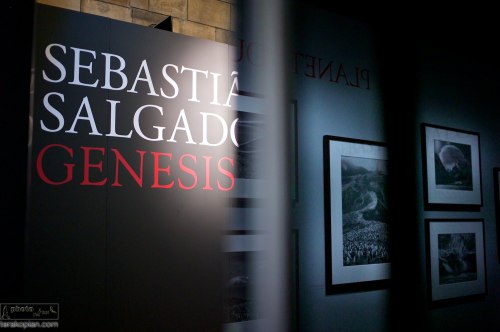


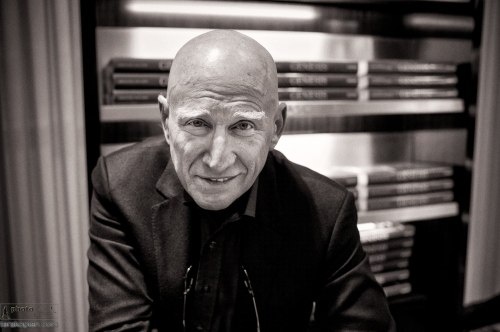


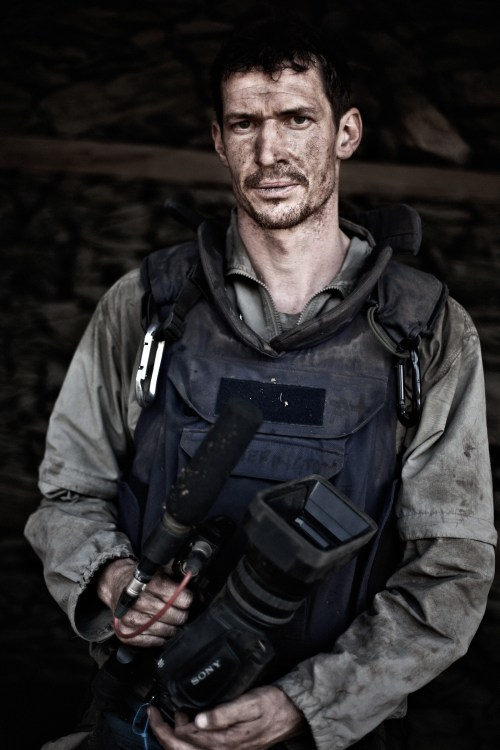


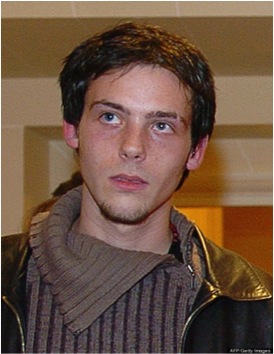

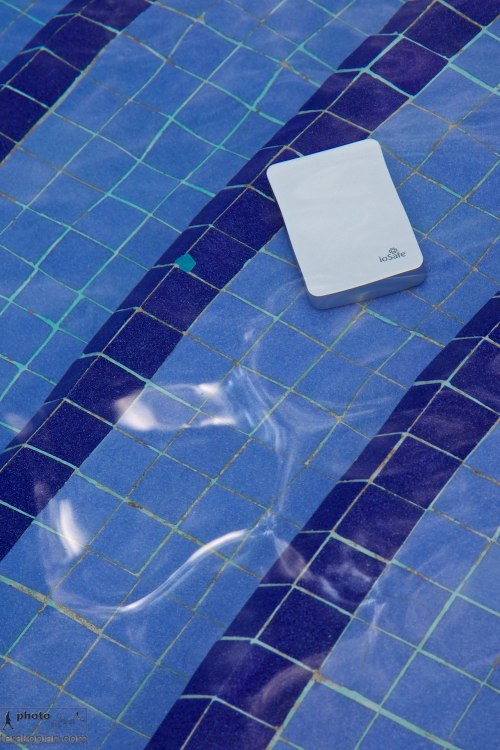


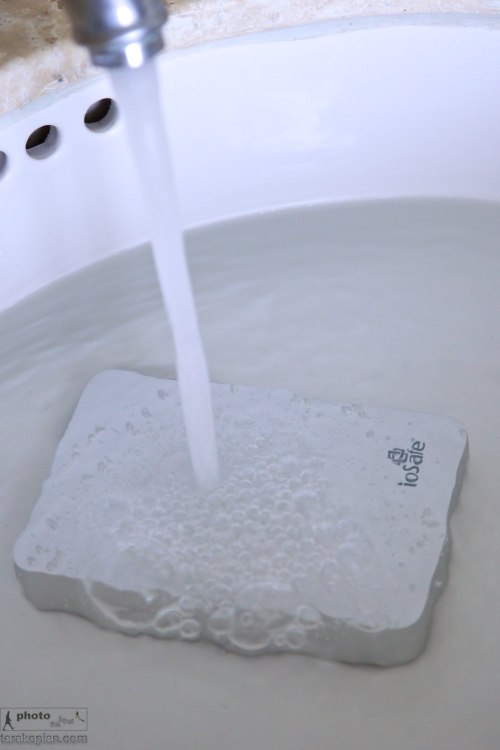


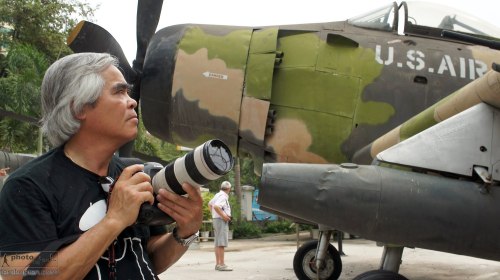


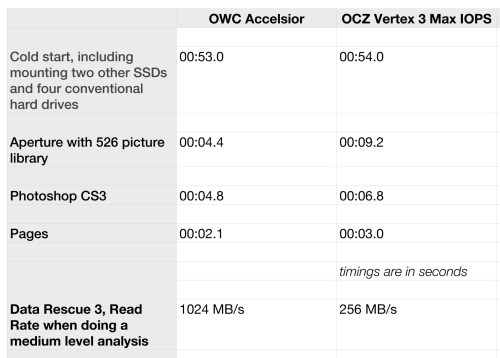


 Photo This & That