Digital Image Processing with Aperture and Nik Software
Here is a recording of my online seminar (webinar from November 30th, 2011) showing how I use Nik Software’s plugins and Aperture for my image processing.

Here is a recording of my online seminar (webinar from November 30th, 2011) showing how I use Nik Software’s plugins and Aperture for my image processing.
Posted in Computers and Software, Photography, Pictures, workshop
Tagged aperture, digital, HDR efex, image, nik software, photo, processing, seminar, sharpener pro, silver efex pro, viveza, webinar, workshop

The BPPA today wrote to the Leveson Inquiry and asked to be added to the list of those giving evidence. We did this because of the one-way traffic from witnesses criticising photographers and because of the dreadfully lazy television journalism that has painted each and every one of us as the worst kind of citizen paparazzi. This is what we said:
Initial submission to The Leveson Inquiry into the culture, practice & ethics of the press by The British Press Photographers’ Association:
Introduction
The British Press Photographers’ Association (The BPPA) has amongst its membership a large percentage of the country’s front line news photographers. Founded in 1984 to ‘promote and inspire the highest ethical, technical and creative standards from within the profession’, The BPPA has a unique perspective on the current practices and market place for press photographs in the United Kingdom. Press photographers led the way when it came to establishing the guidelines by which all UK Police forces (via ACPO) work alongside the media in the field and we would endeavour to bring a similar problem solving approach to the Inquiry.
Request to be added to the list of Core Participants
In the light of the nature of the evidence being given to The Inquiry by various celebrity witnesses, the association’s board took the decision that we needed to make a submission and to seek to give evidence in person. In reading the list of persons and organisations that may be considered as Core Participants, the association believes that the weight of commentary during the opening weeks of the Inquiry makes press photographers “subject to explicit or significant criticism during the inquiry proceedings or in its report.” In the light of this, we would contend that The BPPA is able to give evidence on the issues of culture, practices and ethics, which the Inquiry might not otherwise be able to obtain.
The BPPA can speak for press photographers who, because of the highly fragmented nature of our employment may well speak to the BPPA when they would not speak to the Inquiry. The Inquiry should know that our membership breaks down as follows:
• Directly employed – 24%
• Employed on fixed or rolling contracts 12%
• Working through agencies as freelance photographers 18%
• Entirely freelance 46%
As a profession attracting a great deal of criticism we would further contend that such a diverse group will not be represented in an equitable and fair way at an inquiry where such representation is both vital for a large and key group of professionals, and for the Inquiry’s ability to hear and consider the widest range of informed opinions.
Press photographers are, for various reasons, the very visible face of the UK print media. Because of this we are regularly subjected to false attribution and accusations as well as verbal abuse from members of the public and from a significant number of people who work in the celebrity, entertainment and even law and order industries. The continuous use of pejorative terms such as ‘paparazzi’ about the widest spectrum of news photographers harms our collective reputations.
Our Evidence
The BPPA would seek to provide evidence on the following:
• The culture and practices of professional press photographers
• The market place for news pictures and how it affects those cultures and practices
• The problems that the market for celebrity images is causing
• The dangers of introducing French style privacy laws
• The need for cooperation between all parts of the media to establish clear and enforceable ethical guidelines and codes of behaviour and etiquette
• Our proposals to help control the problems of unethical photographers and citizen journalists with cameras
The association believes that it would be able to make a very positive contribution to The Inquiry by providing a more accurate, up-to-date and informed assessment than any other organisation on the specific topics where we have expertise.
Posted in News, newspaper, Photography
Tagged bppa, Leveson Inquiry, press photography
*Stands up from the gathered folk sat on chairs in a circle in the community centre hall* My name is Edmond Terakopian and I’m a press photographer of 22 years. Following the Leveson Inquiry, anyone would think that being a press photographer in this country is wrong and the devil’s work and that we’re all villains. Well, I’m Edmond Terakopian, a press photographer and extremely proud of it.

On assignment for AP, covering the 46664 Concert: In Celebration of Nelson Mandela's Life. Hyde Park, London. June 27, 2008. Photo ©
Wave after wave of celebrities (and others) with their own personal agendas (always interesting to look back on the ethics and behaviour of such people as they attempt to take the moral high ground) have been giving testimonials on press intrusion. The unfortunate thing is that this has gone from press intrusion (for which there are some very valid cases) to a witch hunt against photographers. The paparazzi who are making life hell for those in the spotlight are now in the spotlight. I personally have no major issue with this as I have witnessed the behaviour of the paparazzi and hate what they have done to the industry I so love. People in their ignorance, and the wider media (reporters, both in newspapers, radio and TV) who know better, are branding every press photographer a paparazzi. This is absolutely wrong and a disgrace. Another disgrace is the way some reporters are trying to distance themselves from press photographers by pointing fingers! I’d like to remind these small minded print journalists that without pictures to illustrate and highlight stories, most stories would either go unread or will at best lack impact. A newspaper without strong and interesting photography would indeed be extremely boring and I would suggest, will not sell. To my colleagues in TV I would like to say that we are all journalists; some use a TV camera, others a microphone, some a camera and others a keyboard. If by all this ridiculous finger pointing and sensationalising that’s going on, carries on and laws are passed, this will effect the entire industry. The whole notion of freedom of press will be in dire peril. Be responsible and please be careful. Perhaps all of this is being done on purpose by some news editors to help shift the public’s attention away from the phone hacking and unethical journalism which is the question at the core of the inquiry?
Allow me to remind everyone what press photographers do; remember the ultimate sacrifices made by our colleagues over the years as they put their lives on the line and cover conflict and inhumanity around the world. Let me remind you of luckier colleagues who ‘only’ lost limbs whilst doing this most honourable of jobs. Don’t tar us all with this brush.
The funniest thing of all though is that on the whole, a paparazzi has a higher income than a press photographer does – yes, even those that risk their lives in conflict zones. The reason for this is simply that the public buy newspapers and magazines that carry this material. As a result, papers and magazines pay top whack for this material. The biggest selling publications are those that run this rubbish; it’s a question of supply and demand. Stop buying this trash and the market for paparazzi pictures will shrink. To the finger pointing public who find it funny to throw abuse at photographers and call us paps, take a look in the mirror and see which publications you and you families buy; you may well find that you’re funding this issue you’re so outraged by. I hasten to add that my colleagues who are celebrity photographers aren’t tarred with this brush either. Honourable and skilled photographers who cover premieres and parties, all by invitation, who are a huge part of the image building of actors and singers.
I’m worried by this inquiry as it has been extremely one sided. So far, neither the NUJ (I have now found out the NUJ has are a statement at the inquiry, but very early on, and before the entire thing turned into an anti-photographer campaign; please see the bottom of this article) or BPPA have been invited to speak. There are also a huge number of politicians who were stung because of the recent MPs expenses scandal. This group of people I’m guessing would jump at any opportunity to try and pass into law some of the ludicrous suggestions made by some at the inquiry.
One cannot have a democracy without a free press. If we can’t do our jobs, bring corruption, injustice and inhumanity before the eyes of the world, just imagine to what depths society can sink to.
I would suggest those who at this point are shrugging their shoulders to go and get a few good photojournalistic books and imagine a UK history where such a book does not exist as these images could not be taken. Then get a few books on street photography and imagine a situation where this sociological history was not documented in the UK.
There is no excuse for bad journalism; fiction or sensationalism should not see the light of day in our papers or TV news segments. However, there is a credible danger that we may end up ruining the people’s right to a free press. Imagine a country where the government is not held to account by the media, or one where criminals get away with all sorts without being shown in the media. There are many consequences to this.

World Press Photo in de Oude Kerk. Press Photographers (L-R) Chris Hondros (who was sadly killed on assignment in Libya, 2011), Mohamad Azakir, Ben Smith and Edmond Terakopian with their awards for the Spot News and Spot News Stories categories. Photo: Bastiaan Heus
My colleague Christopher Pledger has put a lot of what’s been on my mind perfectly in his open letter, which I’m reproducing with permission, in full below:
“The testimony of witnesses this week at the Leveson inquiry has included damning condemnation of the behaviour of the paparazzi. Both the celebrity and ‘ordinary’ victims of phone hacking have told of being chased, spat at and terrified by photographers. These experiences could have fatal consequences for the news photographer, a vital part of a truly free press
There are important distinctions to be made between a paparazzo and a press photographer. A comparison of the two is like that between the cowboy builder and a professional tradesman. It is also important to distinguish between the paparazzi and celebrity photographers. Celebrity photographers work with the permission, and often to the benefit of, their subjects. This can range from red carpet premieres to organised and set up photo shoots of a celebrity out shopping or on the beach. I do not class them in my definition of paparazzi. Lacking moral or ethical guidance the paparazzi work with little respect for the law. The composition, quality, or origin of a photograph is a distant second to its commercial value. Paparazzi agencies will often employ people with little or no knowledge of photography. The agency will provide cameras with settings taped over so they cannot be changed. It is not a photographer that is sent out of the office, simply a man with a camera.
Press photographers by contrast are skilled professionals with years of training and experience. They work within the strict guidelines of both the Press Complaints Commission and their newspaper or news agency. These guidelines include respecting both peoples right to privacy and the boundaries of private property. A good news photograph will be technically excellent and able to tell the story in a single frame. In contrast to the paparazzi financial rewards are low.
This is not to imply that all press photographers are angelic super-humans working to expose the truth to an unwitting public. Like any industry there are a minority of ‘rogue traders’ who are prepared to bend or break the rules to get a picture.
The problem for legitimate press photographers is they are seen as no different from the paparazzi. Regardless of the assignment they are covering all press photographers now experience regular abuse from strangers in the street. When photographing something as mundane as a the outside of a high street bank it is not uncommon to hear shouts of ‘pap scum’ or ‘leave them alone’ from passers by. If a group of press photographers are gathered outside a court or government building the first question asked by curious passers-by is not ‘what’s happening?’ but ‘which famous person is coming?’.
The problem of public perception stems from two different sources, celebrity magazine culture and television news. The dominant celebrity culture makes it hard to avoid a constant stream of images cataloguing the daily lives of the A to Z list. It is no surprise that the general public perceive the primary role of photographers as being to feed this machine. The problem is complicated by disreputable publications being prepared to buy pictures on a ‘no questions asked’ basis. This makes it hard to distinguish between photographers working in a professional way and those who aren’t.
Television news coverage is the other major factor in the problem of perception. During most stories a clip of press photographers is included as a ‘cut away’ shot to add visual interest. If the clip includes the subject of a story being surrounded by the media reporters will often refer to a scrum of photographers. This ignores the numerous TV cameras both in the scrum and filming from a distance. This has been demonstrated during TV reports on the Leveson inquiry. Press photographers have been working from an official area behind a barrier to give witnesses arriving space. TV reports have consistently referred to ‘hordes of photographers’ while ignoring the seven video cameras surrounding witnesses as they arrive. By using these tactics TV news aim to draw a distinction between the dirty press and the clean media. In doing so they may perhaps be driving the Leveson inquiry toward concluding tough privacy laws are required, privacy laws that will include a ban on photographing people in public without their permission.
A ban of this type would be the death of the free press in the UK. Current guidelines require that individuals should not be photographed while they have ‘a reasonable expectation of privacy’. In practical terms this means anyone in a public place can be photographed without permission, as they cannot expect privacy in a public space. If laws were introduced requiring the written consent of an individual before they were photographed, it would mean press photographers would have to ignore events unfolding before them. Some of the biggest news stories in the last year could not have been reported. Pictures of Charlie Gilmour swinging from the Cenotaph would have been taken illegally, likewise pictures of Oliver Letwin disposing of government documents in a park bin. Press photographers would be as ham strung as reporters prevented from covering stories of public interest that are subject to super injunctions.
The problem of finding a solution that avoids this type of privacy law is extremely difficult. Legitimate press photographers already have licensed press cards that are required to be shown to work in places like Downing Street. This system has not stopped any of the behaviour reported this week, or prevented the use of faked press cards. Digital cameras are cheap and easy to use making it hard for anybody to distinguish between professional and amateur, press photographer and paparazzo. If 99 out of 100 photographers comply with a code of conduct, one will always break the rules and tar the rest with the same brush. Introducing government or police regulation and control over licensing of press photographers would affect impartiality and freedom.
It would be very hard to argue that there can be no changes following the Leveson inquiry. We must be very careful what these changes are and where they will take us. Press photographers are in danger of being so restrained by regulation that we become like the fire fighter who cannot enter a burning building for fear of breaking health and safety regulations.
These are my personal views and are not intended to be representative of any organisation I work for as a freelance photographer. Christopher Pledger.”
Please spread this link to as many people as you can. This is an important issue which has extremely far reaching consequences; ones that can have a hugely negative impact on society as we know it. I’m Edmond Terakopian and proud to be a press photographer.
Addendum:
I have just found out (26 Nov, 16:57) that the NUJ has indeed made a statement at the enquiry. However, the NUJ statement was made very early on in the inquiry and was before the entire thing turned into this one-sided, anti-photographer campaign by the famous. When photographers are being attacked in this extremely one sided way, why the BPPA hasn’t been invited is beyond me. The NUJ statement can be read in full in this Media Guardian article. My thoughts are that the NUJ London Photographer’s Branch needs to now be invited to address the points being raised.
More food for thought on some of the ridiculous proposals being aired at the inquiry. Can you imagine if press photographers had to ask for permission every time they needed to photograph someone in public? Having to stop emergency personnel from doing their jobs, to get written permission when on a breaking news story. How often would criminals give written permission? MPs who are stealing from the tax payer via their expense claims…how many of them would give permission? Documenting the horrors of the July 7th bombing of the tubes and bus; would it be right to stop injured people and ask them to fill in and sign forms? On a different note, this would also completely stop any social documentary – street photography of daily life? Forget it. All those natural and real moments will be lost forever. Can you imagine a world without the brilliant images of Henri Cartier Bresson?
On a related note, illustrating why we should not all be tarred with he same brush; has anyone had a bad builder? A bad doctor? A bad dentist? A bad meal in a restaurant? What are we going to do, ban builders, doctors, dentists and chefs? There are always rogue elements in the world. Coming up with ridiculous suggestions which apply to the entire industry and upset the exact freedoms this country fought for in several wars is disrespectful, immature, self centred and just plain wrong. Bad journalism should not be tolerated. Absolutely not. However, holding one sided inquiries where the ill informed people with personal agendas are given free reign to say all they want without hearing the other side is just plain injustice. I’m not defending disrespectful paparazzi, the rogue photographer, the bad celebrity agencies or bad tabloid journalists – let’s just not forget that there is a lot of nobility and importance in the work the press and press photographers do.
Another huge issue that everyone is missing, is that although these images are press images, they do then become historical. Can you imagine history books without any real photographs in them? No images from July 7th. No images from the London riots. No images of dodgy MPs or Murdoch and Wade. Everything having to be posed and re-enacted. How is that good for society?
Disclaimer: These are my personal views and do not reflect those of any news organisations for whom I work.
The Leveson Inquiry – Leon Neal’s Blog
Flaws On Both Sides of the Leveson Inquiry – Mark Borkowski
Leveson Exposed Celebrity Exploitation… – The Guardian
A Paparazzo Speaks – The Guardian
Photographers Hit Back Over Leveson ‘one way traffic’ – Press Gazette
Leveson Inquiry: Photographers Seek To Counter Criticism – Journalism.co.uk
Press Photographers Slam Leveson Inquiry’s ‘one way traffic’ – BJP
Initial Submission To The Leveson Inquiry – BPPA
Photographers Facing Unfair Criticism – The Guardian
Taken Without Permission – Jules Mattsson

Business fashion consultant Gabriella Piccinni from Modaview. London. November 24, 2011. Photo: Edmond Terakopian. Leica M9 Image processed using Aperture and Silver Efex Pro 2.
I’m pleased to announce that I’ll be holding a Nik Software Webinar on my workflow on Wednesday, November the 30th at 7pm GMT. Click HERE to register for my free seminar.
As always, I will be showcasing new and different work, explaining my techniques on image processing and the thought processes behind the technicality of image processing. As an example, I shall show how I processed the portrait of business fashion consultant Gabriella Piccinni from Modaview.
My workflow is based around Aperture and Nik Software’s Viveza 2, Silver Efex Pro 2 and Sharpner 3 in the whole, although I do occasionally use Photoshop. Those who use Photoshop or Lightroom will still have a lot to gain and the processes and using the plugins is virtually identical. There will be a Q&A session at the end.
Hope you can join me on my last webinar for this year.
Posted in education, Photography, Pictures, workshop
Tagged image processing, nik software, webinar
I’m thrilled to announce that one of my street images, a silhouette of a lady having a cup of coffee in a Starbuck’s on New Oxford Street, taken on a Leica M9 and Leica 90mm Summarit lens, has been chosen from the 11,321 entries to the Photography Masters Cup, to be a nominated image.

A lady takes a break at the Starbucks Coffee shop on New Oxford Street. December 09, 2010. Photo: Edmond Terakopian
Press Release:
FOR IMMEDIATE RELEASE:
CAPTAINS OF INDUSTRY NOMINATE BRITISH PHOTOGRAPHER EDMOND TERAKOPIAN AT THE 5TH ANNUAL PHOTOGRAPHY MASTERS CUP
LONDON – Professional photographer Edmond Terakopian of the UK was presented with the 5th Annual Photography Masters Cup Nominee title in the category of Abstract at a prestigious Nomination & Winners PhotoShow. The live online ceremony webcast Sunday, October 29, 2011 was attended by photography fans in 83 countries who logged on to see the climax of the industry’s most important event for color photography. The awards international Jury included captains of the industry ranging from Hasted Hunt Kraeutler in New York, Brancolini Grimaldi, David & Goliath, Simon Studer Art Associates, Stills Gallery to Christie’s in London who honored Color Masters with 272 coveted title awards and 1099 nominees in 18 categories. “It is an incredible achievement to be selected among the best from the 13,321 entries we received this year,” said Basil O’Brien, the awards Creative Director. “Edmond Terakopian’s “Coffee Break” an exceptional image entered in the Abstract category, represents contemporary color photography at its finest, and we’re pleased to present him with the title of Nominee.” See the 5th Annual Winners & Nominees at http://www.thecolorawards.com/gallery INTERNATIONAL COLOR AWARDS PHOTOGRAPHY MASTERS CUP is the leading international award honoring excellence in color photography. This celebrated event shines a spotlight on the best professional and amateur photographers worldwide and honors the finest images with the highest achievements in color photography.
Posted in competition, Leica, Photography, Pictures
Tagged competition, masters cup, nominee
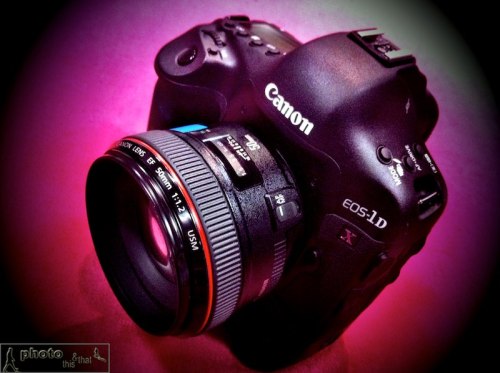
A pre-production Canon EOS 1DX. Photo: Edmond Terakopian
I’m fortunate to have had two opportunities to try out the new Canon EOS 1DX in private (thanks to Canon Europe for organising this) during the Pro Photo Solutions show earlier this week.
I need to firstly make it clear that as this was a pre-production camera, I wasn’t allowed to use my own CF cards for evaluating the images or video (which is fair enough as by the time the camera is released in March 2012, the firmware will have gone through several changes).
What I did get to do was try the camera fully, for both stills and video (checking results on the rear LCD screen), check out the completely redesigned menu system and chat at length with the extremely knowledgeable Graham Smith and Mike Burnhill from Canon.
I must say that I’m very impressed with this flagship camera. It carries on the 1D line and is a rugged workhorse of a machine which has been designed to be even more durable than it’s previous versions (I once stood in torrential rain on assignment for around 6 solid hours with a couple of Canon 1D MkII cameras and ‘L’ lenses. Although my Berghaus Gortex jacket leaked, the cameras carried on working perfectly and never gave any problems).
It’s fantastic having a full frame and fast drive camera, all in one. The 12 fps is just astonishing as is using the 14 fps (with mirror lock up – all of this at 18 megapixels). It’s something I have wished for, for years! The controls on the camera are new, with quite a few being fully programmable. The design and placement for all of these is pretty much spot on (the only problematic one perhaps being having the magnify button which is set low down, below the screen – perfect for reviewing stills, but is a problem for when shooting video and wanting to check focus beforehand (initially spotted by Dan Chung, with whom I’m in full agreement) – I’m sure by launch perhaps one of the more convenient buttons can be programmed via firmware to act as magnify if needed for video).
Shooting up to 51,200 ISO was just astonishing; extremely clean with accurate looking colours. Magnifying in to 100% on an 8000 ISO image made me double take as it looked clean enough to have been a 100 ISO shot! Absolutely amazing. I need to remind readers again though, these were all judged on a pre-production camera using the rear LCD screen.
The AF system is completely new and feels very responsive. The new modes and selection methods with overrides certainly impress.
Another hugely impressive fact is for video shooting the camera has a better file system and no longer drops lines when down sampling to HD. Another massively important addition is adjustable audio meters which display during shooting. Canon have stopped just short by not including a headphone jack. If the AV out port can stream during recording, then perhaps a headphone adapter could be fitted to monitor audio? Who knows!
As far as is the Canon EOS 1DX perfect, we shall have to wait and see. November 3rd is due to see a video product announcement by the company and the rumour sites are buzzing with the launch of the 5D MkIII some time next year.
This certainly seems like a perfect DSLR. Personally, I’d love (as would every single one of my colleagues) a lighter pro body, with a removable grip. Apart from this gripe, it really is an impressive DSLR and ticks almost every box. I can’t wait to test it out properly and see what it’s capable of, both in terms of stills and for video.
Posted in Camera Equipment, News, Photography, Review, viewpoint


 Photo This & That