The UK Government’s GREAT Project Cons Photographers
Campaign Pleads Poverty Even Though
It Has £55M To Get Free Pictures
Three prominent UK press photographers were contacted by the marketing assistant of the government’s UK Trade and Investment office to supply photographs for the GREAT Campaign. In her email to one of the photographers, Isabel Bustillos goes on to say “The GREAT campaign showcases UK excellence in a variety of sectors”. The photographers contacted, Glenn Copus, Shaun Curry and John D McHugh, have with their work shown excellence and as a result were contacted for the photograph needed by the GREAT campaign.
So far, so good. Sadly, the GREAT campaign and the UK Trade and Investment office, showed absolute unprofessionalism and utter disrespect towards the photographers and the value of photography, by initially saying they had very tight budgets so were after a collaboration, asking for the pictures for free. When Shaun Curry reminded Isabel Bustillos (marketing assistant of the GREAT campaign) that photographers do not work for free, as after all it is their profession, she offered a sum of £100. The license asked for was for two years with multiple territory usage and with above and below the line advertising rights. A very quick internet search shows that the GREAT Campaign’s budget is £55 million for 2013 to 2015 (£25M for 2013 and a further £30M for 2014-15). In essence, this governmental initiative with £55 million budget is trying to con photographers into handing over pictures for free. As the initiative’s aim is to boost investment and tourism into the UK, it’s also insulting for UK citizens when it’s realised the penny pinching and amateur attitude will result in not securing the best photographic work and therefore not showing us in our best light, even though there is a tremendous budget set aside for this 120 countries initiative.
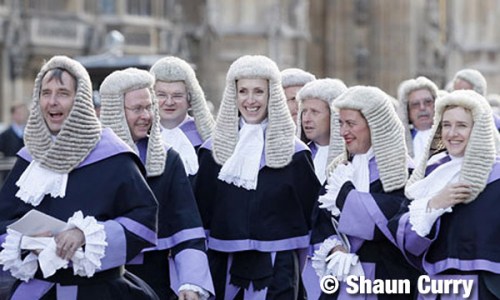
The photograph in question. The GREAT campaign tried to get this picture for free, stating that they had a tight budget and could not pay. The budget for the campaign is £55M. Photo: ©Shaun Curry
Keeping in mind that a two year advertising license for English speaking countries only, for display use only (100 displays/stands) is £6,615.00 (source: Photoshelter’s image license calculator) and that the license the GREAT campaign requires easily brings the amount to much more. If the image was to be priced fully, including brochure, web and print use, for all territories needed, then the price will easily reach the £15-20,000 mark for two years usage. The level of this insult becomes clear. It is one thing for an individual or small company who have never dealt with media not to realise the value of photography. However for someone from the marketing department of a governmental campaign with a £55 million budget to be instructed to secure photography for free and if not pay hundredths of the price, it is truly disgraceful and completely amateur.
As a reminder, the minister for the GREAT campaign is the Rt Hon Maria Miller MP who claimed £90,000 in her expenses for 2005 to 2009 and was reported for it.
To illustrate the correspondence had, I shall reproduce the emails and quotes from the photographers involved in this insulting encounter with the GREAT campaign.
The initial email to Shaun Curry (who was the only person emailed; the others were contacted by phone):
“Hello,
We would like to use your image below as part of the Government’s international GREAT campaign.
The GREAT campaign showcases UK excellence in a variety of sectors with collateral available for consulates and embassies around the globe to use at trade shows, events and publications.
We usually secure images for 2 years, with above and below the line advertising rights. Usually we secure images (signed of visuals attached below for ease of reference) free of charge due to our limited budget and the fact that the campaign features in over 120 countries with credits shown, is this something you would consider? Grateful for your assistance
Isabel
Isabel Bustillos | Marketing Assistant | Marketing |UK Trade & Investment”
After Shaun Curry refused the offer of supplying his work for free, an offer of £100 was made.
Shaun Curry writes to Photo This & That:
“The UKTi liked my picture so much (judge’s parade), they asked to use it in their new ”GREAT Britain campaign’ “the biggest ever integrated Government international marketing campaign” with funding of £30 million. with the promise that it would be seen in “120 countries”.
Now…being a seasoned professional I was of course happy to receive such a picture request, but also careful to listen for the caveat, and as is sadly the norm for photographers and many other creatives these days, along it came…again.
“We usually secure images for 2 years, with above and below the line advertising rights. Usually we secure images (signed of (sic) visuals attached below for ease of reference) free of charge due to our limited budget and the fact that the campaign features in over 120 countries with credits shown, is this something you would consider? Grateful for your assistance”
Im sure I am not alone when I say that this ‘limited or no budget’ excuse has worn a bit thin, but even so, every time I hear it my heart sinks a little lower.
I am not particularly militant, but this time I decided to call them up personally, I politely warned the person who sent me this email, that this whole ‘work for free’ must stop and for their own sake, to re-think with their superiors how they populate their websites and brochures with content.
They were very apologetic and offered me £100.
For anyone who understands or has any knowledge of advertising photography and its rates, “Above the line” means a lot more then £100, multiply this by hundreds and you’ll be getting warm.
Needless to say out of principle I refused this money.
This morning a good friend and colleague John D McHugh called me to share his story about the UKTI and their quest for a free picture….of the same judges parade!
We laughed at this, then decided it wasn’t funny.
John D needless to say refused their offer even quicker than I, and also wanted them of their impending publicity disaster within the photographic community, quoting me as an example, to which they seemed somewhat surprised that we knew each other!
We both posted our experiences on a great Facebook group called “Stop Working for Free” to share and educate any others whom maybe approached by the UKTi looking for a free handout.
Im writing this here today, because I’m annoyed and fed up with this work for a byline, it’s going to have to stop.
Shaun Curry ”
After having failed to get a free or near free photograph from Shaun Curry, John D McHugh was approached:
“I’ve just had a phone call from the GREAT campaign, telling me how much they loved my image. I immediately interrupted the girl and asked what her budget was, at which point she started talking about a “collaboration” and when I pushed her on what her budget was, she tried to turn it around on me and ask what I would charge. I then told her I had some bad news for her, and went on to say that the GREAT campaign had already insulted one of my colleagues with an extremely unprofessional request for a byline only remuneration offer. I also told her that the GREAT campaign was actively being discussed amongst the UK photographic community, and that some pretty disparaging things were being said about the GREAT project and those running it. In fact, I told her, it was one small step away from being blacklisted, and so in good conscience and out of consideration for my peers, I wouldn’t allow then to use my image.”

The photograph in question. The GREAT campaign tried to get this picture for free, stating that they had a tight budget and could not pay. The budget for the campaign is £55M. Photo: ©Glenn Copus
After this failed attempt at securing free photography, Glenn Copus was contacted:
“I got the same call and mail for one of my pics, told them that after making a career out of photography for 44 years by being paid they could buy at a discounted price of £250. Of course I never heard back, but how I laughed at the silence over the phone”.
As it turns out, Glenn’s offer didn’t take into account the full extent of the license required, but even his extremely low offer was met with silence.
I contacted Isabel Bustillos who mentioned that she had told the photographers that they had a low budget, but then said that she had offered one of the photographers £1000. After having checked with all three photographers, they deny being offered this amount.
I then contacted the press office for the Department for Business, Innovation and Skills to find why photographers were being treated in this appalling manor:
“Dear Mr Hamilton and Mr Gibbs,
I have been in touch with Oliver Jackson from the GREAT campaign press office and he has suggested I contact yourselves.
I’m writing a piece on the Great campaign and it’s treatment of photographers whilst trying to secure imagery to use in the 120 countries the campaign is targeting. The article is for Photo This & That and for The Huffington Post blog section.
Three press photographers have been in touch expressing their disbelief at being approached for their work and being asked for it for free. Offers of a byline and also an insulting £100 were also made as the photographers made it clear that working for free is unacceptable. Surely it is recognised that professional work is paid for? Considering a two year license, including advertising was asked for, this is absolutely unbelievable. Considering the campaign has had it’s budget increased to £30 million, it’s somewhat surprising that individuals are trying to be conned by this governmental campaign by telling them the budget is tight. The campaign talks about UK excellence in various sectors, yet it’s treatment of the photographers in question is nothing short of an absolute and utter disrespect for the excellence of their work. Photojournalists go out of their way to bring news to the eyes of the world, often risking life and limb. I myself have lost two photographer colleagues in Libya and another close friend lost both his legs in Afghanistan. However, as a group, we persevere as the work that is done is a great responsibility and of tremendous importance. Looking at the world’s magazines, newspapers, competitions and exhibitions, it’s clear that part of the UK excellence your campaign talks of is indeed also in photojournalism. Why is there such disrespect and unprofessionalism shown? Why were they told there was a tight budget when the campaign has £30 million to spend?
I would like an on the record response which I can publish please. This entire unprofessional and disrespectful approach has the entire press photography community rather upset and this is the campaign’s opportunity to have a right of reply before the article is published.
The approach to the three press photographers (John D McHugh, Glenn Copus and Shaun Curry) was made by:
Isabel Bustillos | Marketing Assistant | Marketing |UK Trade & Investment
I would really like a reply by the end of play today as it’s important for the campaign to explain why there’s such a lack of respect towards photographers and why photography is so devalued. It would be interesting to know how much of the £30 million has been earmarked for photography if at all possible.
I look forward to your speedy reply as this approach has enraged most of the press photographers in the UK.
Regards,
Edmond”
I received the following reply around 50 minutes later:
A UKTI spokesperson said:
“The UK has one of the largest creative industries sectors in the world and the quality of UK photography plays a key part in its success. The GREAT Campaign is a worldwide marketing campaign driving inward investment and tourism to the UK. Many UK photographers partner with UKTI to showcase excellence in UK photography and to provide them with a global showcase for their work. UKTI does not publish photographers’ work without their explicit permission and ensures that all images used are properly accredited to help UK’s photographers enjoy international acclaim.”
Not only were the issues raised not addressed, but the reply is in itself insulting as it acknowledges the part played by quality photography, yet the government’s GREAT campaign is quite happy to abuse and con photographers.
I responded to this:
“There are several points raised in my email and by the photographers contacted. Non of these have been addressed in your comment. Before writing this up, I just wanted to double check if this is really all that you have as a reply to the issue of absolute disrespect shown towards the photographers in question and their work.”
The reply:
“The photographers in questions were asked if they would like to participate in the campaign and I can assure you that no disrespect was intended towards them or their professional work.”
My final email to the press office has so far gone unanswered (even though it’s now a day later):
“The offer of asking for free pictures, then eventually escalating the offer to £100 (only for one of the photographers’ as no sums were mentioned to the others) for a two year, multiple territory with advertising use license, has been seen by all three involved and the majority of the press photographers in the UK (on several forums) as disgraceful.
With £30M as a budget, pleading poverty by saying there is a tight budget is a straightforward lie.
The comment provided by your office is sadly just PR and doesn’t address my points (based on what has been told to me by the three) in my initial email. I just want to make sure that this is really all there is to be said by your office.
The actions, although you say that wasn’t intended, are absolutely unprofessional and disrespectful. Photographers should not be expected to work for free.
I do hope that there is a deeper response that actually addresses the issues raised.”
Having shown the official response to the grievance expressed by all photographers concerned, John D McHugh writes:
“GREAT’s reply to Edmond’s queries utilises typical PR double speak, insulting the intelligence of anyone who reads it, and at the same time blatantly ignores the original accusation of eliciting photography in exchange for “exposure” rather than payment. The fact that I was told GREAT had a “very small” budget is insulting and infuriating in equal parts, especially when it has in fact secured £30million in Government funding. Despite the UKTI claiming “to showcase excellence in UK photography and to provide them with a global showcase for their work”. The simple fact is that by attempting to license photography for free the UKTI is displaying a contemptuous disregard for the creative industries it is supposed to champion. And just to be clear, the GREAT Campaign contacted me, not the other way around, so I obviously have quite enough exposure. Why they think I need more exposure instead of actual payment is beyond me.”
It’s a very sad state of affairs when a campaign called GREAT, created by the UK government, conceived to showcase how great the UK is, does it’s best to con and cheat UK photographers into handing over work for free or best case scenario for hundredths of what the true value is. Quite ironic that the campaign is called GREAT.
UPDATE
Monday, April 21, 2014 – It’s interesting to note that although the GREAT Campaign was pleading poverty and lying to photographers to secure free photographs, it has hired David Bailey (who is sure to be one of the country’s most expensive photographers) to shoot a photograph of Her Majesty for the campaign.





 Photo This & That
What’s Wrong With The Newspaper Industry
Press Photography & The Papers
A press card and a selection of media accreditation from over the years. June 12, 2012. Photo: Edmond Terakopian
The problems with the industry (normally and not just during this recession) are multiple; some do lay with the accountants who run most things (being qualified with arithmetic and spread sheet skills, or the understanding of formulas, in my mind does not give someone aesthetic understanding or the ability to have a news sense), weak picture editors, bad editors, visually less capable mass audience and the pandering of the papers to the weakest common denominator as opposed to trying to visually educate the readership a little. Not too long ago we had newspapers that ran the most amazing photography; informative, accurate, ethical, creative and mind blowingly powerful – and no, I’m not just talking about the broadsheets (as they were then) but a few tabloid papers too.
Another huge issue is the switch to digital and the ‘everyone’s a photographer’ syndrome; backed by accountants who see a picture as something that has four sides to it but have no ability to comprehend it’s content, importance or power. This also lead to the birth of the mass paparazzi – the most money paid for photography is for this type of content and the publications who print this material, sell the most, so have the biggest budgets.
The ‘new’ technology, called the internet also has had a detrimental effect to the traditional model of newspapers. A day late, even with great analysis and checked, journalistically correct information, is sometimes too late for readers. I saw new in quotes as anyone looking at most newspaper websites would thing the internet came to being a couple of months ago. It’s been with us long enough, yet few papers have learnt to design good, usable websites that harness the power of the web and deliver amazing content. The business model has to change too; good content needs to be paid for properly. Content is king; no good content means lower visitor hits, equalling less advertising revenue. It’s not rocket science! It is however beyond doubt the future (including mobile devices using the internet for delivery of content).
Let’s not forget though, as photographers we have our share of the blame. Some of this ignorance comes from the educational sector who are happy to teach Susan Sontag and theory, but when it comes to actual skills needed by photographers to survive, like knowing one’s rights and the law of copyright, they teach nothing. The rest of the blame is purely with us for not finding out.
We are signing away our copyright and future rights to our work, even though the law states that it’s ours. This is shortsighted and every time such a contract is signed, another nail is hammered into our collective coffin. There is no going back from this. Sooner than you know, we will retire and have no picture library of our own to fall back on; so, no books, no print sales and no exhibitions. My thoughts are that the bigger picture needs to be looked at; after all, this is a career and so, is long term.
We are killing our own industry too.
Leave a comment
Posted in Business, education, newspaper, Photography, viewpoint
Tagged comment, copyright, industry, intellectual rights, law, newspaper, photography, press, rights