Microphones microphones microphones!

We’re all visual people so the switch to shooting video as far as the visual aspect, isn’t too traumatic. However, audio can be another thing entirely. One of the first things anyone will realise when taking their first steps into the world of audio is that there are a several different types of microphone and the choice of which to use in a given situation can be daunting. The DVEStore have put together a very neat short video covering 8 different microphones and is well worth a watch and more importantly, a listen.

Are There Any Other Free Professions?

Naturally, Apart From Photography!

Please stop killing our industry. Photographers pose in the dock at Bow Street Magistrates Court, on the day it closed. Photo: Shaun Curry

I have no idea why, but there seems to be an idea that photographs should have no value and be free. This attitude is from both in front and surprisingly, behind the camera. News organisations, PR companies, random strangers at events and so on think that they should get photographs for free, or in best case scenarios, for peanuts. I’ve often wondered if the same person ever tries the same tactic at a clothes shop or a car showroom?

Part of it is that most people have a camera of some sort or another, and feel they can take photographs and therefor photographers shouldn’t charge. I would hazard a guess that even more people can read and write; do these people go into a bookshop and demand free books or go to the newsagent and demand free papers and magazines?

Part of the reason that these image thieves get away with getting photographs for free though is that photography enthusiasts and citizen journalists, some of which are extremely talented, agree to giving away their work for free. It’s the thrill of seeing something in print and maybe even having a credit. It’s the thrill of talking about it at the pub and so on. I can understand the thrill; I’ve been a full time photographer for over 20 years now and every publication still gives me a thrill. However, food for thought might be how would the same individual giving away images for free feel if someone shared their profession, but as a hobby? If someone interested in accounting turned up with a shiny new calculator and a laptop with a spreadsheet and parked themselves outside an accountants’ office and started doing accounts for free, I’m sure those folks inside that office wouldn’t take too kindly. Use exactly this scenario and apply it to any job; van driver, postman, lawyer and so on. It wouldn’t be tolerated and no one would dream of doing it either.

Another point to realise from the enthusiast photographer’s point of view is that if your images are good enough to be published, then they are definitely good enough to be paid for. Simple. Do not give away work for free. By doing this, you are cutting into someone’s income and at the same time devaluing your own worth and the worth of your passion.

Altered Realities

Tilt & Shift Adapter

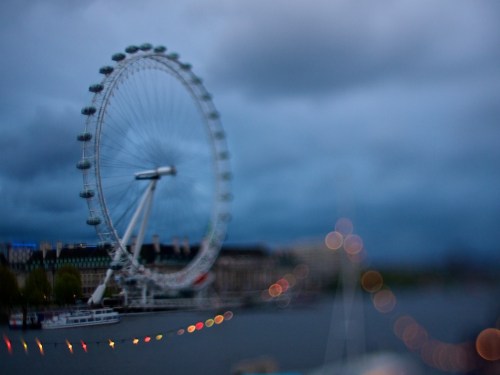
I’ve always like the tilt and shift look. Like a fish eye, if used properly, sparingly and for the right occasion, it can help produce some beautiful and interesting images. Although having used Canon’s brilliant 45mm TS-E lens, I could never quite justify getting one as it is costly. A colleague of mine, Dan Chung let me know about a very cool little adapter for Micro 4/3 cameras made by an Italian firm called Adriano Lolli.

This slideshow requires JavaScript.

The great thing with this adapter is that it’s cheap and let’s you attach lenses by Canon, Leica, Nikon, Olympus and so on, by specifying the mount you need when ordering. The very cool thing with it is that it’s not a tilt and shift adapter as such, but a 360 degree tilt adapter. Think of it as a Lensbaby with a proper and interchangeable lens on the front. The adapter has a handy lever that locks the movement once you have chosen the tilt that you need.

Forgive the rushed, hand held video which acts as purely an illustration on the adapter’s abilities. Video edited on Aperture 3.

I’m very impressed with this little adapter and it’s helping me make some very interesting images using a bag of old Nikkor AIS lenses. The images you see here were done with the 24mm f2 (which equates to a 48mm view on the Olympus E-P2 – as well as any Micro 4/3 cameras). I really can’t recommend this little tool enough!

Addendum: I have added more images to the set, so visit my Flickr set.

Leica S2 Review

My name is Edmond Terakopian and I love Leica. There, I’ve said it. However, as with any relationship involving the heart, all has not always been perfect. I loved my M4-2 and my M6. I loved my 21mm Elmarit, 35mm Summicron, 50mm Summicron and didn’t mind my 75mm Summilux. Didn’t ever like the 90mm Summicron or 35mm Summilux (but the ASPH version was ok). Also, I loved my R6.2 and the 28mm and 90mm Elmarits I had for it, but hated my R4. Phew, I feel better getting that off my chest.

This slideshow requires JavaScript.

As with most people who have used or follow Leica, every once in a while the company makes a decision which just leaves one speechless. Some of the bizarre limited editions are one such thing (pushing up prices across the range and more or less guaranteeing that working photographers will no longer be able to afford the standard cameras) and strange things like the R8 and R9 and the Digital Module R. The M8 and M8.2 followed bringing for me a head scratching response. Then the most bizarre and unbelievable news that Leica were going to bring out a medium format SLR! I didn’t believe it, thinking it was a hoax. It became apparent that it was true though. I was so saddened. For me, Leica has always really been about the M range and I’ve always wanted a proper digital M – thankfully the M9 has now answered that prayer (however at a price). Still, I wished that Leica would stop wasting money and effort on lost causes and just concentrate on the M range.

In November 2009 I got an invite from the Leica Store to try out the S2 (almost final firmware and production) and with curiosity I accepted. I went knowing that I would laugh at this ridiculous notion of a medium format Leica. I had recently shot with the excellent Hasselblad H3DII-50 and thought it silly that Leica would even attempt to get into this arena.

I’m Edmond Terakopian and how wrong was I? I had it completely wrong. I admit it; the S2 is brilliant.

It looks so much bigger in the pictures than it really is. Think of it as roughly the same size as a Canon 1D MkIV or a Nikon D3, with the standard lens being roughly the size of a 24-70mm f2.8. It fits in the hand perfectly and handles just like a “normal” 35mm DSLR. This is majorly important as you have to remember that it isn’t a normal DSLR like a Canon or Nikon, but is in fact a medium format camera. The sensor size is much bigger (60%) than a full frame 35mm sensor, coming in at 30x45mm with a healthy 37.5 megapixels. It has a wide (in medium format terms) ASA range of 80 to 1250.

It has a wonderfully responsive and surefooted AF system that performed flawlessly in the studio and in the corridors of the store. It just felt right in the hand and the shutter release was absolutely smooth as, well, a very smooth thing. Whilst Hasselblads with prism finders and motorwinder grips are comfortable, they are nowhere near as comfortable as the S2. You can literally just pick it up and start shooting. It feels so right that I would comfortably even take it into a news situation; something I would never dream of with any Hasselblad.

Whilst the handling was superb, the image quality had to be tested out. I shot a series of images of a model in the store’s studio, using studio lights and also took the model into an area with available light to test out the higher ASAs. All I can say is that I was stunned by the image quality. Whilst I was in awe of the Hasselblad H3DII range at the lowest ASA, anything higher proved an absolute no no, with 400 ASA images showing really bad noise. Not with the Leica S2; this machine produced amazingly beautiful images all the way to 320 ASA, nice looking 640 ASA shots and usable images at 1250 ASA. Whilst compared to a Canon 1D MkIV or 5D MkII this may seem like not such a big deal, in medium format terms it’s a first.

The S2 is brilliant; it’s fabulous; the camera had proven to me that my initial thoughts were way off and this new format and camera actually made sense. As with most things in life though, there is a little but – it is rather pricey.

Visit my Flickr page to view a set of images taken on the Leica S2.

Nik Software Webinar

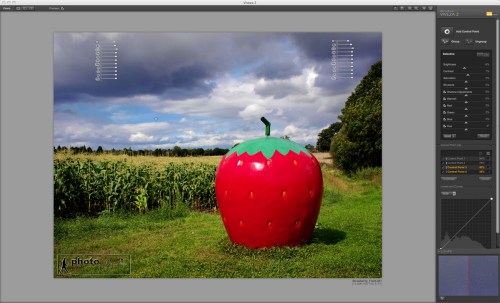
I love doing workshops; having the joy to pass on some of my knowledge and help colleagues out. As regular readers of my blog will know, I’m a huge fan of Apple’s Aperture and along with Nik Software’s Viveza (and now Viveza 2), my workflow has drastically improved as far as speed and quality is concerned.

When Nik software approached me to do a webinar, I jumped at the opportunity to talk about my favourite plugins. Not only is this a chance to reach out to colleagues in a workshop sense, through the magic of the internet, our session can be accessed by many more people.

I’ll be talking about how some on Nik Software’s plugins (namely Viveza 2, Silver Efex Pro and Sharpner Pro 3) fit into my day to day workflow.

I hope that you’ll be able to join me for this free webinar:

25 May 2010 at 7pm GMT or 8pm CET

Please go HERE to register for the event.

Hope to see you there 🙂

Addendum

Click here to see the recording of the webinar.

Tom Bihn Checkpoint Flyer

Bag Review

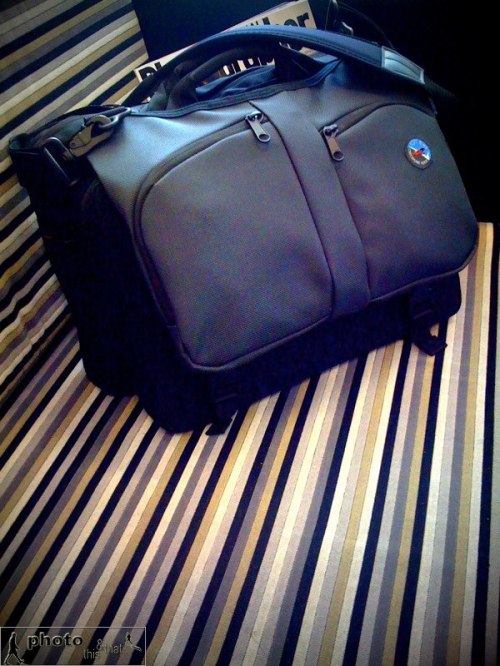
Tom Bihn Checkpoint Flyer Bag

As a photographer, bags are almost as essential to me as the photographic equipment I use. Everything I use has to be absolutely perfectly designed with a clear purpose. Then, it has to be perfectly made, ensuring that it lasts in the field.

I’m a lover of Think Tank Photo bags so much so, that I’m even on the design board. These bags cater for my photographic needs and using a roller, backpack and pouch system, occasionally a shoulder bag too, I have the perfect system for all my assignment needs.

However, I recently got hold of the Tom Bihn Checkpoint Flyer – not a photographic bag at all, but what looked like the perfect travel bag for business trips. I must admit to never having heard of the name until my good friend Daniel Beltra introduced me to them as he’s a big lover and user of their bags for his constant travels.

I really liked the simplicity and design of the laptop part of the bag which then got me interested in the rest. The unique thing about this bag is how it unravels itself, opening up into three sections; this means that the laptop part can just be opened up on it’s hinge and laid flat for X-Rays without having to take out the laptop. I must admit to not having tried this yet but from all I’ve read, airport security staff are more than happy with this approach.

I took the bag up to Edinburgh in Scotland for the workshop Jeff Ascough and I were giving. I packed a set of overnight clothes and essentials into the bag, including my 15″ MacBook Pro, charger and bits and headed for the underground and then to King’s Cross for my train up to Edinburgh. Naturally never without some camera gear, I also had my Think Tank Photo Shape Shifter backpack too.

I must say, I have nothing but praise for the Checkpoint Flyer. It was absolutely comfortable with it’s fabulous shoulder strap and the design was very handy for times during my journey when I needed access to my laptop, documents and magazines. It was also the perfect size for an overnight stay and carried all my stuff in comfort. Last but not least the workmanship looks like it will last and last and last.