With great quality and no compromise manufacturing, comes cost. Leica, who don’t cut corners and use the best materials, making by far the best lenses in photography, also have to charge a premium for these non mass-produced products. With photography being so undervalued, the professional photographer often struggles to get into the Leica system . Naturally some enthusiast photographers also fall into the category of struggling to buy a Leica camera.
With tonight’s Photokina announcement, there is good news. The Leica M-E, which will be available for £3900 including VAT! Don’t misunderstand the price though as the M-E resembles the excellent Leica M9; a camera I have been shooting with professionally for around three years.
The camera comes in a rather attractive dark grey finish with a silver shutter speed dial and shutter release button, is a full frame, 18 megapixel rangefinder camera.
One thing with Leica is that practically every lens made from the 1950s will work on the camera as will a range of Leica screw mount lenses going even further back, using an adapter. Once an investment is made in Leica lenses, they stay with you for life. With the more affordable body, a doorway into Leica digital M photography is now open, bringing with it what I consider to be the best photographic lenses ever made.
Leica announces M-E: The essence of rangefinder photography
Photokina, Cologne, 17 September 2012: Leica Camera AG today presents a new model in the Leica rangefinder portfolio: the Leica M-E.
Together with the new Leica M and Leica M Monochrom – the world’s first digital black and white camera in 35mm format – the Leica M-E joins the latest digital generation of Leica M cameras, now comprising three rangefinder models. Offering rangefinder technology perfected by Leica over decades, the Leica M-E represents the essence of rangefinder photography. Concentrating on the essential photographic functions and renowned dependability for all typical ‘M’ fields of use, the Leica M-E makes an ideal entry- level model for photographers wishing to experience the fascination of M-Photography in its purest form.
Featuring a proven, high-resolution, 18 MP CCD sensor in full 35 mm format, the Leica M-E offers exceptional image quality combined with the distinct advantages of rangefinder photography, and a minimal, discreet design in an unobtrusive anthracite grey paint finish. The application of an attractive new leather-style trim, which also provides enhanced grip for steadier shooting, ideally complements the camera’s classic design.
About the Leica M-System
Since 1954, the Leica M system has stood for an unmistakable, individual kind of photography and a very conscious photographic style. This is because, with a Leica M, the photographer becomes a part of the action in the process of capturing challenging and creative images. The rangefinder allows the photographer to frame the shot precisely, while providing a clear view of what is happening outside the viewfinder frame lines. This allows the user to predict the decisive moment and capture it discreetly and reliably at the right moment – in all fields, from photojournalism and ‘available light’ exposures to discreet and aesthetic fine-art images.
The functions of the Leica M rangefinder camera are consistently constructed for extreme durability and robustness. The highest quality materials, meticulous manufacturing processes and precise manual assembly guarantee functional reliability for many years to come. Full backward system compatibility – almost all lenses in the Leica M range built since 1954 can still be used with the latest M camera models – is an important factor in the enduring value of the Leica M series.
Pricing and availability
The Leica M-E in anthracite grey paint finish is scheduled to be available in the UK at a suggested retail price of £3,900 inc VAT from September 2012 from authorised Leica dealers including the Leica Store Mayfair: www.leica-storemayfair.co.uk, tel: 020 7629 1351. A full list of authorised UK Leica dealers is available at www.leica-camera.co.uk.
Leica warranty and added value services
The Leica M-E comes with a two-year warranty and a one-year Leica UK ‘Passport’ (complimentary accidental damage cover). UK customers are also welcome to visit the Leica Store and Akademie in Mayfair, London, for a complimentary demonstration or training session on the features of the camera. Technical support by telephone or in person is available via Leica’s London-based Client Care department.
Rather than changing the classic lines of the Leica rangefinder, Leica have instead opted to bring out a range of accessories that transform the image making machine into an even more capable tool, taking it beyond it’s traditional charm and ability as a classic rangefinder.
One of the big upsets amongst Leica users who had the R range of Leica SLRs and lenses has always been the lack of an DSLR solution. The Leica S2 definitely brought the DSLR aspect, but is firstly aimed at the studio environment with it’s medium format chip, but also has it’s own S lenses, making the R lenses still unusable. Thankfully, the Leica M changes things and with the R-Adapter M, the majority Leica’s superb R lenses can now be used. This now opens up the ability to shoot with telephoto, macro and zooms, for photography as well as video. The adapter will be priced at £215 and as with all the new accessories, available from early 2013.
In the old days of film, some Leica M models had Visoflex attachments which brought SLR abilities. These were cumbersome and slow to operate. Thankfully, the modern day equivalent isn’t. The EVF2 is a 1.4 megapixel electronic viewfinder that allows through the lens viewing when using Live View for both photography and video. It simply slots onto the hotshoe and into the small interface slot under the hotshoe, on the back of the camera. It can also be tilted 90 degrees, allowing for low angle work with comfort. Having seen the quality of the image from this viewfinder on the Leica X2, it is going to provide an ideal solution for shooting with the camera to the eye. Although the rear screen of the camera can be used for using Leica R lenses or shooting video, the EVF2 will extend the way the camera can be used, and will for most I suspect, be a must buy item. The EVF2 will be priced at £360.
Multifunctional Handgrip-M
This smart grip brings with it several functions; it incorporates GPS, allowing tagging of image location straight into the image’s EXIF.
The grip also offers the ability to use a flash when the normal hotshoe is occupied with the EVF2, using a dedicated SCA adapter and hotshoe, duplicating all of the normal hotshoe’s flash abilities.There will also be an extension cable with a flash bar to allow off camera flash using the grip. For those who prefer it, the grip also offers the ability to attach finger loops, first seen on the limited edition Leica M9 Titanium. The Multifunctional Handgrip-M will be £630. For those who may not need these functions, there is also going to be a Standard Handgrip-M for £209. I think for using the much larger and heavier Leica R lenses, a handgrip is going to be an absolute necessity.
Microphone Adapter Set
An absolutely essential aspect of video is great audio. Most people who work in the film business will in fact tell you that sound is 60% of the final product. It’s great to see that the Leica M is going to have the ability to use an external microphone, for which this adapter will be required.
The adapter slots into the hotshoe and plugs into the interface on the rear of the camera, allowing mono and stereo mini jack microphones to be used. Although the press release or the supplied images do not show this, I’m hopeful that there may be the ability to also mount a microphone to the secondary hotshoe available on the Multifunctional Handgrip-M. If this doesn’t turn out to be so, there are many other options already on the market for attaching a microphone, so I’m not too worried, although this would be an extremely neat solution.
Mounting the brilliant yet tiny Rode VideoMic Pro to the Leica M should make for a superb, compact and ultra high quality video shooting setup. I really cannot wait to try this out! The Microphone Adapter Set will be £150.
Leica Press Release
New accessories for LEICA M
Range of accessories for new LEICA M camera expands potential beyond traditional rangefinder capabilities
Photokina, Cologne, 17 September 2012: Leica Camera AG has unveiled a new range of accessories for the Leica M, increasing the potential use of the camera far beyond the classic capabilities of rangefinder photography. The accessories include the Leica R-Adapter M, Leica EVF2 electronic viewfinder, a Multifunctional Handgrip-M with optional finger loops, and a Leica Microphone Adapter Set, all compatible with the new Leica M, which was also announced today.
The Leica R-Adapter M enables almost all Leica R-Lenses ever built to be mounted on the new Leica M. Users can access a list of 20 dedicated profiles – including calibrated imaging workflows and Exif lens recognition – for a range of R-Lenses covering wide-angles, telephoto, zoom and macro options. This comprehensive portfolio opens up new potential for Leica M photographers, including, for example, video recording with Leica R zoom lenses.
The optional accessories range also includes a high-resolution, electronic Visoflex viewfinder. The Leica EVF2 has a resolution of 1.4 megapixels, and offers 90° rotation for capturing images from unusual angles. When mounted on the camera, it displays all significant exposure parameters and allows precise subject assessment, and is particularly useful when shooting in brightly lit surroundings. Using the R- Adapter M, R-Lenses and viewfinder, the Leica M can be used independently from its monitor in the same way as a DSLR camera.
Also new is the Multifunctional Handgrip-M, which features an integrated GPS module. With this handgrip, the user can record precise geographical information in the image’s EXIF data (i.e. geotagging), enabling the photographer to sort and display images according to location. Facilitating the use of a separate flash unit when an accessory viewfinder is mounted on the camera, the Multifunctional Handgrip-M also provides a dedicated SCA hot shoe that communicates with the camera in the same way as its own hot shoe. The Leica SCA Adapter Set is also available for this purpose. The set comprises a flash bar and a spiral cable with a hot shoe. In addition, the Multifunctional Handgrip-M provides a socket for a remote power supply, as well as a DIN/ISO X-sync socket for studio flash systems. An optional remote power unit (DC Adapter) is also available.
Furthermore, the Leica M can be connected directly to a computer workstation via the handgrip’s integrated USB socket. This allows full remote control of the camera with the ‘Leica Image Shuttle’ software provided, and the transfer of image files directly to the computer by USB cable.
The Multifunctional Handgrip-M is also a valuable aid to safe and steady handling of the camera, particularly when shooting with heavier R-lenses. The optional finger loops, which come in three sizes (S, M and L) further enhance safe and steady handling of the camera and lens system. These can be used in combination with the standard Handgrip-M, which is also available as an optional accessory.
Ensuring high quality sound with the 1080p Full HD video capability of the Leica M, a Leica Microphone Adapter Set, consisting of an adapter and stereo microphone, is also available. Other brands of microphone may also be connected using this adapter.
A new ever-ready case completes the range of accessories for the Leica M.
Pricing and availability
The Leica M range of accessories is scheduled to be available in the UK from early 2013 from authorised Leica dealers including the Leica Store Mayfair: www.leica-storemayfair.co.uk, tel: 020 7629 1351. A full list of authorised UK Leica dealers is available at www.leica-camera.co.uk. Suggested retail prices including VAT are as follows:
Leica R-Adapter M – £215 Multifunctional Handgrip-M – £630 Standard Handgrip-M – £209 Optional Finger Loops (S, M, L) – £80
Tonight (8pm GMT) Leica Camera made several announcements for new products at Photokina in Cologne, Germany. This particular announcement, I must admit, has me buzzing with creative energy.
The Leica M is by far the most versatile rangefinder camera ever produced. Although the rangefinder system dates back to the 1950s design used for the Leica M3, which the new Leica M also incorporates, it has other methods of focusing as well. It’s important to note that for purists, the rangefinder system works as it has done before on the M cameras and is not compromised.
The new additional focusing systems is Live View. This means that the photographer uses the rear screen, a 3”, 920,000 pixel screen which is covered by tough Gorilla Glass or the new Leica EVF2 optional electronic 1.4 megapixel viewfinder, to view the image through the lens. This opens up huge possibilities of mounting the Leica R range of lenses using the also announced Leica R-Adapter M. This opens up the world of telephoto, zoom and macro lenses (and although not mentioned on the press release, I imagine also fisheye photography. As with the world of Micro 4/3, I’m guessing that there will be the opportunity for third parties to make adapters, allowing all sorts of lenses from various manufacturers, even including tilt and shift and PL mount, to be mounted on the new Leica M. The huge advantage though here over every other camera in the market though is that the Leica M is full frame). The Live View has a magnification function and also focus peaking functions to fine tune focusing.
My wish since getting my Leica 50mm f0.95 Noctilux ASPH has been to use it to shoot video, and I’m thrilled to see that full 1080p HD video is available on the new Leica M. To be able to shoot video using Leica M and R lenses is going to be truly magical and I can’t wait to get my hands on this camera! The camera offers 1080p and 720p, at 24fps and 25fps, and 640×480(VGA) at 30fps shooting resolutions, in Motion jpeg or Quicktime format. For audio there is an external mono or stereo mini-jack microphone adapter available. Most importantly for audio, along with auto level adjustment, there is full manual gain control as well, even whilst filming; this is a great and needed facility.
Naturally the M9’s CCD chip could not support Live View, for which a CMOS chip is needed. Leica have collaborated with CMOSIS and designed a new chip for the Leica M. The full frame Leica Max CMOS image sensor has 24 megapixels and a sensitivity range of 200 to 6400 ISO (up from the M9’s 160 to 2500 ISO), with a pull 100 ISO setting. The new digital processing engine is the Leica Maestro chip, also deployed in the Leica S2, which promises higher image quality and speed. The entire digital workflow of images is now under Leica’s control which promises even higher imaging capabilities than previously achieved.
Having worked with my M9 and M9-P extensively for years, occasionally in the rain, I’ve never had a problem with moisture ingress. The good news is that Leica have made mention of special rubber seals to protect the camera from spray, dust and moisture, which makes me thing it’s sealed even better against the elements.
The Leica M will be available in black or silver chrome and is expected in the UK in early 2013 with a suggested retail price of £5,100 including VAT.
Thoughts
Having been a Leica photographer since 1989, and using the Leica M9 for three years now, I’m really excited by the specification and look of this new camera. It’s by far my favourite camera system to use and accounts for around 80% of my work. I also use Canon’s DSLR system for the rest of my work, when needing telephoto, macro, fisheye and tilt and shift lenses, and also for video. I can see the Leica M taking over all of these functions, leaving the Canon DSLRs for work that needs fast moving AF and fast drive speeds.
Leica have taken the classic Leica M camera, with it’s discreet look and size, kept it’s fabulously traditional operating interface of shutter dial and aperture ring, yet incorporated Live View and full 1080p HD video, with all the needed options, in practically the same body. At a quick glance, it’s impossible to tell the difference with the M9 (the Leica M is 5mm taller and is 95g heavier), yet the Leica M has so much more to it. It has the best of the traditional Leica and the best of modern digital photography and video. The announced accessories (see the separate post) support and add to the camera’s abilities and are a perfect match. It’s a brilliant achievement and I really cannot wait to shoot with this camera; I have a strong suspicion that it will be awesome!
Videos
Leica Press Release
The LEICA M: a new milestone in digital rangefinder technology
Most versatile rangefinder camera yet includes high performance sensor and processing technology, three focusing options including Live View, Full HD video recording and compatibility with Leica R-Lenses
Photokina, Cologne, 17 September 2012: Leica Camera AG has today announced a groundbreaking milestone in the history of the Leica rangefinder system: the Leica M. As the first camera to implement a newly designed and constructed CMOS image sensor, and to feature additional focusing methods and functions such as Live View and Full HD video capability, this is the most versatile model ever in the history of the Leica rangefinder camera, and sets entirely new standards.
The Leica M combines the advantages of digital innovation with rangefinder technology that has been continuously perfected over decades. At the same time, it remains true to the legendary values of the M- System, while expanding the opportunities offered by rangefinder photography – and, for the first time, offers compatibility with Leica-R legacy lenses.
The Leica M also marks the beginning of a new era in Leica’s product naming policy. In future, Leica M and S model names will omit the number suffix to emphasise the long-term significance and enduring value of the respective systems.
The Leica M is the first in a long line of Leica rangefinder cameras to feature a completely new development in sensor technology: the Leica Max CMOS image sensor. This 24 megapixel, full 35mm format sensor was designed and constructed in collaboration with CMOSIS specifically for the camera and its use with Leica M- and R-Lenses. This new development successfully transfers the characteristic advantages of CCD sensors, such as natural and brilliant colour rendition and impressive reproduction of detail, to a CMOS sensor.
In combination with the high-performance Leica Maestro processor, which is also employed in Leica S cameras, this new full format sensor ensures maximum image quality and speed. All elements in the image creation chain, from the lens to the resulting image file, are now under complete control of Leica’s engineers, guaranteeing the ultimate in image performance and quality. A further key feature is the low power consumption of the components which, in conjunction with the high battery capacity, ensures outstanding performance over a long shooting period.
The Leica M offers a multitude of new features. The first of these are Live View and Live View Focus, where image composition can take place in real time with the view of the subject through the lens. The sharpness, exposure and colour content of images can be precisely assessed on the camera’s large, 3”, high-resolution 920,000 pixel screen. The glass covering plate of the monitor screen is manufactured from particularly tough and scratch-resistant Corning® Gorilla® Glass.
Thanks to the Live View function, photographers now have access to entirely new opportunities that, in combination with the outstanding performance of Leica M- and R-Lenses, go far beyond the classic capabilities of rangefinder photography. This applies particularly in macro and telephoto photography, and allows even more discreet shooting. In combination with M- and R-Lenses, the camera’s new 1080p Full HD video mode also opens up completely new possibilities.
The Leica M offers two additional focusing methods that can be activated quickly and easily with the new focus button, giving M-Photographers even more options for capturing outstandingly sharp images. The ‘Live View Zoom’ option enables up to 10x magnification for precise assessment of the sharpness of subject details or the close focusing limit. The second aid to focusing is ‘Live View Focus Peaking’. With this feature, contours of the subject are automatically displayed as red lines to allow simple and convenient focus assessment. Focusing precision can be reviewed on the basis of the intensity of the lines displayed.
All new features of the camera have been optimised for the Leica rangefinder system, and ensure the renowned dependability of the Leica M in all shooting situations, from available light photography to discreet and aesthetic fine-art image composition. In line with the principles of the M-Philosophy, all functions and features are designed and constructed for absolute robustness and a long working life. The top and base plates of the Leica M are machined from solid brass, and the full-metal chassis is a completely self-contained, die-cast element manufactured from high-strength magnesium alloy. Special rubber seals protect the camera body against dust, spray and moisture.
The new rangefinder camera is also a typical ‘M’ thanks to its intuitive handling, with direct manual setting options and fast access to functions. The new layout and user-friendly operation of the menu interface guarantee a clear and uncomplicated overview of the camera settings. Dedicated button controls have been provided for the Live View and new focusing functions, and Live View Zoom and Live View Focus Peaking can be selected with the new focus button on the front of the camera. User profiles can be programmed with any camera and shooting settings, stored under a specific, user-selected name, and accessed quickly whenever required for particular situations. The profiles can also now be saved to an SD memory card. For improved comfort when shooting, the Leica M features an ergonomically formed thumb rest with an integrated setting dial at the top right, on the back of the top plate. This ensures the camera can be held securely in even the most demanding situations.
A wide range of optional accessories is available for the new Leica M. Of particular note is the new Leica R-Adapter M, which allows almost all Leica R-Lenses ever built to be mounted on the camera. Further accessories include the Leica EVF 2 (Visoflex electronic viewfinder) and the Multifunctional Handgrip-M with an integrated GPS module that, in combination with optional finger loops in various sizes (S, M and L), helps to ensure safe and steady handling of the camera and lens system. The range also includes a Leica Microphone Adapter set to ensure high quality sound with video recordings.
The Leica M will be available in a discreet black paint version, or an elegant silver chrome finish.
Pricing and availability
The Leica M in black paint or silver chrome finish is scheduled to be available in the UK at a suggested retail price of £5,100 inc VAT from early 2013, from authorised Leica dealers including the Leica Store Mayfair: www.leica-storemayfair.co.uk, tel: 020 7629 1351. A full list of authorised UK Leica dealers is available at www.leica-camera.co.uk.
Leica warranty and added value services
The Leica M comes with a two-year warranty and a one-year Leica UK ‘Passport’ (complimentary accidental damage cover). UK customers are also welcome to visit the Leica Store and Akademie in Mayfair, London, for a complimentary demonstration or training session on the features of the camera. Technical support by telephone or in person is available via Leica’s London-based Client Care department.
Photographer Tom Stoddart at his Perspectives Exhibition, More London Riverside. August 08, 2012. Photo: Edmond Terakopian
One of photojournalisms most powerful authors, photographer Tom Stoddart is having an extremely powerful, thought provoking, moving, educational, photographically brilliant, emotionally shocking exhibition until September 11th, 2012 in an open air display at More London’s Riverside (by Tower Bridge and City Hall).
Photographer Tom Stoddart at his Perspectives Exhibition, More London Riverside. August 08, 2012. Photo: Edmond Terakopian
Having seen the Perspectives exhibition today, I cannot recommend it highly enough to anyone with any interest in the recent world history, the planet, people, photography, photojournalism and life in general. Although very familiar with Tom’s work, there were quite a few images I had never seen before. With 78 of his signature images on display, with subjects as diverse as future Olympians training in China, the fall of the Berlin Wall, the HIV / AIDS pandemic in Africa, hostilities in Iraq, the siege of Sarajevo to the horrific famine in Sudan, it’s an exhibition which should definitely be seen. Admission is free and the exhibition finishes on September the 11th.
Tom Stoddart’s Perspectives Exhibition, More London Riverside. August 08, 2012. Photo: Edmond Terakopian
A short video of me on assignment covering Virgin Atlantic’s inaugural flight to Vancouver with Sir Richard Branson (Founder and President of Virgin Atlantic) and Olympic gold medallist Amy Williams.
Opening of the Leica Studio-S, 27 Bruton Place, Mayfair. Portraits of photographer Edmond Terakopian trying out the new Leica M Monocrom and APO-Summicron-M 50mm f/2 ASPH. May 16, 2012. Photo: By Brett / http://www.bybrett.com
I have to admit that when I first read rumours of a black and white Leica M, I thought it would never happen. When I saw the announcements, I was a tad surprised, until I saw the images. Such tonal range and amazing detail at very high ISOs all of a sudden made so much sense.
Test shots with the Leica M Monochrom and APO-Summicron-M 50mm f/2 ASPH. Camera was set to jpeg. 640 ISO. ***All shots on a pre-production Leica M Monochrom***. May 16, 2012. Photo: Edmond Terakopian
Test shots with the Leica M Monochrom and APO-Summicron-M 50mm f/2 ASPH. Camera was set to jpeg. 640 ISO. ***All shots on a pre-production Leica M Monochrom***. May 16, 2012. Photo: Edmond Terakopian
I was fortunate enough to be able to try out a pre-production Leica M Monochrom today, along with the astonishingly great Leica APO-Summicron-M 50mm f/2 ASPH. In my enthusiasm to shoot with the camera I unfortunately didn’t check to see if the camera was set to RAW, so all these test images are from jpegs which I have processed a little in Aperture. Naturally RAWs produce the best files, so take these jpegs, which have been saved again as jpegs and thus degraded the image quality (especially at higher ISOs) as a guide. Even so, they are amazingly good!
Test shots with the Leica M Monochrom and APO-Summicron-M 50mm f/2 ASPH. Camera was set to jpeg. 8000 ISO. ***All shots on a pre-production Leica M Monochrom***. May 16, 2012. Photo: Edmond Terakopian
Test shots with the Leica M Monochrom and APO-Summicron-M 50mm f/2 ASPH. Camera was set to jpeg. 8000 ISO. ***All shots on a pre-production Leica M Monochrom***. May 16, 2012. Photo: Edmond Terakopian
Test shots with the Leica M Monochrom and APO-Summicron-M 50mm f/2 ASPH. Camera was set to jpeg. 10,000 ISO. ***All shots on a pre-production Leica M Monochrom***. May 16, 2012. Photo: Edmond Terakopian
Test shots with the Leica M Monochrom and APO-Summicron-M 50mm f/2 ASPH. Camera was set to jpeg. 10,000 ISO. ***All shots on a pre-production Leica M Monochrom***. May 16, 2012. Photo: Edmond Terakopian
One of the great aspects of the launch event for the press at Leica Mayfair’s S-Studio was being able to discuss the camera with friends and colleagues.
Photographer Ian Berry from Magnum Photos tries out the new Leica M Monochrome. May 16, 2012. Photo: Edmond Terakopian (Image shot on an M9-P and processed in Silver Efex Pro 2)
Photographer Ian Berry from Magnum Photos tries out the new Leica M Monochrome. May 16, 2012. Photo: Edmond Terakopian (Image shot on an M9-P and processed in Silver Efex Pro 2)
I must admit to being blown away and yearn to be able to work in black and white like the good old days!
The huge thing with this camera is not needing the bayer filter in front of the sensor. This makes the sensor much better at picking up ultra fine detail and a wider tonal range, not to mention it’s ability to produce really gorgeous files at 8000 ISO. Just playing with these jpegs it’s clear to me that Leica have in fact pulled off a master stroke of absolute genius. I can’t wait to get my hands on this camera again, shoot in DNG and process them properly through Aperture. It is going to be lush!
I do not condone nor can I be held responsible for reader comments published on this blog; they are the sole responsibility of the reader making the comment.

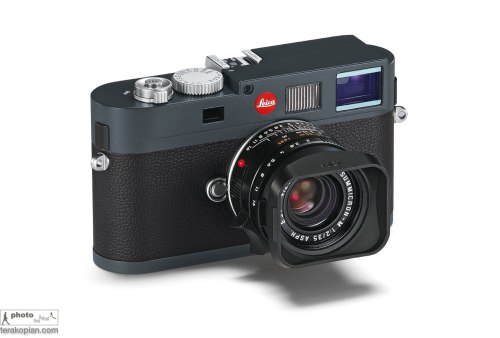
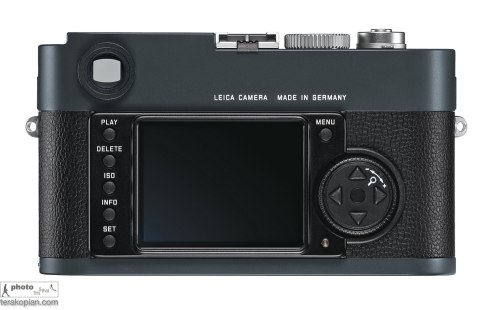

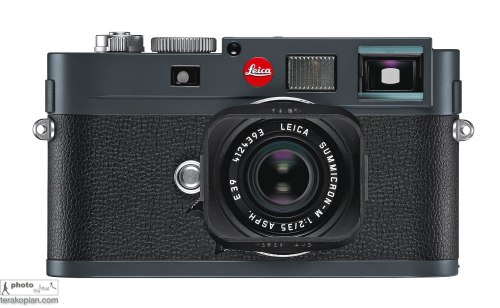


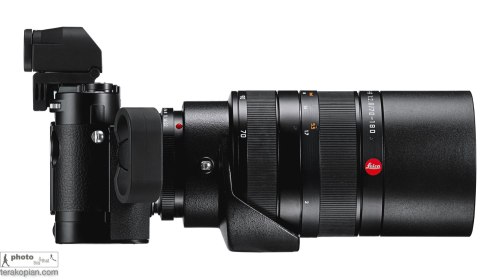
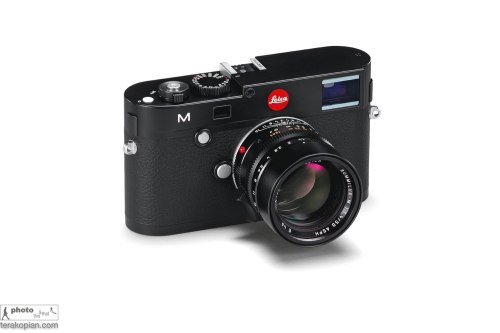

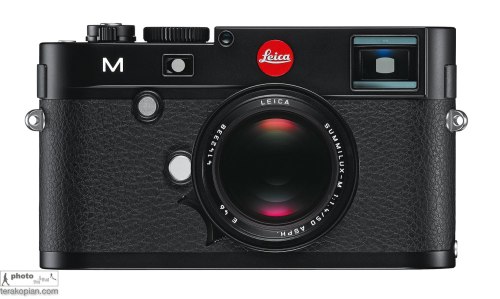


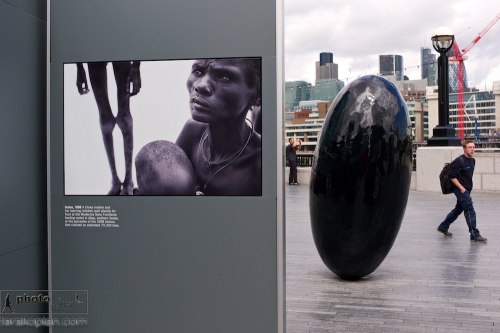


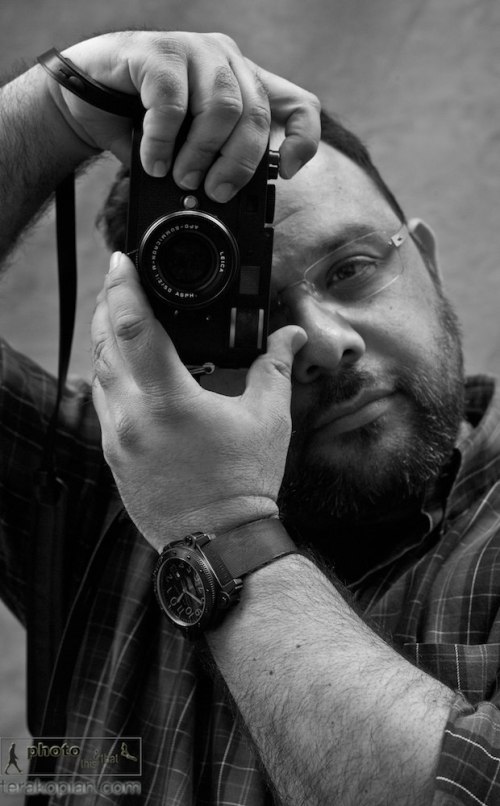





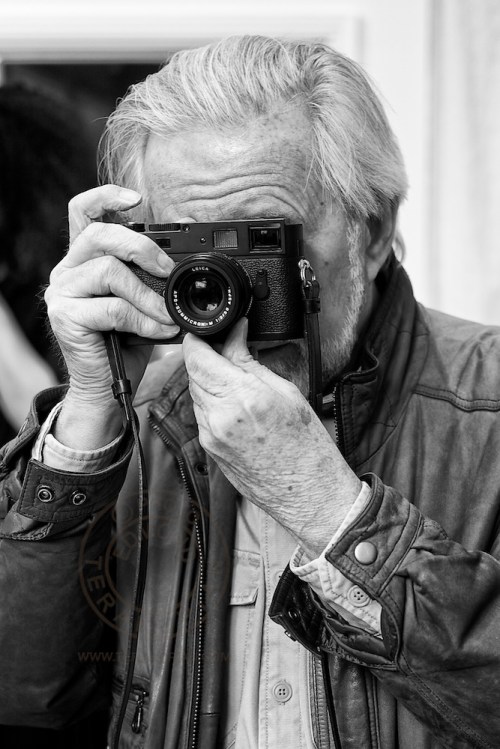


 Photo This & That