Here’s a video review from Digital Rev on my favourite ever lens; the Leica Noctilux-M 50mm f/0.95 ASPH.
You can see a selection of shots with this lens on my Flickr.

Here’s a video review from Digital Rev on my favourite ever lens; the Leica Noctilux-M 50mm f/0.95 ASPH.
You can see a selection of shots with this lens on my Flickr.
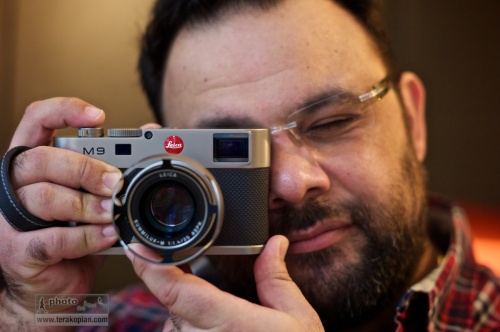
Photographer Edmond Terakopian tests the limited edition Leica M9 Titanium. November 12, 2010. Photo By Brett
There were rumours abound before Photokina 2010 about Leica bringing out a new camera; talk of an M9.2, a different digital M and even a digital body that would take the Leica R lenses. Well, the different digital M turned out to be right, but who would have thought it would be anything like the Leica M9 Titanium, or Titan as it’s also called?
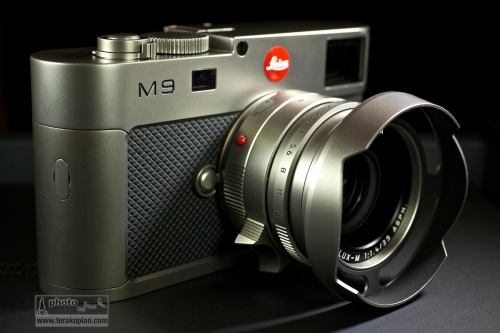
The limited edition Leica M9 Titanium, complete with Summilux-M 35mm f1.4 ASPH in Titanium. November 12, 2010. Photo: Edmond Terakopian
I must admit to not being a big fan of the limited editions that companies produce; I’m a photographer and want tools which are reliable and produce the utmost in imaging quality. I’ve often sighed to myself when I’ve seen limited editions of the M6 or M8. My thoughts at the time were always the wish that Leica would stop concentrating on these and put all their energy into making a ‘proper’ digital rangefinder. For me, the M8 and M8.2 just didn’t cut it. Well, the M9 certainly does cut it and ever since reviewing it for the BJP at launch, I’ve been saving for my own M9 which I recently bought. Leica has changed a lot in recent years; fresh thinking has brought amazing products like the S2 and some stunning M optics as well as the wonderful M9. So, considering the current lineup, I didn’t sigh when I first saw pictures from the launch, but was rather intrigued.
The M9 Titanium though is an absolute departure from putting exclusive leathers and other materials onto the normal camera’s outer casings. Although it has an M9 at it’s heart, it has a completely a new casing, even down to the base plate. There is also some new technology in the viewfinder, more of which later. As it’s name suggests, the material is Titanium; tough and light – pretty much ideal for a camera. Every piece of exterior metal is made from solid Titanium and the body is covered in beautiful high grade leather.
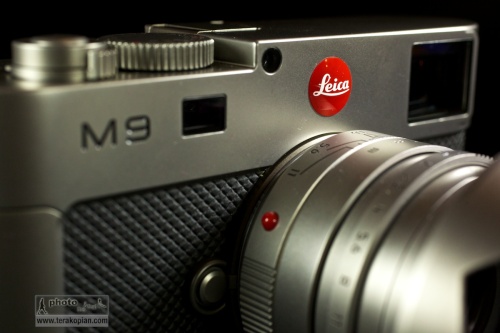
The limited edition Leica M9 Titanium, complete with Summilux-M 35mm f1.4 ASPH in Titanium. November 12, 2010. Photo: Edmond Terakopian
So, what to do about designing the camera? Well, the answer surprisingly was to approach a car designer; to quote Leica:
“The exclusive special edition Leica M9 “Titanium” is the result of a collaboration with Walter de’Silva, the prominent automobile designer. Responsible for groundbreaking design concepts for the latest models from the Volkswagen Group, the chief designer and his Audi Design Team have re-interpreted the design of the LEICA M9 just as he envisaged it. The outcome is a unique camera with a new interpretation of the characteristic features of Leica rangefinder cameras, which lends precision engineering, unique style and solid titanium to extraordinary formal design.”
It may seem a strange thing to do as cars and cameras are so extremely different, but seeing the camera, I must say that the collaboration is an absolute success. In the pictures first released, the camera and lens looked good, but in real life, it looks and feels superb.
In the days of film, I used to have a Leica 35mm f1.4 Titanium lens – I must say I always loved the way it felt. Well, this camera takes that feeling and multiplies it many times over. I can’t think of anything that can make an M9 feel cheap, but the M9 Titanium does just that! As much as I admire the look and the feel of the camera, I also absolutely adore the lens. The ‘kit’ lens is Leica’s extraordinary Summilux-M 35mm f1.4 ASPH. This too is created using solid Titanium and also comes with a beautifully crafted Titanium lens hood, specifically made for the camera. Even the red Leica badge is custom made from resin and hand-engraved with enamel for the camera. There is also an interesting leather holster for the camera, which again was specifically designed and made for the camera. All of this is packaged up in the most beautiful of presentation boxes, including a gorgeously printed book showing the journey of the camera’s design, from concept to reality.
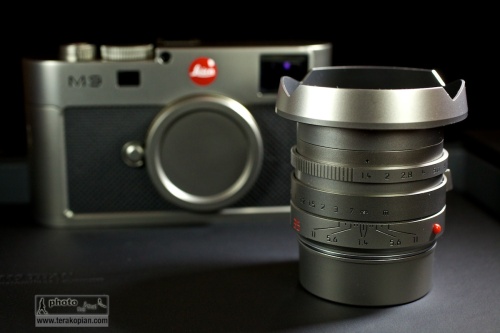
The limited edition Leica M9 Titanium. Summilux-M 35mm f1.4 ASPH in Titanium. November 12, 2010. Photo: Edmond Terakopian
The good news for the collector is that there are only 500 of these to be made. As I mentioned earlier, this isn’t one of the ‘normal’ limited editions, but a completely new design of camera, in solid Titanium. Price of such exclusivity is £19,800.00. I’m not really a collector, so don’t know much about such things when looked at as investment, but to me, a completely unique camera does make investment sense. Now, if only I could win the Lottery!
In Use
Thanks to the wonderful folks at Leica UK and the Leica Store Mayfair, I was able to spend a day with the M9 Titanium. Naturally all the testing was done in the office; even if Leica would allow it, I wouldn’t feel comfortable taking such an exclusive and irreplaceable camera out on the street. I need to add though that this camera isn’t part of the 500 but a pre-production proof of concept model; after all, the Leica Stores need to have cameras to show collectors before orders are placed. The one I used had the serial number 6.
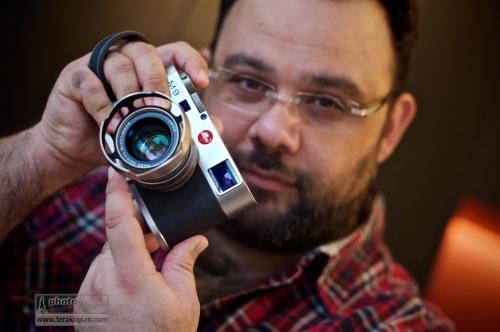
Photographer Edmond Terakopian tests the limited edition Leica M9 Titanium. November 12, 2010. Photo By Brett
In the hand, this camera really feels great. The weight and feel of the materials is just perfect. Aesthetically, I think, it works really beautifully, but the feel of the thing is also spot on. Every part of the body, and that gorgeous lens just work. It’s form, function and material in perfect harmony.

Test images shot with a Leica M9 Titanium. Photographer Brett from the Leica Akademie. November 12, 2010. Photo: Edmond Terakopian
One of the first things I wanted to see were the new LED illumintaed frame lines in the viewfinder. Traditionally, these are bright-line overlays. In use, these have served me well for a decade; however, in very bright conditions where the subject has a very light coloured background, they can disappear. The M9 Titanium has a completely new system where LEDs are used for illuminating red frame lines. These are much easier to see; very crisp and accurate. It took a few minutes to get used to, but I think I would welcome this system in future M cameras. Aesthetically this removes the need for an illumination window on the front of the camera, adding to a cleaner look.
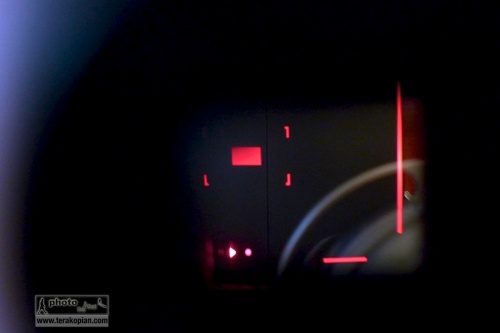
The limited edition Leica M9 Titanium. LED bright line frame lines. Unfortunately I couldn't photograph it showing the entire frame, so this image shows the bottom right hand corner. November 12, 2010. Photo: Edmond Terakopian
One thing which did surprise me was that the frame lines still showed the lens pairings as they have traditionally done, e.g. 28mm and 90mm. I was expecting that the system would show just one set of frames for the mounted lens. I guess though that this would need to read the 6-bit coding to differentiate between the lens pair. Perhaps in the evolution of the M line we shall see this function.
Looking at the outside, one thing which is absent is the manual frame-line selector lever. There are some die-hards on certain forums which mourn it’s loss, but I for one have never found a need for it. I already know the field of view a 50mm is going to give me compared to say a 28mm; the need for changing this manually before choosing lenses is, I think redundant. The M9 Titanium looks so much better and cleaner for not having it.
The Summilux-M 35mm f1.4 ASPH is a superb lens; the results just sing. To have it made from Titanium just makes it feel even better in the hand. It’s an absolute joy operating this camera, looking through that superb viewfinder and focusing this gem of a lens; it just feels absolutely spot on.
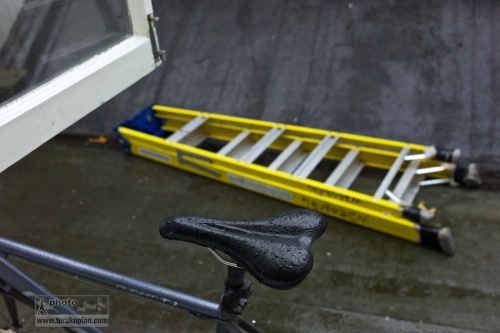
Test images shot with a Leica M9 Titanium. November 12, 2010. Photo: Edmond Terakopian
Apart from the material and design differences, it just handles like an M9; it just feels even better in the hand. I walked around the office taking portraits of some of the folks there and also some shots of the studio and other shots through an open window. I must admit that it’s the first time in my 21 years as a photographer that I’ve felt privileged using a particular camera; it was a real treat.
The Carrying and Holding Concept
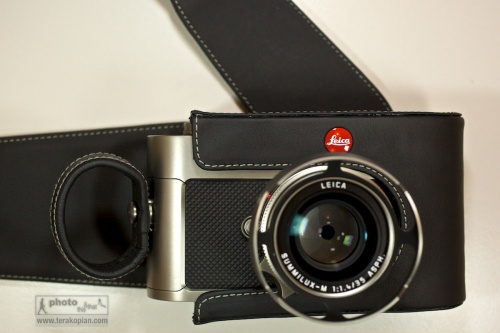
The limited edition Leica M9 Titanium. November 12, 2010. Photo: Edmond Terakopian The limited edition Leica M9 Titanium. The carrying system comprising of the leather holster and the finger loops. November 12, 2010. Photo: Edmond Terakopian
I think one of the obvious things is that this camera will probably never really be used as a photographic tool, but more of a collector’s piece. As a result, I’m looking at these ideas as concepts and not as real world suggestions for working with the camera. As concepts, they are very interesting. The holster is a new approach and is made beautifully out of very high grade leather. I for one would never use it in real life situations though.
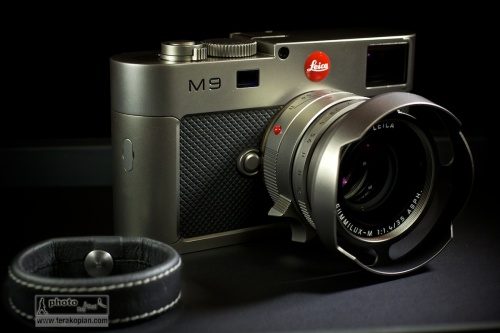
The limited edition Leica M9 Titanium, complete with Summilux-M 35mm f1.4 ASPH in Titanium. The finger loop is shown on the bottom left. November 12, 2010. Photo: Edmond Terakopian
The finger loops, which are metal and covered in leather (and come in two sizes) are slightly more usable. The very first time I held the camera (you insert two fingers through the loop), it felt strange but quickly became quite comfortable. With use, one acknowledges that it’s actually quite a neat system and very secure. I would probably opt for the included carrying strap though as I’m just used to having a camera on my shoulder. This new one sided mounting system does away with the traditional strap lugs at either side, again making for a very clean look.
Reality
I would love an M9 Titanium in black paint. I generally shy away from shiny cameras for my work. The less attention, the better considering some of the environments I work in. Titanium is wonderfully strong and light and is the perfect metal for these tools of ours. Alas, it’s expensive and harder to work with, needing special tooling. The M9 Titanium also has a special hard coating which is applied in Switzerland, so this camera, even if mass produced will never be cheap. Still, as a photographer, a black, or very dark and matt coloured Titanium Leica would be fabulous.
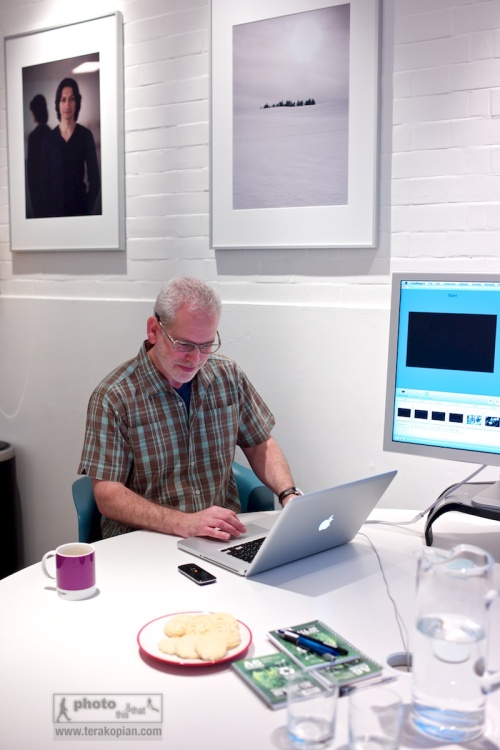
Test images shot with a Leica M9 Titanium. Photographer Brett from the Leica Akademie. November 12, 2010. Photo: Edmond Terakopian
The current M9 Titanium is a thing of beauty. Everything about it is pure elegance; not just elegance though as it’s combined with absolute usability and stunning design which marries the aesthetic with the practical. As someone who prefers black, I can look at this camera and I still appreciate it’s gorgeous looks and even the colour. How good does it feel? Just think about my earlier comment that it makes the regular M9 feel cheap.
For a set of picture taken with and of the Leica M9 Titanium, please visit my Flickr page.
©Edmond Terakopian
Posted in Camera Equipment, Leica, Photography, Review, viewpoint
Tagged collector, investment, leica, leica m9 titanium, limited edition, review, road test, test
My name is Edmond Terakopian and I love Leica. There, I’ve said it. However, as with any relationship involving the heart, all has not always been perfect. I loved my M4-2 and my M6. I loved my 21mm Elmarit, 35mm Summicron, 50mm Summicron and didn’t mind my 75mm Summilux. Didn’t ever like the 90mm Summicron or 35mm Summilux (but the ASPH version was ok). Also, I loved my R6.2 and the 28mm and 90mm Elmarits I had for it, but hated my R4. Phew, I feel better getting that off my chest.
As with most people who have used or follow Leica, every once in a while the company makes a decision which just leaves one speechless. Some of the bizarre limited editions are one such thing (pushing up prices across the range and more or less guaranteeing that working photographers will no longer be able to afford the standard cameras) and strange things like the R8 and R9 and the Digital Module R. The M8 and M8.2 followed bringing for me a head scratching response. Then the most bizarre and unbelievable news that Leica were going to bring out a medium format SLR! I didn’t believe it, thinking it was a hoax. It became apparent that it was true though. I was so saddened. For me, Leica has always really been about the M range and I’ve always wanted a proper digital M – thankfully the M9 has now answered that prayer (however at a price). Still, I wished that Leica would stop wasting money and effort on lost causes and just concentrate on the M range.
In November 2009 I got an invite from the Leica Store to try out the S2 (almost final firmware and production) and with curiosity I accepted. I went knowing that I would laugh at this ridiculous notion of a medium format Leica. I had recently shot with the excellent Hasselblad H3DII-50 and thought it silly that Leica would even attempt to get into this arena.
I’m Edmond Terakopian and how wrong was I? I had it completely wrong. I admit it; the S2 is brilliant.
It looks so much bigger in the pictures than it really is. Think of it as roughly the same size as a Canon 1D MkIV or a Nikon D3, with the standard lens being roughly the size of a 24-70mm f2.8. It fits in the hand perfectly and handles just like a “normal” 35mm DSLR. This is majorly important as you have to remember that it isn’t a normal DSLR like a Canon or Nikon, but is in fact a medium format camera. The sensor size is much bigger (60%) than a full frame 35mm sensor, coming in at 30x45mm with a healthy 37.5 megapixels. It has a wide (in medium format terms) ASA range of 80 to 1250.
It has a wonderfully responsive and surefooted AF system that performed flawlessly in the studio and in the corridors of the store. It just felt right in the hand and the shutter release was absolutely smooth as, well, a very smooth thing. Whilst Hasselblads with prism finders and motorwinder grips are comfortable, they are nowhere near as comfortable as the S2. You can literally just pick it up and start shooting. It feels so right that I would comfortably even take it into a news situation; something I would never dream of with any Hasselblad.
Whilst the handling was superb, the image quality had to be tested out. I shot a series of images of a model in the store’s studio, using studio lights and also took the model into an area with available light to test out the higher ASAs. All I can say is that I was stunned by the image quality. Whilst I was in awe of the Hasselblad H3DII range at the lowest ASA, anything higher proved an absolute no no, with 400 ASA images showing really bad noise. Not with the Leica S2; this machine produced amazingly beautiful images all the way to 320 ASA, nice looking 640 ASA shots and usable images at 1250 ASA. Whilst compared to a Canon 1D MkIV or 5D MkII this may seem like not such a big deal, in medium format terms it’s a first.
The S2 is brilliant; it’s fabulous; the camera had proven to me that my initial thoughts were way off and this new format and camera actually made sense. As with most things in life though, there is a little but – it is rather pricey.
Visit my Flickr page to view a set of images taken on the Leica S2.
You either get it or you don’t!
“You’re so lucky”. This was the greeting I got from a wedding photographer; someone I had never met. Alas she didn’t seem to be talking about me, my dress sense, my personality or my photography. She was talking about the fact that I had a Leica M9 around my neck. There are occasions when cameras spark off conversations between complete strangers in the field, but I have to say that none have induced more talking and question asking than the Leica M9. It seems to be a magnet for chatty photographers from all spectrums of the profession.
Going back to me being so “lucky”. Actually, it was true. I was taking some photographs at a friend’s wedding, and all my kit which comprised of the M9, 24mm Elmar and finder, 35mm Summicron and 75mm Summicron lenses, fitted into a tiny Domke F5 shoulder bag with room to spare. The young lady making the “lucky” comment was weighed down by a back pack, two DSLRs with their big and weighty zooms and flashguns.
Whilst a DSLR is much more versatile in being able to help you photograph most situations, given the right lenses (which can range from fish-eye to macros and zooms to super telephotos) a small, light, precision made rangefinder is something else. If any camera can come close to being Marmite, it’s the Leica rangefinder. You either get it, or you don’t as much as you either love or hate Marmite.
The size of the M9 and the tiny lenses certainly has appeal, but it’s the way a rangefinder works and looks so non threatening that really appeals to me. Its been such a joy to use a Leica rangefinder for work again. In the days of film I used to use the Leica M4-2 and M6 for around 80% of my work. The rest would require long lenses and an SLR would be called into service. The number of times the people I’ve photographed have taken pity on me and told me that one day I’ll be able to afford a real camera. The first time seemed comical as they obviously had no idea about the cost or quality of Leica kit, but I soon realised that the advantage was that people were always relaxed in my presence as they didn’t take me as a serious professional photographer.
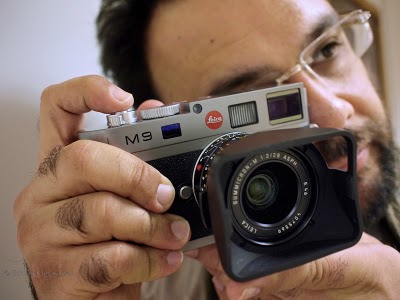
The Leica M9 in use. Photo: Antje Bormann
It’s All About The Lenses
I’ve been very fortunate in my career and have used and owned some fantastic lenses. Stunning lenses like Canon’s 35mm f1.4L or 85mm f1.2L II and the 50mm or 85mm f1.4 lenses from Zeiss have all been superb. These have been partially eclipsed by a superb 180mm f2.3 APO lens I had which was made by nowadays little known firm called Angenieux. However, by far my favourite optics have been Leica’s. The 21mm Elmarit, 35mm and 50mm Summicrons from days gone by have helped me make some of my favourite images on my Leica M cameras. The 90mm Elmarit on my Leica R6.2 also worked wonders.
Well, after the absolute disappointment of the M8 and the M8.2, the M9 is an absolute breath of fresh air. It’s not only full frame, but the sensor is great. It now opens up the digital photographer to the wonderful and amazing world of Leica optics; used how they should be used – full frame and without any multiplication factors. Thankfully, you can use the majority of the lenses ever made by Leica, dating all the way back to the 50s, with only a handful of exceptions (these are helpfully listed in the manual). To help out with older non-coded lenses, you can even manually set the lens in use on the camera using the menu system. Naturally there’s also the option of sending any old lenses to Leica for them to code it for you; at a cost.
The main thing with Leica lenses is that they just give a certain look to your photographs. I’d even say that some of the old Summilux lenses aren’t even that sharp, compared to the best modern lenses. However, they all have this magical ability of rendering light sources within the image beautifully and give you a beautifully contrasty image regardless of the light sources visible. In black and white you’d get an amazing tonal range and in colour the true rendition of colours as well as the tonal subtleties captured is wonderful. To finish off perfectly, you get beautiful bokeh. When shooting wide angle you also get such little distortion, as the design of the camera allows the rear elements of the lens to go deeper into the lens mount of the body.
I’ve used many camera systems during my career, starting with the Canon FD system, then the Nikon AF system, Nikon digital and for the past five or so years the Canon digital system. The one thing that remained constant through most of this time was the Leica M system and some R equipment too. What is also amazing is that Leica somehow has the ability to awaken a passion within photographers who generally only look at the equipment as a tool. Not only is it a passion for the cameras and lenses, but when the company gets it wrong, it’s almost taken personally. I have to admit to almost feeling heart broken when I tried the M8. The image quality didn’t live up to expectation, although in ideal conditions it would produce nice enough images, it just wasn’t consistent through its ISO range. To top it was the horrid problems with having to get IR filters for all one’s lenses. The cherry on top was the crop factor. I tried it when it first came out and then re-visited it around six months ago, and still, it was a disappointment. For a camera where zooms aren’t available and the majority of photographers don’t use the tri-focal lenses but stick to primes, it’s important to have full-frame; a 35mm lens should give a 35mm view. Well, thankfully the M9 and its full frame sensor have answered my criticisms of its predecessor. To top this, it’s actually a wonderful sensor and works rather well all the way up to 1250 ASA.
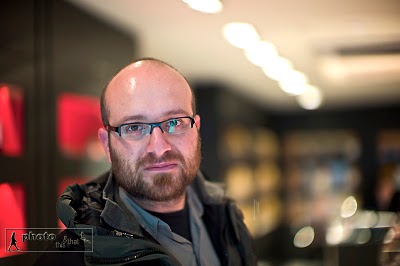
Portrait taken using the legendary 50mm f0.95 Noctilux at 400 ASA
Is It All Good?
You can probably have a suspicion that I’m rather fond of the M9; well, I am. As I mentioned earlier, it’s opened up the opportunity for us photojournalist types to use Leica for deadline work again, and this time, unlike with the M8, its with very little compromise. Its very nicely built and works extremely well.
The issues I came up with, apart from the sadness of only having it for a week and then returning it, was the buffer is easy to fill. I was originally shooting jpeg and RAW combined. I realised that shooting RAW (DNG) compressed made things much quicker and relatively snappy. It’s no Canon 1D MkIII when it comes to buffer speed, but compressed DNG works wonders. If there’s any visible quality difference between compressed and not compressed, I really can’t see it.
Another issue I came up with was the feel of the shutter button. Coming from the old mechanical rangefinders, it felt different. I could feel the stages in travel it has to have to accommodate the exposure lock for aperture priority use. However, the great news is that this can be changed in the custom functions. Another very useful function is to delay the wind on. I had these two custom functions (Soft and Discreet) constantly set and loved the way the shutter release now felt and worked. It’s still not the same silky smooth gentle release of the old mechanical Leicas, but then again having a yearning for it is unrealistic. After all, it’s a totally different camera.
Lastly, although thankfully there is now a dedicated ISO button, I’d welcome either a mechanical dial that showed the speed setting, or perhaps an LCD on the top plate showing the set ISO. For me it’s essential to be able to check this setting at a quick glance without having to go into the menu system.
In Use
I found the auto white balance to work amazingly well. It worked fabulously outdoors, like most modern cameras. However, it was under tungsten light where it excelled. The results are amazingly good. When shooting a series of images, you do occasionally get one in the set where for some reason the white balance jumps, but it’s generally completely constant. This in itself isn’t an issue if you shoot DNG as it’s very easily fixed.
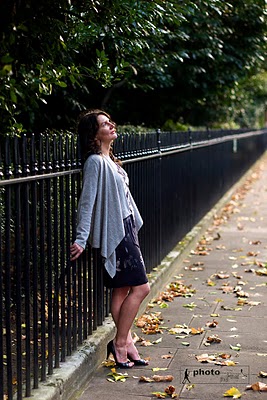
Photograph taken using the 75mm Summicron
Although Leica offer the camera with a full download of Adobe’s Lightroom, my software of choice is Apple’s Aperture. I do applaud Leica for not bringing out yet another RAW format and the files from the M9 processed beautifully in Aperture. Editing through the 18 megapixel images has been a joy and the image quality began to remind me of looking at Kodak Ektachromes on a lightbox. Maybe the Kodak engineers who made the M9’s sensor were looking at the look of Ektachrome? Main thing is that the files look fabulous.
With the M8, anything over 400 ASA started to look terrible, especially early on when the IR filtering issue was not yet publicly known. The M9 shoots beautifully at up to 1250 ASA and nicely at 1600 ASA. Its maximum of 2500 ASA can be used in emergencies, but I’d personally steer clear.
Whilst the menu system works well, it does take a little getting used to as it’s not as intuitive as some of the modern Japanese camera systems around. I’d for example love to see the SET button placed inside the direction buttons. I have a small gripe with the delete mechanism too. I have a dislike with any delete function which gives the option of delete all. If in the middle of a fast moving news job, it seems a little to easy to delete all images by accident, even if there is a confirmation needed.
On a positive note, the bright-line frame markers work perfectly. The M8 had serious issues with the frame markers not corresponding to image view photographed. This was partly addressed in the 8.2, but the M9 seems to work even better and I didn’t have a single issue.
Does It Make Sense?
If logic were to dictate, then no, not really. At £4950 body only, the M9 is a very expensive camera. Leica have always been expensive, but this is expensive, even by Leica standards. Leica are not a mass manufacturer and there’s a fair amount of hand assembly and finishing that goes on. To top this off the quality control is extremely high and has always been so. However, I just feel that the price tag is too high. It pushes it outside the grasp of most professional photographers and possibly makes it only accessible to the enthusiast photographer who has a well paid day job. Its a shame really.
The image quality, especially at high ASAs, doesn’t come close to my favourite DSLR, the Canon 5D MkII; the Canon produces smoother files at 2000 ASA than the M9 does at 1250 ASA. It also is more versatile and being a DSLR can take lenses from 15mm to 800mm, making it much more useful. However, the Leica M9, and these wonderful Leica lenses just produce images with life; there is a quality and look to the images which no other camera system can produce. Logic dictates that a large and cheaper DSLR makes more sense; the heart though, wants what the heart wants; after all, photography is a passion. Also the form factor is fabulous; this tiny camera takes up so little room and the lenses even less. It affords a very subtle and gentle way of working which is wonderful. I applaud and congratulate Leica on the M9; it’s an amazing camera and as soon as this recession lifts, I’ll be making a visit to the Leica Store in Bruton Place.
For a full range of photographs taken with the Leica M9, please visit my Flickr page. For a newer set of images, please visit THIS page too.
This article first appeared in the BJP on December 16, 2009.
Posted in Camera Equipment, Leica, Review, viewpoint
Tagged digital, full frame, leica, m9
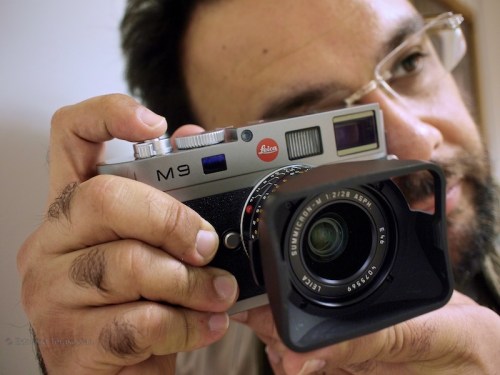
Edmond Terakopian tries out the new Leica M9. September 17, 2009. Photo: Antje Bormann

Test shots with final pre-production Leica M9 at Jacob's Pro Lounge, London. Antje Bormann. September 17, 2009. Photo: Edmond Terakopian
Seems that the M9 has put a stop to that though and I find myself yearning to get back to my rangefinder days; well, the recession’s kind of getting in the way, as there’s no way for me to justify the £4850 price tag, but at least now its not the quality that’s putting me off, but merely the cost. As Richard, the chap from Leica said yesterday, it’s reassuringly expensive!

Test shots with final pre-production Leica M9 at Jacob's Pro Lounge, London. Antje Bormann. September 17, 2009. Photo: Edmond Terakopian
Where the camera really shines though is that it now has a full frame sensor. The cropped sensor of the M8 was a huge disappointment for me. The other huge improvement is that there is much less image noise, so working in low light is again a possibility. Whilst the camera’s high ASA ability doesn’t come anywhere near matching a 5D MkII, its still very impressive and a million times better than it used to be on the M8. At 160 ASA its faultless; absolutely stunning. I pushed it higher to 1250 ASA and its still extremely good. There’s some grain, but it looks right and the colours also look right. I shot a load of tests indoors under mixed lighting and also outdoors in daylight and apart from some shifts in the auto white balance, the colours where great.

Test shots with final pre-production Leica M9 at Jacob's Pro Lounge, London. Antje Bormann. September 17, 2009. Photo: Edmond Terakopian
Whilst the shutter is no were near as silent as the old cloth shutters, it has several quite modes which allow the cocking to be done on release of the shutter button; this makes operation much more quite.
For a gallery of images check out my Flickr.
Addendum 1: I was so impressed with the Leica M9 & X1 that I have since writing the review bought both cameras.
Addendum 2: You can now read my full review of the Leica M9 in the BJP (British Journal of Photography).


 Photo This & That