Category Archives: Photography

In The Picture with John Moore

Frontline Club –John Moore has spent most of the last year photographing Pakistan’s slide into instability and in December 2007 was one of the few photographers present at the assassination of Benazir Bhutto”.

There are still spaces available for his talk. Book at the Frontline Club.

Afghanistan Diary by photographer John D McHugh

A good friend of mine, John D is spending another six months in Afghanistan.

During this trip he’s writing a diary for The Guardian, and its well worth a read. Its updated regularly so make sure you keep an eye on it.

He also has his own blog which documents his trips to Afghanistan during 2007.

New Media


by Edmond Terakopian

January 2008


How we all miss the golden era of photojournalism, when Life magazine and Picture Post were at their peak. When every issue brought amazing picture stories by Robert Capa, Henri Cartier Bresson or the king of the art, W. Eugene Smith. A few years later we had the brilliant Sunday Times Magazine which would carry picture stories by the great Don McCullin.


Apple’s Aperture which allows image editing, captioning, RAW conversion and export of images. A very handy feature is that it also builds up your fully searchable image database as you continue using it. After having searched through several terabytes of images, I’ve imported my selection into Aperture to make my final edit and corrections.


Alas those days are gone as publishers decide that more and more pages should be sold to advertisers, and the remaining pages dedicated to celebrity nonsense.


However, all is not lost. We’re now beginning to explore the internet and its infinite number of pages; pages which can be as large as our monitors and not destroyed by adverts. Once, the internet was for computer savvy nerds, but it has now grown in popularity to the extent that all age groups, from all walks of life, are completely at ease using the web. Even mobile devices now allow us now to access the web from practically anywhere.


All is not good news though as publishers now look at the internet and ask, “What can we do with it?” Instead of the thought out approach of using this as a vehicle for promoting and delivering great photojournalism, its being used as a delivery mechanism for video. I guess they think that a moving colour image with sound is much more ‘modern’, so our talented photographers are being asked to “shoot it in video” as well as using their skills to capture the story in the single image. In one particular paper in the States, the whole photography team has had their stills cameras replaced by video. Obviously there are two main problems with this approach; firstly, no one remembers great video of a particular event as its always the still image which springs to mind. Secondly, how can anyone use two different apparatus at the same time? The decisive moment will probably be lost as the photographer is busy switching from one to the other.

In the better case scenario where only a video camera is provided, where does the skill of the single decisive moment come when everything is caught on camera in a horizontal format at many frames per second? How will we remember great stills pictures if there are none taken by the press corps?


The Roland Edirol R-09 is a field audio recorder with built in stereo microphones, and is now part of my everyday kit. Its superb at recording interviews or ambient sounds, which can really add to the mood of a series of pictures.


My personal thoughts are that we should look at alternative ways of story telling, and embrace any technology that enhances this. I think the operative word is enhance. It’s similar to someone buying their first fish eye lens; you can’t put it down as its such an amazing effect and you end up using it on every image, sadly ruining most of them! A fish eye is a great tool for the correct circumstance, but a disaster elsewhere. Its the same with the alternative means of story telling. Use it if it enhances the story, not just because you can.


This is where new media or multimedia comes in. Slide shows are by no means a new thing. However, the internet and ADSL means that we have a modern equivalent to the Kodak Carrousel and tatty off-white slide screen – which never stayed quite straight.


I think as photographers we have our own ways of looking at things; our own way of capturing little snippets of life frozen in time by our shutters. The whole approach is different from that of the moving image. However, by going back in time to the golden era of Capa, Bresson and Eugene Smith, we can bring the same approach to story telling into the modern way of delivery; the internet. A step further brings us back to the slideshow. There are various ways of delivering slideshows, of which a little later.


Using this new media we can use our skills as photographers and construct picture stories to be delivered as a slideshow. Whilst some subjects look just fine as silent slide shows, others benefit by having sound with them. This can either be in the form of music, or a recording made of the subject, including audio interviews and ambient sounds.


It Begins


My own wake up call came when a paper I work for called me to do a shift. I gladly accepted the fashion assignment, but then came the request from the picture editor that he wanted it shot in video for the paper’s web site. I had lost my first shift to video! I spent a few weeks looking into video; the courses and equipment. It was depressing as my love is for the magic of stills. But I started to explore to see how I could expand my repertoire. Audio visual slideshows was my answer.


This still leaves a huge amount to be learnt. As far a

s the stills image, one still uses the pure discipline of constructing a picture story. In very basic terms, it needs a beginning, a middle and an ending. Every image needs to be shot and included in the edit because it brings something new to the viewer as far as understanding the story. The audio, is where its all new.


If you study the TV news or movies, it becomes very apparent just how important good sound is. Good content with clean and neat recordings are paramount. A bad choice of music, or a bad recording of the subject, either technically or content wise, will distract the viewer of your slideshow and loose the impact of your pictures.


The Nitty Gritty


To put together a slideshow, we naturally need a set of pictures on the same topic and the audio to go with it. Also, we need software to prepare the still images, more software for the audio, and yet more software to marry the two with timings and transitions.


My personal arsenal consists of:


Apple Aperture – Image editing, captioning and conversion


Apple Soundtrack Pro 2 (part of Final Cut Studio 2) – Audio editing


Apple iMovie – For arranging images and audio together and making a Quicktime movie.


Sound Slides – For doing exactly the same as iM

ovie, but in a Flash format ideal for speedier web delivery.


I have also been exploring Final Cut Pro and the Express version, and once mastered, these will replace iMovie in my workflow.


Soundtrack Pro 2 which is part of Apple’s Final Cut Studio 2, allows full audio imports and multi track editing. The audio for the project has several tracks (ambient sounds from the program’s own library, a recording of camera shutters and the music track), with various volume settings. Using this program made the editing and combining of the tracks very straight forward. The final track was output as an MP3 file.


On the hardware side, I shoot with two Canon EOS-1D MkII bodies and two Canon EOS 5D bodies, choosing between them depending on the assignment to hand, and a range of Canon lenses from the EF 15mm f/2.8 to the EF 500mm f/4L IS USM. On the audio side of things I use a Roland Edirol R-09. All of this and my Apple MacBook Pro are carried around in various ThinkTank Photo bags and pouches.


The Edirol is a very neat little package, about the size of an iPod. It records onto SD cards and uses a couple of AA batteries which seem to last forever. It also has a stereo microphone built in. For an even better recording quality, it does allow you to plug in an external microphone and Roland make a very neat one specifically designed to work with it. On the side of the unit is a set of buttons for adjusting the recording level, and a display on the front which lets you monitor the recording level. You can also plug in some earphones to hear the recording.


The most important aspect of a sound recording is to get the microphone as close to your subject as possible and to set the correct recording level. Too low and you will get a very noticeable hiss. Too high and you will get clipping and distortion. Think of it as exposing your picture perfectly keeping all the highlight and shadow detail intact.


When using music, naturally you will have to buy royalty free tracks. A quick search on the internet will show several companies selling downloadable MP3 content for which you can buy the royalty free license. It may be tempting to use a favourite track in the charts, but you will be breaking the law. Just as you’d be upset if someone stole one of your images, so the musicians and their recording companies get upset if you steal their music.

Choosing the right track can take many hours of listening. You need to make sure that the mood and tempo of your chosen music works with and enhances the mood of your images.


…and Action!


As I mentioned earlier, the subject needs to lend itself to a picture story. This method of delivery won’t suit all subjects. The more journalistic the images, the more they will benefit from this treatment.


I’ve been fortunate to cover London Fashion Week for years. My very first time was very stressful and I felt totally out of place as I was surrounded by photographers who travel the world just covering fashion. However as the days went by and I was assigned to other fashion weeks, I totally fell in love with the assignment. Its a great mixture of imagery and its up to the photographer to find these. My first trip back stage at a Basso and Brooke show really opened my eyes to the images that could be made. The energy and speed with which models are brought in, changed, made up and then moved to the catwalk was amazing. Keeping an eye open for nice candids, working in sometimes very low light and all the while trying not to get underfoot all provide their own challenges, but also yield beautiful journalistic images.


Then comes the catwalk (or runway) itself, at the end of which you will always find a large number of photographers doing an impression of sardines. Space is at a premium and everyone squashes together, filling every centimeter. Nowhere else will you find such a concentrated amount of 70-200mm and 300mm jutting out from such a small space.


On the face of it, its all pretty straight forward. There is a long catwalk, and models walk up and down it, wearing the designers’ new seasonal range. This is where it gets interesting though; you can photograph it in a very straight forward fashion (which on certain occasions works well) or you can get creative and use wide lenses, play with the light or move completely away from the “pit” and try the sidelines.


For this slideshow I decided that I was going to find my favourite images shot over the last four years. After collecting them all I did all the conversions needed in Aperture and output them all at 800 pixels across, using a preset I had already made.


For the next part I spent a while listening to music and finally found a song with the right energy for the catwalk sequence. Unfortunately I didn’t have any ambient recordings made backstage so I found a suitable track in Sound Track Pro’s library.


I wanted to convey some of the excitement of cameras being fired so decided to make a recording of the shutter being fired on a 1D MkII and 5D. After recording these separately, I imported them into Sound Track Pro and overlaid them, making the finished track begin slowly and build to a climax which sounds like hundreds of cameras being fired. The whole thing though was only two cameras. Lastly came the mastering of the final sound track which was combining all three.


I had already decided that I wanted to show each image for three seconds, so a few calculations showed that I had a few too many pictures in my edit. After deleting four of them, I had the lengths just right.


Sound Slides makes it very easy to combine the pictures and audio together. It then outputs a folder containing a flash file and related image and sound files, ready for publishing to the web.


Using Sound Slides I imported the photographs and the sound track, and after spending another minute filling in the credits and choosing the colour scheme, I was done.


The other possible way of doing this project is to import the images and audio in iMovie (or Final Cut) and make a Quicktime movie of the slideshow. This method gives much more control on speed and transition.


For examples of stories, please visit here.

This article was originally written for, and published on the Canon Professional Network web site.

Observations Oslo

Subtle; that’s what I found Oslo to be; subtle.

Its not like some cities where one almost immediately gets a flavour and the ambience. Oslo’s much more subtle than that. In fact, it took me a couple days until the city began to grow on me. If its your first time, I definitely suggest that you go for a week, otherwise you’re going to miss out.

One of the nice things is how nice and clean everything is. How polite and helpful people are. These qualities make it sound rather clinical, which they are, but at the same time its a very welcome to be surrounded by friendly people and cleanliness.

Its definitely a place to go walking and exploring. Although there’s a very good tram network and taxis can be found easily, I strongly urge a map and some comfortable walking shoes. There’s something familiar about the place, but new. It at times reminds one of Sweden or Denmark, but actually its rather different.

The next thing to strike you is that its expensive! Ok, so not so much a quality; at times, especially with bar prices, its ridiculously expensive. The cost of even fast food and snacks is high, let alone proper restaurants. This isn’t the place to go for shopping.

So, its subtle, clean and expensive; not the best sales pitch for a place! However, you would be missing out if only the obvious was going to steer your choices for destinations to explore and enjoy. After a couple of days one really begins to get a fuller flavour for the city and its people. 

Its a very elegant place. Great food and fun bars are dotted around the place. To keep costs down one can even choose to stay in hostels, leaving money for food, drink and the famed ferries. Actually, the cost for hotels isn’t as high as some other European destinations. Probably the main reason for Oslo being known as such an expensive city are more to do with the taxation on alcohol. With a little bit of research, one can choose bars, cafes and restaurants which are off the typical tourist routes and will cost less.

There are lots of free attractions, museums and events to enjoy too. A quick look through the Visit Oslo web site will provide very helpful listings of these. Another thing to keep in mind is that the best times to visit are between May and September. Leave it later than that and the weather can get rather cold and wet.

On my first day, after checking in to my hostel, I picked up a camera and decided to go exploring. My first port of call was the beautiful palace right in the middle of the Slottsparken. The palace has its own guard and several times a day there is a changing of the guards ceremony which is well worth seeing. As with everything in Oslo, its very friendly and accessible, unlike certain other cities where everything happens behind closed metal gates at great distance.

The main streets in the centre of town are only a ten minute walk from the palace. Some very beautiful restaurants, both traditional and contemporary line the streets which then give way to trendy clothes shops and boutiques. Although not a city to shop for bargains, its still good fun having a lazy walk through the streets window shopping. A large ice rink in the middle of the city centre acts as a great focal point and meeting place.

The marina’s within walking distance of the city centre and 15 minutes later I find myself sat outside a cafe under some gas heaters and some viking style blankets watching the boats and people. There’s a booming trade in ferries as they dock and leave the marina carrying their cargo of tourists and commuters.

There’s a wonderful warmth and cosy feeling to the restaurants and bars at night. They just become so welcoming and comfortable. The food is good and the ambience great, and with the flow of beer the hours disappear and quite often one finds that its early morning all of a sudden.

One of the funnier things that I experienced was going from one bar to another after midnight, only to be greeted by the shouting chants of some drunken youths. I turned to my friend to ask if they were chanting football slogans to be told that actually they were reciting poetry! Now that’s the type of drunken youth I enjoy running into at night!

Norwegians like their coffee and the people of Oslo are definitely into good coffee. I found a rather wonderful coffee place next to my hostel (Cochs Pension, Parkveien 25) called Kaffebrenneriet, with the most amazing coffees and pastries. A superb start to the day. My joy was multiplied when I realised it was a chain!

My personal favourite place though has to be the Vigeland Sculpture Park (Vigelandsparken – Main entrance from Kirkeveien). Its an absolutely huge park dedicated to the work of sculpture Gustav Vigeland (1869-1943). There are well over 200 sculptures dotted around the park, some as individual pieces, others working together as a much bigger piece. Its quite possible to spend the better part of a day exploring the works in the park. Definitely worth a visit.

Another favourite haunt of mine turned out to be Lorry Restaurant (Parkveien 12). A large restaurant over two floors with a great bar. Although its a fairly large place, it somehow has a mood and atmosphere of a smaller and more intimate establishment. The service was also extremely friendly and fun. I must admit to having more than the occasional late night here; the kind when before you know it its 3.30 am and the staff begin to clear up!

Oslo may not be at the top of most people’s list for must visit cities, but having been, I’d certainly recommend it for that more relaxed break, checking out parks and museums during the day and spending the evenings sampling some good food and beer.

The Floods

Photojournalists; we’re a strange breed indeed! I found myself driving at speed, windscreen wipers at full blast up the barely visible motorway towards Gloucester. The local radio station was constantly asking motorists to stay off the road, and letting people know that Gloucester was in peril. Months of torrential downpours had come down in a matter of days and parts of the country were underwater. Rivers had burst their banks all over the place. The radio again told me to stop and turn around; instead I planted my foot down a touch harder and carried on making my way to the flooded town.


My main worries were if I’d be able to get through, to get access, or will the situation be so bad that my 4×4 won’t get me in close enough. Will the Police do their best to stop me making pictures. Increasingly over the years it seemed to me that the Police’s priority had switched from fighting crime, to stopping photographers doing their job. Then, most of my thoughts drifted to my waders which I had bought on route from a fishing shop; will they really be waterproof?!


My new best friend, a voice at the local radio station told me that my target, the electricity power station which supplies half a million people across Gloucester and Cheltenham was at risk of being flooded. After following the calm female voice on my navigation system I finally got to Gloucester. I turned off a round about and found a street completely under water. Finding a few men just standing at the water’s edge in disbelief, I got directions to the power station, followed by “mate, I wouldn’t go there, its flooded”. They didn’t realise that unlike “normal” human beings, we actually seek out these places that the majority avoid. Wars, famines, riots, disasters…..flooding – yep, on my way.


I passed the road closed sign, and as I got closer to the power station, the number of emergency vehicles grew. This road was also flooded. I cursed myself at not reading my car’s user’s manual; I had no idea what depth I could drive through without flooding the engine or the passenger area.


Once I arrived at the side road leading to the power station I was astonished. The Fire Brigade, Army, Navy and Highways Agency were in full swing. There was a human conveyor belt of sand bag makers. These were being filled at full speed and loaded onto pallets to be taken inside the grounds of the power station to battle the force of mother nature.


I finally managed to get access and hitched a ride on a truck. Thoughts drifted to the fact that I was sat in a metal truck surrounded by water; the same body of water which was inching its way into an electricity power station – is this really a clever thing to do?!


All the delays in getting to Gloucester and eventually gaining access meant that I had to work quickly. I had deadlines to meet and the AFP picture desks in London and Paris had already been on the phone a couple of times. Spotting pictures as we went closer towards the power station, I began switching between cameras, making images. Soon enough I had the images I needed. Grabbing a ride back out of the flooded access road and straight to my car and my MacBook Pro and Aperture. Plugged in my card reader into the Firewire 800 port and my images started to download with the needed haste. In no time I’d edited, captioned and made all my image adjustments. As luck would have it I logged onto 3.5G (HSDPA) cellular signal and my images were making their way back to the office at speed.


The voice of my best friend on the radio had changed as presenters had handed over; however, the information was as good as before. As we’d all expected, the historic university city of Oxford was the next place to be. A quick chat with the picture editor at AFP and I was on my way.


It was night fall. People had already been evacuated and taken to the football stadium and the neighbouring hotel. Having switched to the local radio for Oxford, I found another new best friend. Listening to the commentators and more importantly, local residents calling in with up to the minute reports kept me up to date with what to expect. I headed straight for the football stadium and the hotel. The Red Cross and St John Ambulance Service were at high alert and had already homed the evacuees in hotel rooms. There were now reports of Abingdon flooding around 11pm. I decided to head for Abingdon and then return to Oxford. Luckily Abingdon didn’t flood too badly. After making some pictures I headed back to Oxford , but only after discovering the joy of learning to drive in pitch black flooded tiny and bendy country lanes. There’s a first time for everything! Having found a room for the night it was time to edit and send the pictures I’d shot from the evening in Oxford and Abingdon. 


After a few hours sleep I was back at the hotel and the neighbouring football stadium. There were many tens of elderly evacuees having breakfast and being looked after by the Red Cross. I spent the next couple of hours photographing what was going on. After another editing and wiring session, I headed towards Osney, a part of Oxford right by the river Thames which had already partly submerged. There was a lake in the middle of the main road. I was astonished. The side roads which led to housing were also flooded; not as badly, but the environment agency was predicting that tomorrow would be the beginning of the some real flooding.


The story had grown. There was a lot of international interest too. What had begun as an overnight assignment turned into a five day and night, damp and wet job. The few hours of sleep each night were at a variety of tiny hotel rooms around the city.


During the next few days, my most important piece of equipment wasn’t my cameras, lenses or laptop; it was my trusty pair of rubber waders! Having the freedom to move around was liberating. All I had to worry about was falling down submerged and invisible man holes (their covers having been moved by the power of the moving water). I’d been in a mine field before so was accustomed to being wary of where I tread, but had never thought that a man hole could ever be a source of equal worry. As the pressure of the flood water flowing into the submerged man holes was so strong, I was told by the Fire Brigade how deadly these were.


During my four days in and around Oxford, I spent most of the time in Osney. I’d decided that it was better to tell the story of this little community would be a good mirror of what everyone else was going through. AFP had another two photographers covering the story from other towns. As I began to get to know the locals, I discovered their hatred of the media as they swooped in for half a day, made their hurried pictures, interviews and pieces to camera. Often exaggerating things to make their stories more sensational, and leaving for the next “scoop”. Over the days I began to get a little bit more access and respect. People started to talk to me and give me an insight into what they were going through. I ended up spending my birthday in Osney and was touched when a couple of residents bought me a birthday cake!


During the assignment, I ended up shooting 3240 frames. Every moment of every day and night, every corner, every city and village had yielded new moments to document. I’d ended up with an edit of 166 images during the week which had been edited, captioned and wired. I’d made several national papers  over the days and news magazines too. Time magazine had even used one of the images in its “Pictures of the Week” slideshow.


The last thing I needed during the week was equipment or software issues. I’d feared the dampness or the occasional rain shower might give me trouble. However, everything kept working smoothly. All I had to worry about was making pictures which conveyed the story…and not sink down man holes.


SLIDESHOW OF IMAGES HERE


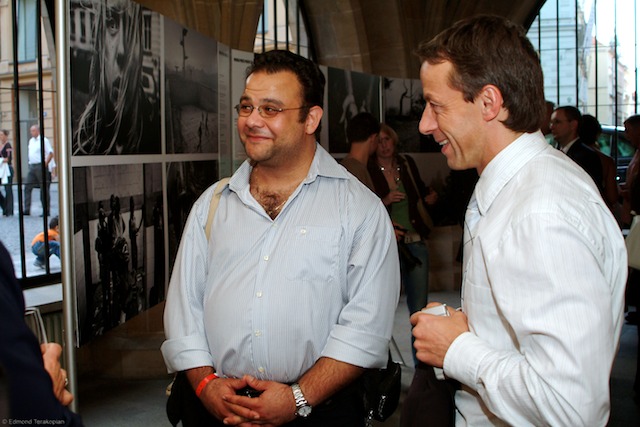
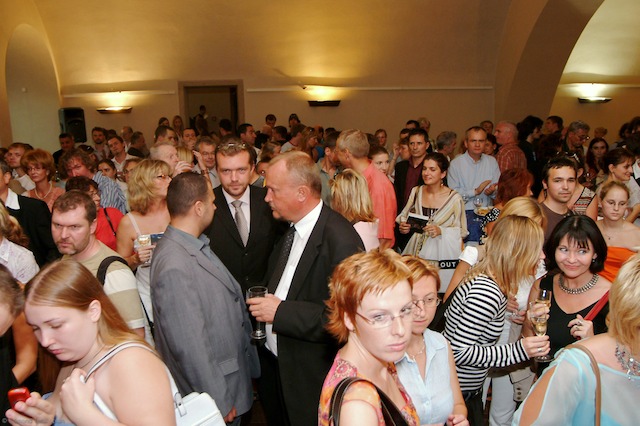
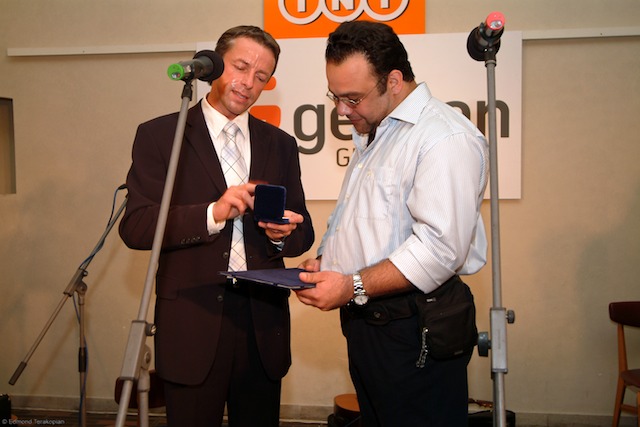
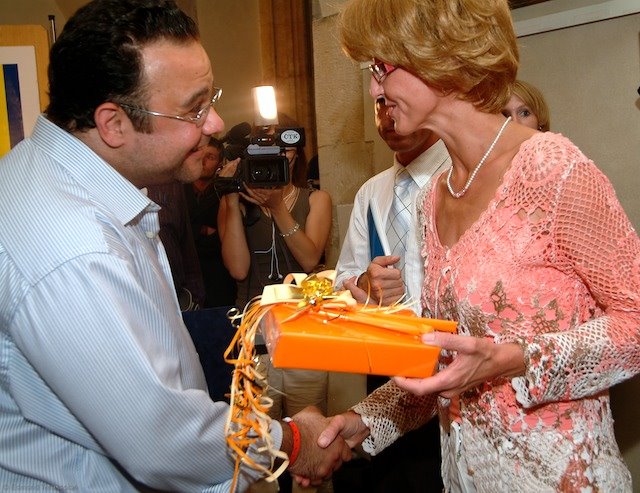
The Prize of Prague 03